8 November 2026
ADVERTISEMENT
ADVERTISEMENT

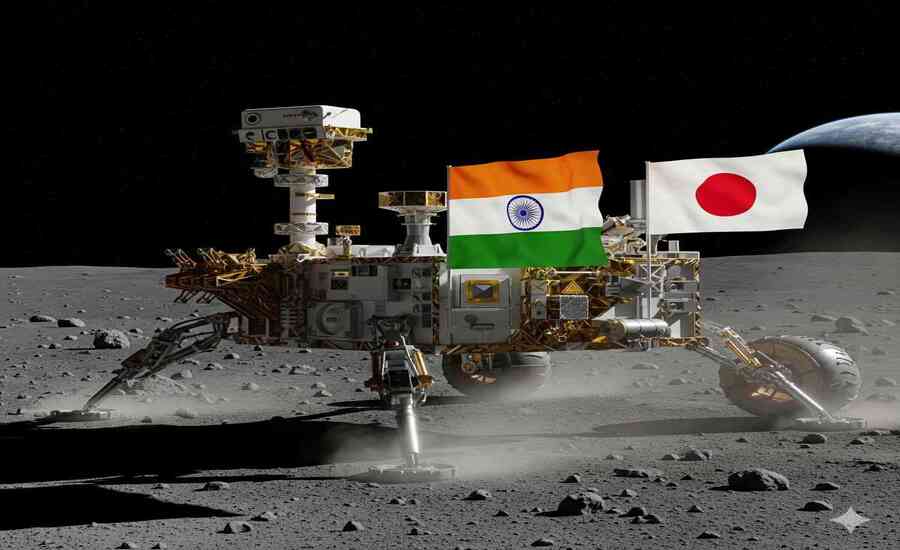
Chandrayaan-5 Mission: How ISRO and JAXA Are Planning a Historic Leap to Unlock Moon’s South Pole Secrets

ISRO and JAXA are advancing the Chandrayaan-5 mission, a joint lunar project targeting the Moon’s south pole. With a powerful rover and extended mission life, it aims to unlock water resources and future space possibilities.
Chandrayaan-5 Mission
Indian Masterminds Stories

New Delhi: The Chandrayaan-5 mission is gaining momentum as the Indian Space Research Organisation (ISRO) and Japan Aerospace Exploration Agency (JAXA) deepen their collaboration to explore the Moon’s south pole. 

This joint lunar project, also known as LUPEX (Lunar Polar Exploration Mission), represents a significant step in global space exploration. With advanced technology, a heavier rover, and extended mission life, the Chandrayaan-5 mission aims to unlock crucial insights about lunar water and resources, strengthening India’s position in the international space race.

What is Chandrayaan-5 Mission

Chandrayaan-5 is a joint India–Japan lunar mission focused on exploring the Moon’s south polar region—one of the least explored and most scientifically important areas.

Read also: ISRO Human Spaceflight Explained: Gaganyaan Timeline, Crewed Chandrayaan, and Reusable Tech

  • It is part of India’s Chandrayaan programme.
  • Also called LUPEX (Lunar Polar Exploration Mission).
  • Approved by the Government of India in 2025.
  • Planned launch window: 2027–2029.

The mission reflects a growing trend of international cooperation in space exploration, especially in high-cost, high-risk deep-space missions.

What are the Objectives of Chandrayaan-5 Mission

1. Search for Lunar Water

The primary goal is to detect and analyze water ice in permanently shadowed regions of the Moon’s south pole.

2. Study Lunar Soil and Volatiles

The mission will study lunar regolith (soil) and volatile compounds to understand the Moon’s composition and evolution.

3. Support Future Human Missions

Data from Chandrayaan-5 will help in planning future human settlements and long-duration missions on the Moon.

Advanced Technology and Design

Heavier Lander and Rover

  • The lander will be heavier and more advanced than previous missions.
  • The rover is expected to weigh around 350 kg, much larger than Chandrayaan-3’s 25 kg rover.

Longer Mission Life

  • Expected operational life: around 100 days, significantly longer than earlier missions.

International Payloads

  • Scientific instruments from global agencies like NASA and ESA may be included.

This combination of advanced systems will allow deeper and longer exploration of the lunar surface.

Roles of ISRO and JAXA in Chandrayaan-5 Mission

The Chandrayaan-5 mission clearly divides responsibilities between both space agencies:

  • ISRO: Responsible for the lander module.
  • JAXA: Developing the rover and launch system (H3 rocket).

This partnership leverages:

  • India’s expertise in cost-effective space missions
  • Japan’s strength in precision robotics and launch systems

Strategic Importance of Chandrayaan-5 Mission

1. Strengthening Global Space Position

After the success of Chandrayaan-3, this mission positions India as a major space power.

2. Technological Advancement

The mission will push India into:

  • Heavy rover operations
  • Long-duration lunar missions
  • Deep-space collaboration

3. Economic and Scientific Impact

  • Potential for space mining and resource utilization
  • Boost to India’s space-tech ecosystem

Chandrayaan-4 and 5: A Combined Lunar Strategy

India is working on two major lunar missions simultaneously:

  • Chandrayaan-4: Aims to bring Moon samples back to Earth.
  • Chandrayaan-5: Focuses on in-depth exploration of the Moon’s south pole.

Together, these missions mark a shift from exploration to utilization of lunar resources.

Key Challenges Ahead

Despite strong progress, Chandrayaan-5 faces several challenges:

  • Operating in extreme cold and darkness at the lunar poles
  • Ensuring precision landing in rough terrain
  • Managing international coordination and timelines

However, ISRO’s recent success rate increases confidence in overcoming these hurdles.

Read also: Explained: How IIT Kharagpur Solved 4.4 Billion-Year-Old Moon Secrets Unlocking Key Clues for India’s Next Lunar Mission


Indian Masterminds Stories
Join our WhatsApp Channel
ADVERTISEMENT
ADVERTISEMENT
Related Stories
ADVERTISEMENT
ADVERTISEMENT
NEWS
Bhopal Growth Corridor Feature
Bhopal's Draft Master Plan Proposes 51-Km Growth Corridor, ₹20,000-Crore Project Estimate
IAS Abhay Singh
Who Is IAS Abhay Singh? 2007-Batch UP Officer Removed as MLC Poll Observer After Complaint
PMGSY Bihar rural road connectivity
Bihar Plans Development Roadmap for 264 Urban Local Bodies, Puts Social Infrastructure in Focus
DDA
DDA Rolls Out New Housing Scheme With 445 MIG Flats Across Delhi
Gujarat-government resized
Gujarat Sets 20% Green Cover Growth Target for Cities Over Next Decade
Rajasthan Illegal Mining Case
Rajasthan Illegal Mining Case: SC Orders Probe Into Luni, Jojari And Bandi Rivers, Flags Role Of Officials 
Specialised IP Courts
What are Specialised IP Courts? And Why Do India Need These Courts
Judge Aman Sharma Death Case
Judge Aman Sharma Death Case: Supreme Court Seeks Delhi Police Crime Branch Update
ADVERTISEMENT
ADVERTISEMENT
Videos
Five years after Kargil, India sent its cricketing heroes to Pakistan where terrorism posed a deadly threat. The man guarding them, former Special Director of Intelligence Bureau, Mr. Yashovardhan Azad, reveals what all went behind the scenes during that crucial tour. 
Trust No One, Said His Instinct in Pakistan
Gajendra Singh Shekhawat
How India Plans to Boost Tourism, Create Jobs and Ease Overcrowding : Gajendra Singh Shekhawat on the Road to 2047
Dr Saket Badola IFS
Beyond Tigers and Safaris: How Corbett Literature Festival Wants to Change the Conservation Conversation
ADVERTISEMENT
UPSC Stories
Aniket Sagar ICoAS
No Coaching, Full-Time Job and Two Attempts: How Aniket Sagar Cleared ICoAS
Aniket Sagar, a chartered accountant from Bundelkhand, cleared UPSC ICoAS 2025 after working at PwC,...
IDAS Himanshu Tembhekar
Should UPSC Aspirants Give Up Their Hobbies? IDAS Officer Himanshu Tembhekar Explains
Should UPSC aspirants give up their hobbies? IDAS officer Himanshu Tembhekar explains how hobbies help...
UPSC Story
He Taught Students to Meet Expenses. Today, Sachin Bhadouria is a Scientist ‘B’ at CWPRS
Sachin Bhadouria overcame financial challenges and a Hindi-medium background to secure AIR 2 in a UPSC...
CSR NEWS
NCL CSR Blood Bank Project
NCL Signs ₹1.16 Crore CSR MoU to Establish Blood Bank at District Hospital in Singrauli
The project will fund essential medical equipment, furniture and renovation of the existing building...
REC Foundation Solar Street Light
REC Foundation to Install 350 Solar Street Lights Across Six Districts of West Bengal to Improve Rural Safety 
The CSR initiative, undertaken in partnership with Y4D Foundation, aims to improve night-time safety...
nalco
NALCO Signs MoU with SDI Bhubaneswar to Provide Skill Training to 60 Youths in Odisha
The three-month CSR programme will benefit youths from villages near NALCO's Angul and Koraput complexes,...
ADVERTISEMENT
ADVERTISEMENT
ADVERTISEMENT
Latest
AI Youth and the Future of Jobs-200kb
Who Will Hire India’s Young When Machines Can Think?
vishwas zargad
He Took His Late Mother's Photo to the UPSC Interview | Vishwas Jhargad AIR 145 | CAPF 2025
ADVERTISEMENT
ADVERTISEMENT
ADVERTISEMENT
ADVERTISEMENT
ADVERTISEMENT
ADVERTISEMENT
ADVERTISEMENT
Videos
Five years after Kargil, India sent its cricketing heroes to Pakistan where terrorism posed a deadly threat. The man guarding them, former Special Director of Intelligence Bureau, Mr. Yashovardhan Azad, reveals what all went behind the scenes during that crucial tour. 
Gajendra Singh Shekhawat
Dr Saket Badola IFS
ADVERTISEMENT
ADVERTISEMENT