New Delhi: India is set to conduct one of its largest and most complex maritime search and rescue exercises as the Indian Coast Guard hosts the 12th National Maritime Search & Rescue Exercise (SAREX-2026) off the Paradip coast on October 7 and 8.
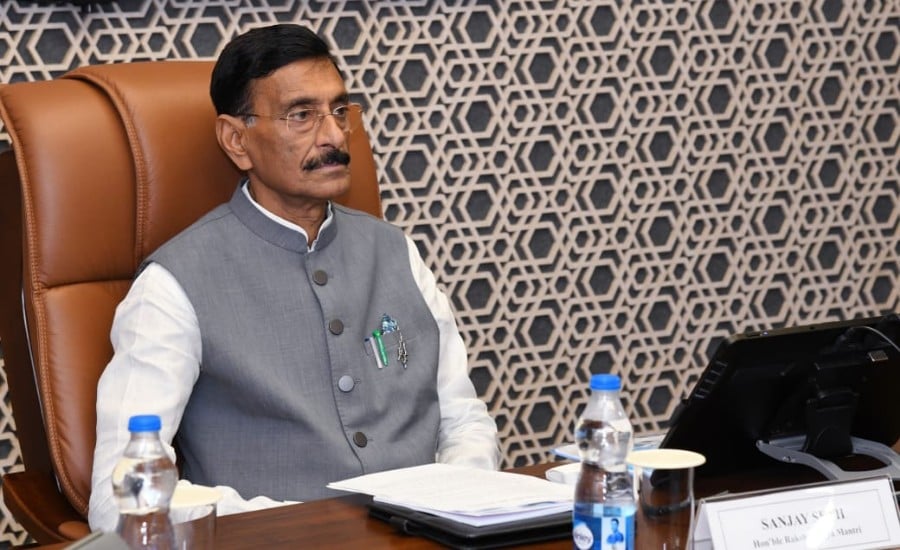
Raksha Rajya Mantri Sanjay Seth will inaugurate the exercise on October 7 and witness a Search and Rescue (SAR) demonstration on October 8. The exercise will bring together Indian defence, Coast Guard, civil and state assets, along with 32 observers from 30 countries, giving the drill a strong international dimension.
The exercise will test India’s ability to respond to a large-scale maritime emergency involving multiple distress situations at the same time. It will also assess how quickly different agencies can coordinate rescue operations and mobilise resources when hundreds of lives are at risk.
SAREX-2026 to Simulate a Mass Rescue Operation
A key feature of SAREX-2026 will be a simulated Mass Rescue Operation involving both aeronautical and maritime emergencies.
The exercise will recreate a scenario in which a passenger aircraft ditches at sea with 228 people on board and impacts the container vessel MV Zumba. The situation will require multiple agencies to coordinate search, rescue, evacuation and other emergency-response activities.
The scenario has been designed to test the response of rescue teams under conditions similar to a major real-world maritime disaster, where several emergencies may develop simultaneously.
Such exercises are important because maritime accidents can involve large numbers of passengers and crew, while adverse weather, distance from shore and difficult sea conditions can make rescue operations challenging.
Ships, Aircraft and Helicopters to Join the Drill
The scale of the exercise is reflected in the number and variety of assets being deployed.
The Indian Coast Guard will deploy 15 ships, two Dornier aircraft, three Advanced Light Helicopters and a Chetak helicopter. The Indian Air Force will also participate with C-130J and Mi-17 aircraft, while the Indian Navy will deploy two ships.
Civil and state assets, along with shore-based support units, will also form part of the exercise.
The combined deployment will allow participating agencies to practise coordinated operations involving ships, aircraft, helicopters and shore teams rather than relying on a single rescue platform.
30 Countries to Observe India’s Rescue Capabilities
SAREX-2026 will also have significant international participation, with 32 observers from 30 countries attending the exercise.
Their participation highlights the importance of international cooperation in maritime search and rescue. Commercial shipping and passenger movement frequently involve vessels, aircraft and people connected to different countries, making coordination across national and organisational boundaries important during major emergencies.
The exercise will provide an opportunity to strengthen cooperative protocols and improve understanding of how different rescue agencies can work together during large-scale incidents.
It will also help promote greater interoperability between maritime search and rescue systems, particularly when an emergency has an international dimension.
24th NMSAR Board Meeting in Bhubaneswar
Alongside SAREX-2026, the Indian Coast Guard will host the 24th National Maritime Search & Rescue (NMSAR) Board Meeting in Bhubaneswar.
The meeting will be chaired by Director General Paramesh Sivamani, Director General, Indian Coast Guard.
The discussions will focus on strengthening India’s national search and rescue preparedness and improving the country’s ability to respond quickly when distress calls are received.
Key areas of discussion will include:
- Better distress-alert management
- Faster mobilisation of rescue assets
- Technology integration
- Seamless coordination among different agencies
The meeting will complement the operational exercise by addressing the systems and coordination mechanisms required to support effective search and rescue operations at the national level.
Why Faster Maritime Rescue Matters
India has a long coastline and handles significant maritime traffic, making an effective search and rescue system important for passengers, seafarers, fishermen and commercial shipping operators.
During a major accident, every minute can matter. Rescue agencies must identify the location of people in distress, deploy suitable assets, establish communication and bring survivors to safety.
A large-scale exercise such as SAREX-2026 allows agencies to identify coordination gaps before an actual emergency occurs. It also gives personnel an opportunity to practise their roles in a controlled environment involving multiple platforms and agencies.
The participation of aircraft, ships, helicopters and shore-based units will help test different stages of a rescue operation, from locating people in distress to evacuating them from the affected area.
Building a Technology-Enabled SAR Network
Technology integration is emerging as a key part of India’s maritime search and rescue framework. Faster communication, improved distress alerts and coordinated information-sharing can help rescue authorities take decisions more quickly.
The NMSAR Board Meeting will focus on strengthening these systems while SAREX-2026 will provide a practical setting to test coordination and response capabilities.
Together, the two initiatives are aimed at building a faster, technology-enabled and internationally connected SAR framework for India.
Strengthening Maritime Cooperation
SAREX-2026 also reflects India’s wider maritime engagement under the vision of SAGAR and the spirit of MAHASAGAR.
Beyond military preparedness, maritime search and rescue directly supports human safety at sea. Strong rescue capabilities can improve confidence among seafarers, passengers, fishermen and commercial operators who depend on safe maritime routes.
The exercise will therefore serve as more than a demonstration of defence equipment. It will test India’s ability to bring different organisations together during a major emergency and ensure that rescue resources reach people in distress as quickly as possible.
With 32 international observers, a 228-person mass rescue scenario and a large deployment of Coast Guard, Navy, Air Force and civilian assets, SAREX-2026 will provide an important test of India’s preparedness for complex maritime emergencies. Its wider objective is to build a rescue system that is faster, better coordinated and capable of working seamlessly with international partners.
Read also: What Is DRDO Flatfish AUV? Features, Range, Capabilities And Strategic Importance Explained