For years, Adilabad – a predominantly tribal district in northern Telangana – lived with the constant fear of water scarcity. Erratic monsoons, scattered hamlets, rocky terrain, and falling groundwater levels made agriculture risky and daily life uncertain. Seasonal migration was common, Rabi crops were rare, and borewells frequently ran dry just weeks after the rains.
Yet, over the last few years, Adilabad has scripted a quiet but powerful turnaround – not through mega dams or expensive canals, but through people’s participation, scientific planning, and decentralised water governance.
THE TURNING POINT
The transformation gained momentum under the Jal Sanchay Jan Bhagidari (JSJB) initiative, complemented by PMKSY 2.0. What followed was nothing short of a district-wide movement. In 2025, Adilabad secured 1st rank nationally in Zone 3 under JSJB, a recognition of its unmatched community participation in water conservation, recharge, and storage.
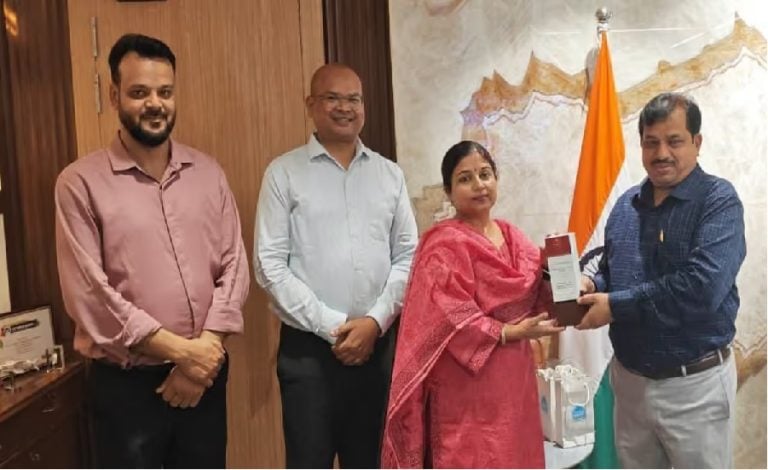
“This success belongs to the people of Adilabad,” says District Collector Rajshri Shah (IAS 2017, Telangana) during a conversation with Indian Masterminds. “Our role was to create systems that were transparent and scientific. The real strength came from Jan Bhagidari — people owning every structure built.”
WATER CONSERVATION AT SCALE
Under JSJB 1.0, implemented across 20 mandals, Adilabad completed an extraordinary 98,693 water conservation works between April 2024 and May 2025. Each work was geo-tagged, photographed, uploaded on the JSJB portal, and monitored — setting a national benchmark for transparency.
The works spanned groundwater recharge, surface water harvesting, soil erosion control, and farm-level water storage. Check dams, percolation tanks, mini percolation tanks, gabion structures, contour trenches, borewell recharge pits, soak pits, rooftop rainwater harvesting structures, and farm ponds together created a dense web of water security across the district.
What made this effort unique was convergence. MGNREGA and the Watershed Department worked in sync, while Central Water Commission (CWC) officers verified 1% of the works through field inspections to ensure technical quality and financial propriety.
SCIENCE MEETS COMMUNITY
Technical expertise guided every intervention. Borewell recharge structures revived drying wells. Check dams slowed runoff and stored monsoon water. Percolation tanks raised groundwater tables. Farm ponds supported irrigation during dry spells. Even innovative magic soak pits were introduced in habitations to capture and reuse greywater.
“This was engineering with empathy,” notes Shah. “Every structure was planned after understanding local hydrology and traditional knowledge.”
Villagers began calling the effort a “water meditation” — a collective, patient act of healing the land. Slowly, streams that once vanished after the monsoon began holding water for months.
WATERSHEDS THAT TELL STORIES
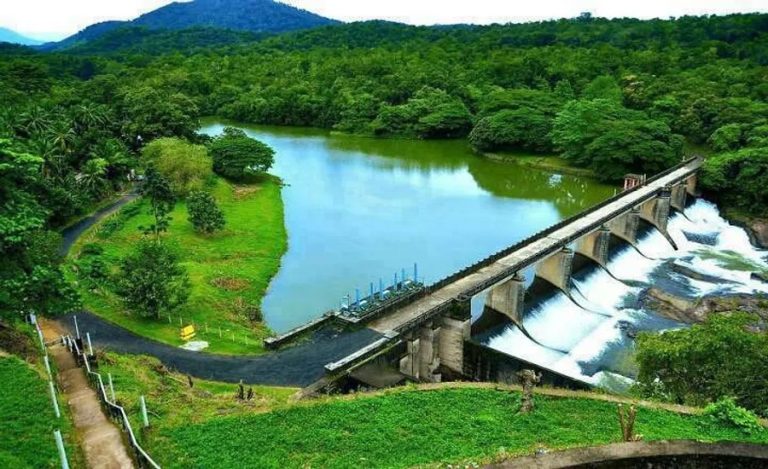
The impact is best seen in individual micro-watersheds. In Talamadugu Mandal, a modest check dam with 20,000 cubic meters of storage revived eight borewells. Twenty-two farmers across 28 hectares shifted from rainfed agriculture to reliable Rabi cultivation.
In Rupapur Micro Watershed of Gadiguda, a ₹4.84 lakh check dam recharged ten borewells and transformed farming for eleven tribal farmers across ten hectares. Multiple cropping became possible, stabilising incomes and reducing distress migration.
The Umri Micro Watershed stands out. An Amrit Sarovar percolation tank, built at a cost of ₹7.5 lakh, created 10,000 cubic meters of storage. It recharged five borewells, ensured drinking water for cattle, supported fish culture, and enabled seven farmers to cultivate 23 hectares during the Rabi season.
“When water stays, life stays,” Shah reflects. “These structures have changed not just agriculture, but confidence.”
PMKSY 2.0: STRENGTHENING THE NET
Under PMKSY 2.0, Adilabad executed 684 Natural Resource Management works worth ₹880.65 lakh, especially in tribal mandals like Talamadugu and Gadiguda. Check dams, gabions, loose-boulder structures, rock-fill dams, soak pits, and farm ponds formed a seamless system that captured every possible drop of rain.
The outcomes are visible: improved groundwater levels, reduced soil erosion, higher cropping intensity, and water availability even in lean months.
PEOPLE AT THE CENTRE
At the heart of Adilabad’s success is Jan Bhagidari. Farmers contributed labour and land access. Women’s SHGs tracked expenses. Youth handled geo-tagging and monitoring. Gram Panchayats led planning. Watershed committees ensured maintenance. Every structure became a community-owned asset.
“This is not a government scheme imposed from above,” Mr. Shah emphasises. “It is a shared responsibility. That’s why it will last.”
FROM SCARCITY TO SUSTAINABILITY
Today, Adilabad stands transformed. Borewells have revived. Fields remain green longer. Cattle no longer walk miles for water. Migration has reduced. Farmers speak with pride about groundwater levels and dependable irrigation.
Adilabad’s journey proves that water security is not built by concrete alone. It is built through trust, science, and collective will. From drought to dignity, this tribal district has shown how people, when empowered, can turn scarcity into sustainability — one drop at a time.