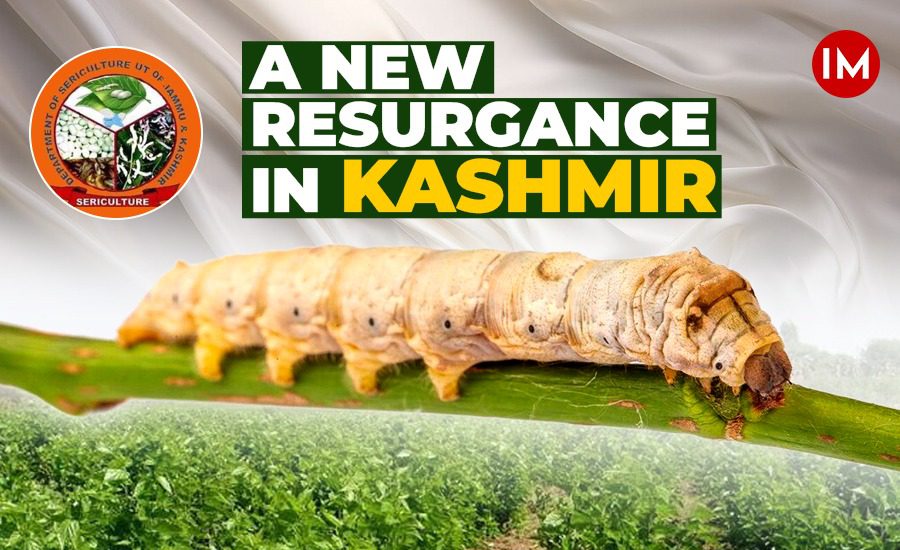
In the lush landscapes of Jammu and Kashmir, a time-honored tradition weaves its story through the lives of its people – sericulture. This age-old practice not only stands as a testament to the region’s rich cultural heritage but also offers promising economic prospects. The Union Territory’s distinctive geographical attributes, such as its temperate climate and diverse biodiversity, create an ideal environment for producing high-quality cocoons. However, in recent years, there has been a decline in the production of silk worms in the region. Once a flourishing industry, sericulture is now facing significant challenges.
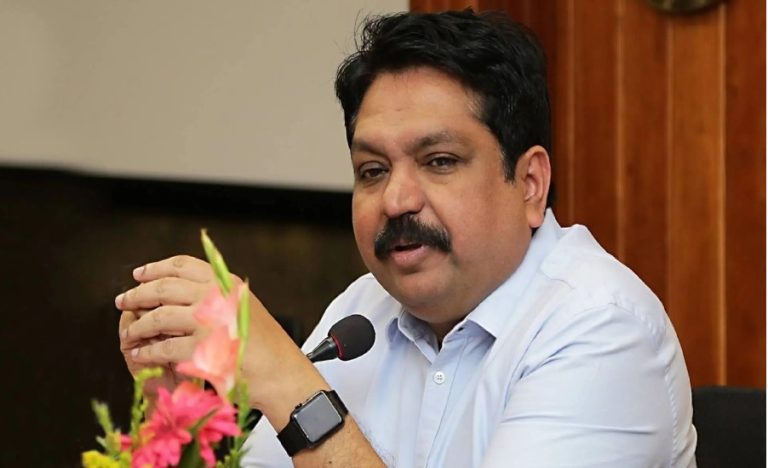
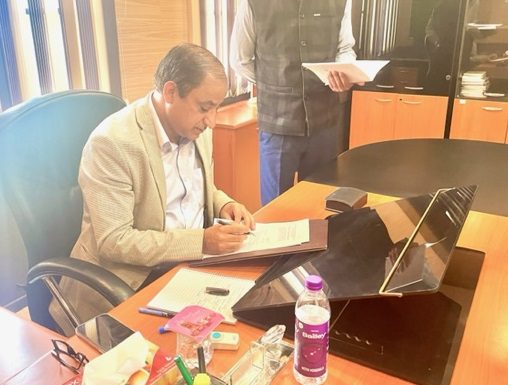
But, now, 2013-batch IAS officer Ajaz Ahmad Bhat, who is Director of Sericulture in J&K, is changing the scenario. By focusing on expanding Mulberry cultivation and enhancing seed quality, while also investing in the training and development of farmers under the Holistic Agriculture Development Program (HADP), he has made noticeable improvements in the Sericulture department in just five months.
Mr. Bhat’s vision extends beyond just doubling Silkworm Seed Production; he also aims to double the number of farmers involved in sericulture within the state. Presently, there are 27,000 farmers engaged in sericulture activities.
Indian Masterminds spoke with Mr. Bhat to learn more about his initiatives and his strategies for reviving the industry.
THE SILK PROCESS
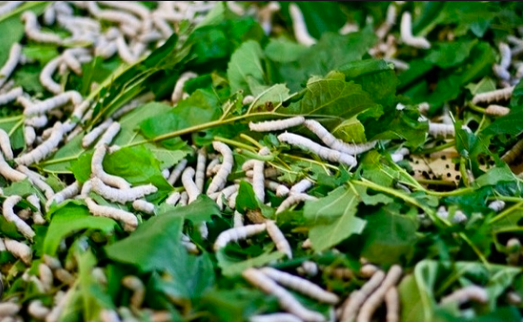
Sericulture is the process of cultivating silkworms and extracting silk from them. Silkworms feed almost exclusively on mulberry leaves. Therefore, the first step in silkworm production is to cultivate mulberry trees. Then, silkworm production starts with the hatching of eggs laid by the adult silk moth. These eggs are kept at a controlled temperature and humidity until they hatch into larvae in incubation centres. The eggs are tiny, and the larvae that emerge are also very small. Once the larvae are fully grown, they enter the pupal stage, where they start spinning their cocoons. The resulting structure is the silk cocoon.
Mr Bhat said, “The silk is harvested by soaking the cocoons in hot water to loosen the gum (sericin) and then unwinding the silk filaments.”
MULBERRY PLANTATION
To increase and better the plantation, the department is introducing high-end varieties of mulberry plantation and also increasing their quantity. Mulberry trees are hardy, fast-growing, and can be harvested several times a year.
Mr Bhat said, “In the near future, we aim to boost the number by 1 million. We’ve set a five-year target to increment by 200,000 plants annually.”
Emphasis is also being laid to increase plantation in the tribal and border areas. Also, wherever government land is lying vacant, new blocks are being built with permission from the government.
INDIGENOUS SEEDS
Mr. Bhat focused on indigenous seeds and stressed the need for their augmentation. His goal is to produce the state’s own seeds. Currently, the state requires approximately 12 million Disease-Free Layings (DFLs), with each laying containing between 40,000 to 60,000 eggs.
He said, “We aspire to achieve complete self-sufficiency in this aspect. Presently, we import 1.6 million seeds from outside sources, mainly from Bengaluru and other regions, while only 8 lakhs are indigenous.”
SKILL UP-GRADATION
Skill up-gradation is the most important area the department had to work in to increase production. For this, Mr. Bhat emphasized the importance of increasing training sessions and exposure visits for farmers. The sericulture industry in Kashmir largely relies on outdated methods and technologies, which result in lower productivity and higher costs.
To achieve this, a comprehensive plan has been devised, and efforts are on to disseminate information widely among the populace.
Mr Bhat said, “New training centers are being established, and farmers are receiving training to enhance their skills and capabilities.”
INFRASTRUCTURE
Mr Bhat believes that strengthening infrastructure is essential to boost sericulture production. Also, there is a lack of investment in modernizing infrastructure and techniques, such as automated reeling machines or improved disease-resistant silkworm varieties.
To achieve this, distribution centers for worms and incubation facilities are being established in every district.
Consequently, they prioritized expanding Chawkie Rearing Centers, which are responsible for worm production.
New centers are being constructed across multiple districts for this purpose. These centers will not only rear and incubate worms but also increase grainage units. Notably, a significant grainage unit is under construction in Jammu, with another large unit planned for the Kashmir valley.
A laboratory is currently under construction at the Agriculture University, aimed at facilitating research and experiments pertaining to sericulture. This facility will serve as a hub for conducting various studies in the field. Additionally, plans are in place to provide direct exposure to farmers by bringing them to the laboratory for firsthand experience and learning opportunities.
INCENTIVES
To incentivize farmers towards sericulture cultivation, the department initiated a program providing 200 free plants annually, coupled with additional incentives of Rs. 70 per plant.
Emphasis was laid on raising awareness through publicity campaigns, as increased awareness will attract farmers towards sericulture, consequently boosting its production. Post-elections, numerous new programs will commence, with a strong emphasis on skill enhancement and exposure for farmers.
THE PRODUCTION
A few years ago, the production stood at 1500 metric tons, but currently, it hovers around 800 metric tons. “Our aim is to double its production. Recently, a fund of 94 crore has been allocated to the department for a period of five years by the government,” Mr. Bhat informed.
Citing the main reasons behind declining production, he said that there is less awareness as earlier, the department did not focus on publicity. Also, Silkworm production faces several challenges, including disease management, genetic diversity of the silkworms, and environmental impact.
AWARD WINNING OFFICER
Before his current role, Mr. Bhat served in the Horticulture Department, where he was recognized for revitalizing operations and enhancing the effectiveness of district and block officers. His efforts in improving the department’s condition earned him the SoCH Award in 2021.
Hailing from South Kashmir, he pursued engineering at NIT Srinagar. He originally belongs to Jammu and Kashmir Administrative Services and later, he was promoted to the IAS cadre in 2013.