In the dense green heart of Madhya Pradesh, where the Bhil, Baiga, Gond, Sahariya, Barela, Korku, and Bharia from Chhindwara tribes live close to the soil, a secret breathes in the roots and branches – tribal medicine. Long before a hospital ever rose here, these forest communities had mapped out their own ways to heal fevers, wounds, and even what modern science calls incurable diseases.
But as concrete grows and forests shrink, so does this ancient knowledge. Dr. PC Dubey, former Principal Chief Conservator of Forests, Madhya Pradesh Cadre, 1986 batch, is among the few who refused to watch it vanish quietly into the undergrowth.
In an exclusive conversation with Indian Masterminds, he shared details regarding the same.

A NEW CHAPTER FOR TRIBAL REMEDIES
It started with a question that echoed across jungles: How do we keep these cures alive when the young are leaving the forests for cities, carrying smartphones but forgetting the soaked wood that controls sugar, or the bark that calms an anxious heart?
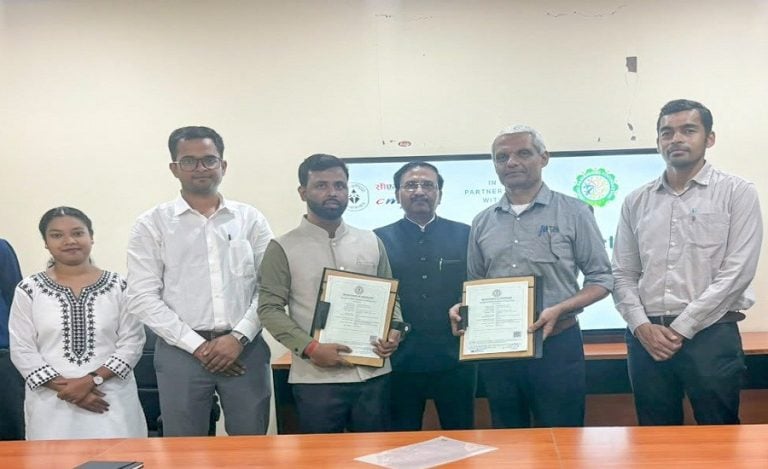
Dubey’s answer was clear. Bring science to the jungle, and the jungle to science. His vision brought together Holkar Science College and Sri Aurobindo Institute of Medical Science in Indore for a unique partnership. Together with Dr. Vinod Bhandari of SAIMS, Dr. Sushil Upadhyay, Dr. Nadeem, Dr. Arjun Tiwari, and Prof. Sanjay Vyas of Holkar College, Dubey helped open locked gates, both literally and emotionally. He bridged the mistrust between tribal healers and modern researchers, making sure age-old secrets did not die with the last village elder.

FROM HEALERS’ HUTS TO LAB REPORTS
This is not folklore anymore. Over 20 tribal-dominated districts became living laboratories. Bhil healers like Barua and Patel, who never wrote a word of their wisdom, sat down with scientists who wrote entire journals about it. One finding is now becoming a legend in its own right
A simple hardwood known locally as Biza hardwood. For generations, tribal families soaked its bark in water overnight. In the morning, they drank the earthy liquid to tame diabetes.
“When scientists at Aurobindo Hospital tested this in clinical trials with over 200 patients, they saw what the forest people always knew. Blood sugar levels dropped, insulin dependency eased, and not a single side effect emerged. The wood had secrets the lab could measure, but the forest understood long ago,” the officer shared with Indian Masterminds.

RITUALS THAT SAVE FORESTS TOO
In these communities, plants are more than just pharmacy shelves; they are family. Many tribes protect certain trees as sacred totems tied to their gotras (clans), such as Dahiman, Garud, Tinsa, Arjun, Suarukh, Haldu, Dhankat, Rohina, etc. The Kekad or Garuga Pinnata tree, for instance, is never cut down except for sacred occasions like weddings. Its fruits are tied around a groom’s wrist, and a bride’s parting moment includes dropping its seeds by the riverbank, ensuring new trees will stand long after the songs of marriage fade away. It also has wonderful effects on cancer.
This quiet conservation wisdom, marrying rituals with replanting, survives only because elders insist these customs be honoured. Dr. Dubey’s mission is to document and decode these links before the last rituals are performed without meaning.

A FAIR SHARE FOR THE KEEPERS OF KNOWLEDGE
But saving knowledge alone is not enough. The project goes further, establishing profit-sharing models to safeguard tribal rights. Any medicine born from this ancient pharmacopoeia, once validated and patented, will bring its profit home, into the same villages that preserved these roots and barks for centuries. Backed by the Ministry of AYUSH, the Homoeopathy Council and ethical clearances, this project promises not just recognition but real returns for the people who kept these cures alive.

JUNGLE WISDOM MEETS MODERN SCIENCE
Dr. Dubey believes that real forest management is incomplete without the forest people. ‘Every plan must ask, how do we keep the tribal mind alive in the jungle they protect?’ he says. He argues that forest working plans or management plans must not be just about timber and wildlife but about the human link too; those who know which branch cures a fever and which root breaks a tumour’s grip.
He recalls how the forest department once trained villagers to plant commercial species like teak and sagown. But in doing so, some age-old knowledge slipped through their fingers. Now, with the help of DNA analysis and modern lab tools, Dubey’s team is connecting rituals to real conservation value and showing how these same sacred plants might hold keys to fighting diseases like cancer.
“Roughly 30 species of trees, herbs, shrubs, and climbers are under threat of extinction within a few decades to come, which are of medicinal, livelihood, veterinary, and nutraceutical value and a major part of their culture, traditions, rituals, and traditional values. With this, we are attempting to protect and conserve it,” he shared with Indian Masterminds

IF WE FORGET, WE LOSE EVERYTHING
Madhya Pradesh is home to almost 33% tribal population and millions who still carry this living library in their minds. But the risk is clear: as old healers pass away, their knowledge can disappear overnight. If we ignore this, we lose more than cures; we lose a way of living that protected these forests for centuries.
For Dr. PC Dubey, the message is simple: listen before the whispers fade. Respect the tribal healers not as relics of a romantic past, but as partners for the future of India’s health and forests.
In a world running behind synthetic drugs and glass vials, these healers of the forest hold a wisdom that can heal more than our bodies; it can heal our broken link with nature. If we choose to listen.