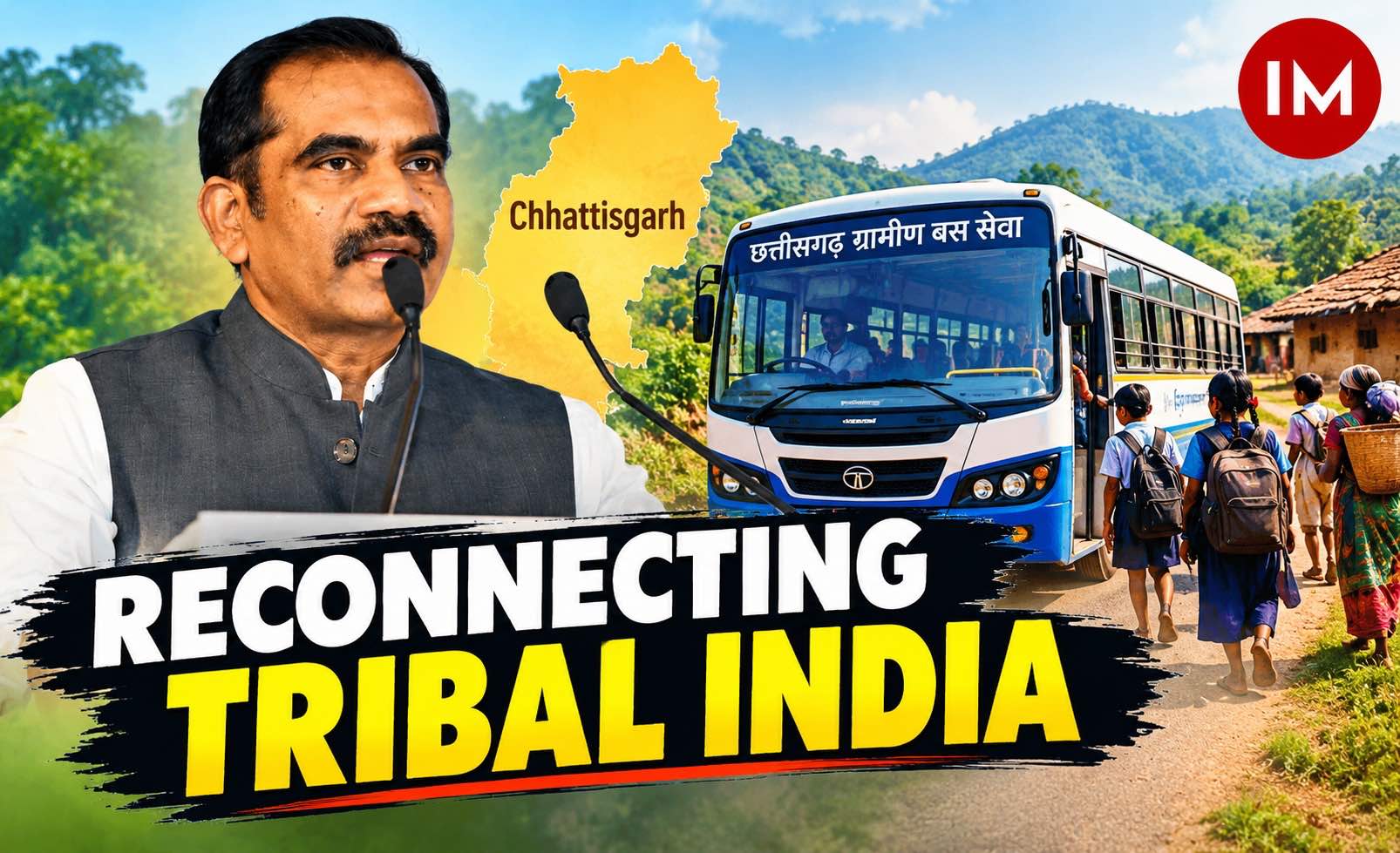
In regions where decades of conflict once made even an ordinary journey a challenge, a bus can represent far more than transportation. It can become a lifeline to education, healthcare, employment and opportunity. In Chhattisgarh, where remote tribal communities have long struggled with isolation and inadequate infrastructure, the Mukhyamantri Gramin Bus Yojana is helping rebuild these everyday connections and bring villages closer to the mainstream.
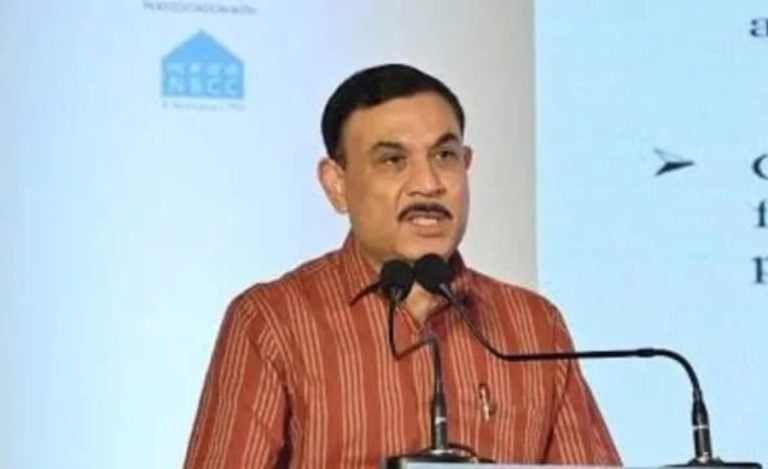
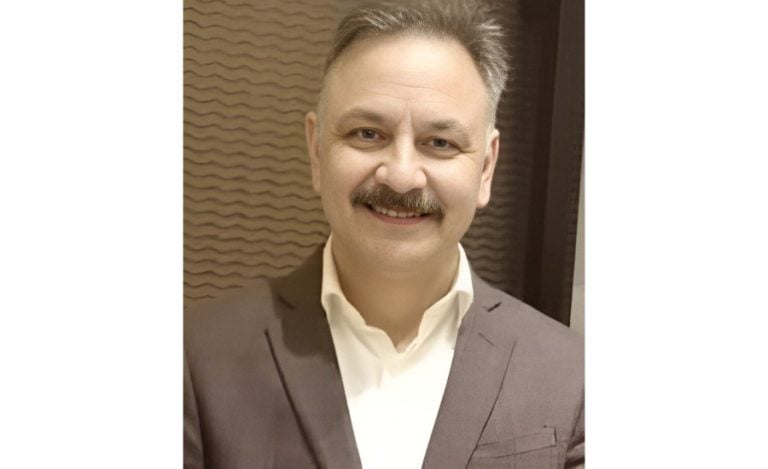
Spearheaded by 2005 batch IAS officer S. Prakash, Secretary and Commissioner, Transport, Government of Chhattisgarh, the initiative is addressing a long-standing problem: how to provide reliable, affordable public transport in areas where difficult terrain, low passenger numbers and years of Left-Wing Extremist violence made regular bus services commercially challenging.
Launched on October 4, 2025, the scheme has expanded from 34 buses connecting around 250 villages to a network of more than 100 buses operating across 13 districts in the Bastar and Surguja divisions. By combining private-sector participation with targeted government subsidies, it is demonstrating how public policy can restore connectivity without requiring the state to build and operate an entirely new transport system.
For tribal students, patients, farmers, small traders and daily commuters, the change is particularly meaningful. A scheduled bus with affordable fares and assured seating can make the difference between reaching a classroom, accessing medical treatment or taking agricultural produce to market – and remaining cut off from these essential opportunities.
Speaking to Indian Masterminds, Mr Prakash explains that the initiative is built around a simple but significant principle: public transport in remote areas must be assessed not merely by commercial returns, but also by the opportunities it creates for people.
“Public transport in remote areas cannot be viewed only through the lens of commercial viability. Connectivity is equally about enabling people to access education, healthcare, employment and markets,” he says.
How It Started: Rebuilding Connectivity After Decades of Isolation
Chhattisgarh’s struggle to provide reliable public transport to remote tribal regions has deep historical roots. When the state was formed on November 1, 2000, it inherited a government-run transport system. However, repeated attacks on buses by Naxalites, coupled with poor passenger numbers and difficult operating conditions, made services increasingly difficult to sustain.
By 2006, the government-run bus service had been shut down, leaving several remote communities with limited alternatives. Residents frequently depended on pickup trucks and goods carriers to reach nearby towns, often paying high fares without assured seating or fixed departure times.
For schoolchildren, the consequences could be particularly serious. Reaching an educational institution sometimes meant walking several kilometres or depending on whatever vehicle happened to be available. Patients faced similar difficulties when travelling to hospitals, while farmers and small traders struggled to transport their produce to markets.
The challenge remains significant in a state where the literacy rate among Scheduled Tribes stands at 59.1 per cent, according to the information cited in the source material.
The launch of the Mukhyamantri Gramin Bus Yojana (MMGBY) on October 4, 2025, marked an attempt to address this gap. Union Home Minister Amit Shah inaugurated the scheme at Jagdalpur in the presence of Chief Minister Vishnu Deo Sai.
The initiative began with 34 buses operating on 34 routes and connecting approximately 250 villages. Its first year has seen a substantial expansion in both coverage and operations.
For Prakash, the objective was not simply to put more buses on the roads, but to ensure that people living in underserved areas could depend on a regular transport service.
“One of the key considerations in designing the scheme was that people in remote villages should not have to depend on uncertain and potentially unsafe modes of transport for essential journeys. A predictable bus service can make a substantial difference to the daily lives of rural households,” he says.
Implementation: A Partnership Between Government and Private Operators
One of the most important features of the scheme is its operating model. Rather than establishing an entirely new government-owned transport corporation, Chhattisgarh has partnered with private bus operators to provide services on designated rural routes.
Under this arrangement, private operators retain ownership of their buses, manage operating expenses and collect passenger fares. The government provides financial assistance to bridge the gap between operating costs and the revenue generated on routes where passenger demand is insufficient to make services commercially viable.
This approach allows the state to extend public transport to remote villages without directly investing in a new fleet or constructing bus depots for the scheme.
The network has grown to 107 buses operating across 106 routes in 13 districts covering the Bastar and Surguja divisions. The notified routes span approximately 5,300 kilometres, with individual route lengths ranging from 14 to 105 kilometres.
Most routes provide two scheduled trips a day, generally in the morning and evening, connecting villages with nearby block, tehsil and district headquarters.
The expansion is particularly significant in districts such as Sukma, Bijapur, Dantewada and Narayanpur, where difficult terrain, dispersed settlements and a history of security challenges have made transport access especially difficult.
The scheme also recognises that affordable fares alone may not be enough to attract operators to remote routes. Without financial support, low passenger volumes could make regular services unsustainable, discouraging private investment in precisely those areas where connectivity is most needed.
How the Subsidy Model Works
The scheme’s central financial mechanism is viability gap funding, under which the government compensates operators for providing services on routes where fare collections may not cover operating costs.
Financial assistance is provided at a ceiling rate of ₹26 per kilometre during the first year, ₹24 per kilometre in the second year and ₹22 per kilometre in the third year, subject to applicable bidding and payment conditions.
Operators are also exempted from monthly motor vehicle tax for up to three years.
Importantly, the subsidy is linked to the actual distance covered on the designated route. Each bus is equipped with a vehicle location tracking device, enabling the transport department to monitor operations through its control and command system.
Operators submit their claims through the MMGBY portal, and the claims are verified against vehicle-tracking data before payments are released.
According to the state government’s figures, ₹5.77 crore was disbursed as financial assistance during the scheme’s first year.
This monitoring mechanism helps connect public expenditure with actual service delivery. It also provides a way to verify that subsidised buses are operating on their designated routes rather than relying solely on operators’ claims.
The gradual reduction in subsidy rates is intended to encourage routes to become more commercially viable as passenger demand develops.
Impact on the Ground: Cheaper and Safer Journeys
The benefits of scheduled bus services are becoming visible in the everyday travel experiences of rural residents.
According to the first-year figures provided in the source material, the scheme has expanded to cover 850 villages that previously lacked regular passenger transport. Its buses have collectively travelled approximately 24 lakh kilometres.
The difference can be seen on the 83-kilometre Konta–Jagargunda route in Sukma district.
According to the transport department’s assessment, a journey that previously cost around ₹200 or more in a pickup vehicle can now be undertaken for approximately ₹130 on a scheduled bus. For shorter journeys between villages, where an available vehicle could cost around ₹200, the bus fare can be approximately ₹50.
Beyond the savings, passengers benefit from predictable timings and assured seating. These improvements are particularly important for women, children, elderly residents and patients who may find travelling in goods carriers difficult or unsafe.
The impact also extends to economic activity. Farmers and small traders can travel to nearby markets more reliably, while people seeking employment can reach towns without depending on uncertain transport arrangements.
Prakash says the encouraging response from residents reflects the importance of restoring connectivity to previously underserved communities.
“The response from tribal communities has been very encouraging. People are now travelling to urban areas more frequently, which is helping them economically and also providing better access to education and healthcare,” he says.
Education and Healthcare: The Most Important Benefits
For students living in remote villages, the availability of regular transport can directly influence their educational opportunities.
When reaching school requires a long walk or an unreliable private vehicle, attendance can become difficult. Scheduled bus services offer students a more dependable means of travelling to educational institutions, including opportunities to pursue higher education in nearby urban centres.
Healthcare access is another critical benefit. Patients requiring consultations, diagnostic services or regular treatment can travel to hospitals in nearby towns with greater certainty.
The initiative also makes it easier for residents to reach government offices and access public services that may not be available in their villages.
These benefits are difficult to measure through passenger numbers alone. Reliable transport can reduce the time, uncertainty and expense associated with essential journeys, making education, healthcare and employment more accessible to communities that have remained geographically isolated.
As Prakash explains, reconnecting tribal communities with schools, enabling access to higher education and improving access to essential services are among the scheme’s principal objectives.
Challenges and the Road Ahead
Despite the expansion, sustaining the network will require continued attention to passenger demand, operating costs and service quality.
The transport department reports that 31 of the 107 buses have occupancy levels exceeding 60 per cent. Officials also indicate that some operators have begun running additional kilometres without financial assistance, suggesting that demand on certain routes may be strengthening.
However, the long-term viability of the model will depend on passenger volumes, seasonal fluctuations, fuel and maintenance expenses, fare revenue and the government’s ability to reduce subsidies without compromising service frequency.
The scheme’s approach is designed to support private operators during the initial stages while allowing routes to become more commercially sustainable as connectivity improves and more people begin using the service.
“The intent is to create a sustainable operating framework. The financial assistance is designed to provide initial support to routes where private operators may otherwise hesitate to invest. As connectivity improves and passenger demand develops, we expect the economics of some routes to strengthen over time,” Prakash says.
Continued monitoring, appropriate route planning and reliable schedules will be essential to ensuring that the network serves the communities for which it was designed.
Reconnecting Villages, Restoring Opportunities
For Chhattisgarh, the revival of rural public transport is part of a larger effort to rebuild normal life in areas affected by decades of armed conflict.
The end of Naxalism does not automatically remove the barriers created by years of isolation. Roads, transport, educational access, healthcare and livelihood opportunities must also reach communities that have remained disconnected from mainstream development.
The Mukhyamantri Gramin Bus Yojana represents a practical step towards addressing that challenge. By combining affordable fares, private participation, targeted subsidies and technology-based monitoring, it seeks to make regular transport available where conventional commercial models have struggled.
Under S. Prakash’s leadership in the Transport Department, the initiative has expanded from a modest beginning into a network serving hundreds of villages across 13 districts.
Ultimately, its success will be measured not only by the number of buses deployed or kilometres travelled, but also by the opportunities created for the people who depend on them.
For a tribal student, a bus may mean reaching school regularly. For a patient, it may mean reaching a hospital on time. For a farmer, it may mean taking produce to market at a lower cost.
In communities long defined by isolation, these everyday journeys can become the foundation of a larger transformation—one in which reliable connectivity helps turn peace into progress and access into opportunity.