In Gir, protecting an Asiatic lion is rarely about one intervention. It can mean tracking a sick animal across thousands of square kilometres, stopping a wildlife crime network before it strikes, rushing emergency medical care into the forest, or persuading thousands of schoolchildren to see conservation as their own responsibility.
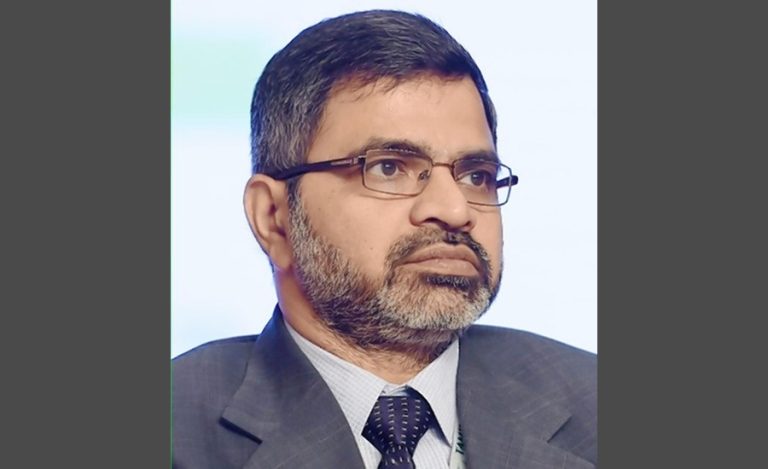
Few officers have approached that challenge from as many directions as Dr Ram Ratan Nala, IFS (Gujarat, 2011).
A veterinary doctor by training and currently Conservator of Forests, Wildlife Circle, Junagadh, Dr Nala has spent much of his career working around Gujarat’s most iconic species. His work has brought together veterinary medicine, wildlife health, intelligence-based enforcement, habitat protection, zoo management and public participation.
Nominated for the Eco Warrior Awards 2026 under the Wildlife Protection and Conservation category, his career reflects an unusual combination: the eye of a veterinarian, the instincts of a field officer and the administrative reach of a forest leader.
Also read: How IFS Diganth Nayak Turned a Human-Dominated Landscape Into a Tiger Habitat
From Veterinary Medicine to the Indian Forest Service
Dr Nala graduated in Veterinary Science and Animal Husbandry from Sher-e-Kashmir University of Agricultural Sciences and Technology, Jammu, in 2007. After working as a veterinary doctor, he joined the Indian Forest Service in 2011.
His Gujarat journey began as Range Forest Officer at Jamwala in Gir West, followed by assignments as ACF Gir East, DCF Sasan-Gir, DCF Gir West and DCF Gir East. He also served at Sakkarbaug Zoo, Publicity & Liaison Division in Gandhinagar, Kevadiya Forest Division and Social Forestry, Valsad.
Today, as CF, Junagadh Wildlife Circle, he oversees a landscape where conservation is inseparable from science, enforcement and community participation.

Operation 2366: When Intelligence Entered the Forest Crime Battle
In April 2015, confidential intelligence pointed towards an attempt to sell what were claimed to be Asiatic lion nails for ₹7 lakh near Visavadar. Dr Nala, then DCF Gir West, personally took charge.
What followed became Operation 2366, named after the Swift car used during the operation. Forest staff Gopal Singh Rathod and Pratapsinh Kesoja posed as customers and negotiated with the suspects. At Dhari, the trap was sprung. The accused was locked inside the vehicle using its child lock while armed accomplices fled.
The operation exposed the value of intelligence-led enforcement in protecting a species coveted in the illegal wildlife trade.
“It was about speed and precision. Every second mattered when a lion’s life could be at stake,” Dr Nala later shared in an exclusive conversation with Indian Masterminds.
The officers involved were later honoured by then Gujarat Chief Minister Anandiben Patel.

When Gir Faced a Health Crisis
Three years later, Dr Nala found himself confronting a very different threat. In 2018, a disease outbreak placed the Gir lion population under intense pressure. The response required surveillance across more than 3,000 sq. km, rescue and quarantine of affected lions, dedicated treatment facilities and coordination with scientists and government agencies.
Dr Nala supervised field operations, coordinated health interventions and helped establish systems for rapid response, surveillance and reporting. His veterinary background became an important asset in a forest where treating wildlife presents challenges very different from treating animals in a clinic.
That experience also drove one of his most distinctive innovations.
An ICU on Wheels for Lions
Dr Nala conceptualised India’s first customised Lion Ambulance, essentially an ICU on wheels designed to take critical veterinary care into the field.
Equipped with oxygen support, ventilators, diagnostic equipment and treatment facilities, it allowed injured and sick animals to receive immediate attention and be transported safely to treatment centres.
“If we can bring the hospital to the lion instead of the other way around, we save time, and lives,” he told Indian Masterminds.
At Sasan, he also conceptualised a state-of-the-art veterinary hospital, strengthening the medical infrastructure available for wildlife.
His conservation work extended to local communities as well. Cloth-bag production was introduced at the individual level for local women, creating livelihood opportunities while helping reduce plastic pollution around Sasan-Gir.

Turning World Lion Day into a People’s Movement
Perhaps his most visible contribution came outside the forest. Dr Nala initiated World Lion Day celebrations at Gir, transforming the occasion into a mass conservation campaign involving schools, communities, NGOs and other stakeholders.
In 2016, 505,829 students, villagers and participants across three districts took a pledge to conserve Asiatic lions, earning a World Records India recognition.
By 2017, the campaign had expanded dramatically, with nearly 10 lakh people participating across four districts and around 5,000 schools.
“Such campaigns will go a long way in conservation of the Asiatic lions and forests,” Dr Nala said at the time.
In August 2025, he took the initiative further, spearheading the first World Lion Day celebration at Barda Wildlife Sanctuary in Porbandar and providing strategic leadership for the first International Big Cat Alliance conference at Sasan Gir.

Building Conservation Beyond Lions
Dr Nala’s conservation portfolio today extends well beyond the Gir lion.
He has led continuous patrolling and surveillance, strengthened coordination with the Police Department, district administration and Western Railways, and worked through high-level and circle-level committees to improve wildlife protection. According to him, no lion deaths have been recorded on the concerned railway stretches in the last two years, 2024–2026, following implementation of the prescribed SOP.
His work has also included the 2017 Mugger Crocodile Census, 2025 Lion Census and 2026 Herbivore Census, supporting evidence-based wildlife management.
At Blackbuck National Park, Velavadar, he has supported conservation of the threatened Lesser Florican through habitat management, monitoring and community participation. At Sakkarbaug Zoo, he strengthened ex-situ conservation programmes for vultures, red junglefowl, Indian wolves and other priority species, while also guiding the Gene Pool Programme.
From Gir to Kevadiya: Building Institutions
As founding Director of Sardar Patel Zoological Park at Ekta Nagar, Kevadiya, Dr Nala helped establish the zoo in just one year, with more than 2,000 animals of Indian and exotic origin.
He developed the Cactus Garden, pioneered India’s first PET Zone and established a sophisticated veterinary hospital equipped with X-ray, ultrasound, ventilator, multipara monitor, gas anaesthesia, blood and serum analysers, blood-gas analyser, centrifuges and autoclaves.
At Sakkarbaug, he strengthened quarantine infrastructure and upgraded the vulture breeding centre. He also introduced One-Day Nature Education Camps, bringing students, communities, NGOs, volunteers and professionals closer to wildlife conservation.

A Conservation Model Built on Many Fronts
Dr Ram Ratan Nala’s contribution lies not in one spectacular intervention, but in connecting several pieces of conservation that are often treated separately, such as healthcare, enforcement, habitat, technology, institutions and people.
In Gir, that approach has meant protecting the lion not merely as an animal, but as the centre of a larger conservation landscape.
And perhaps that is what makes his journey particularly relevant to modern wildlife protection: the forest needs guards, scientists, veterinarians, administrators and communities working toward the same goal.
Dr Nala has spent his career building those connections, one field operation, one animal, one institution and one community at a time.
Also read: Devesh Pandey: The IFS Officer Giving a Fighting Chance to the Himalayan Newt in Darjeeling Hills