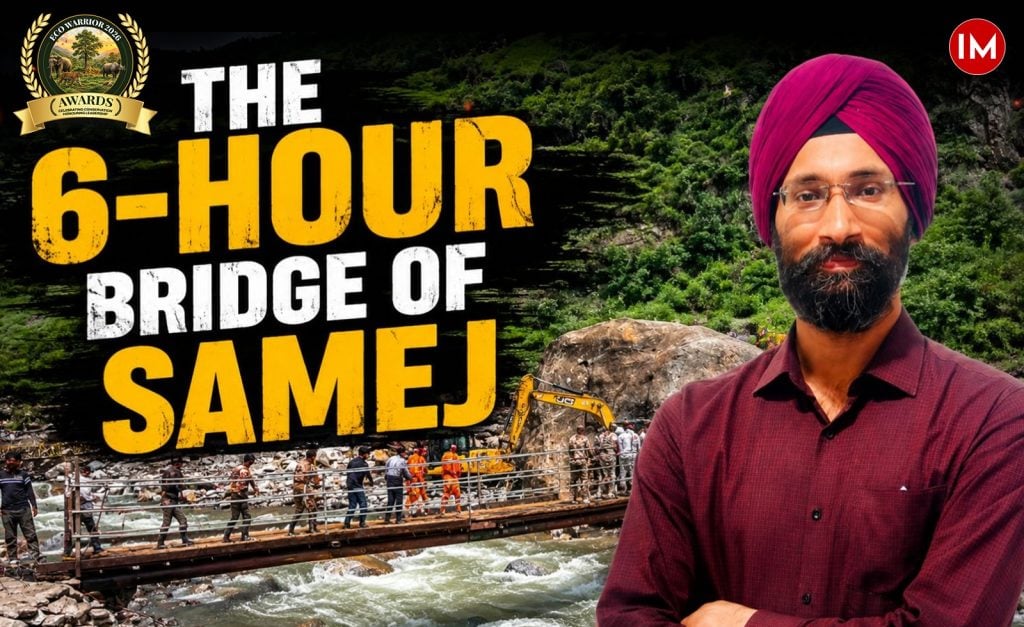
On the morning after disaster struck Samej, there was little left that resembled normal life.
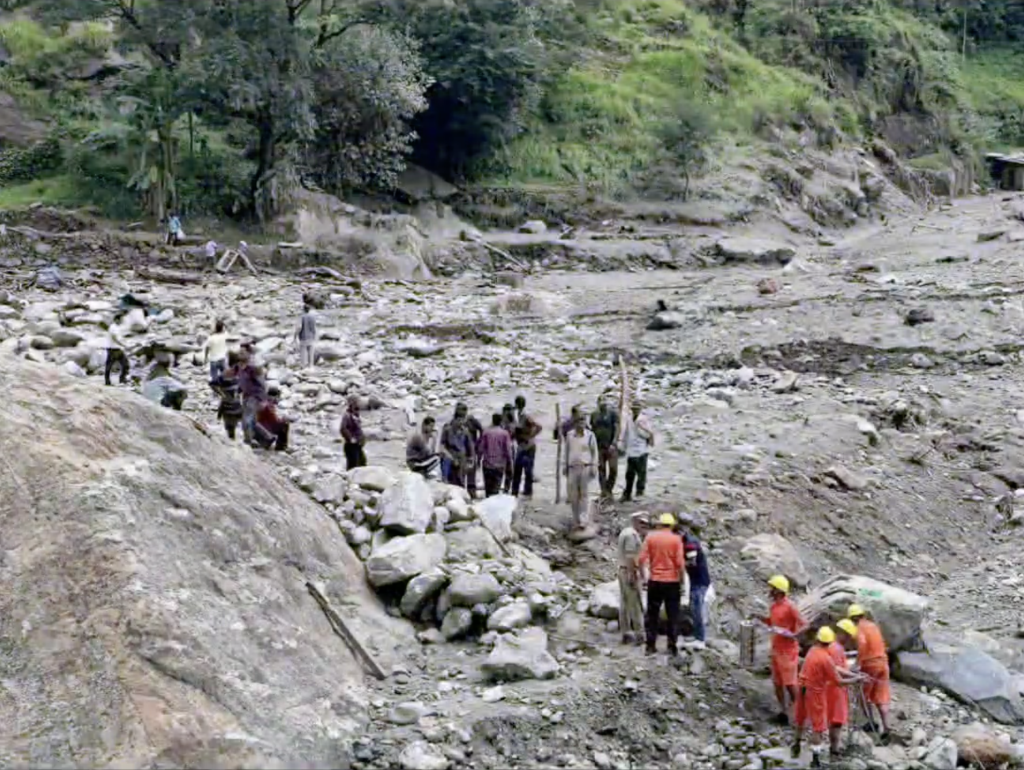
A cloudburst near the 5,227-metre-high Shrikhand Mahadev had sent a violent surge of water through Bagipul, Samej Nullah and Ganvi. Samej village was buried. More than 20 people lost their lives. Roads and bridges disappeared, communities were cut off and the mountains became difficult to cross even for those trying to save lives.
For Gurharsh Singh, IFS, there was no time for the usual transition into a new posting.
He had been posted as Deputy Conservator of Forests, Rampur Bushahr Forest Division, on August 1, 2024, the very day the cloudburst struck, and formally took charge on August 2. The Chief Minister was in Samej that day. The district administration had shifted its operations nearly 120 kilometres from Shimla to the disaster site.
What followed would turn into an unusual story of a Forest Department stepping far beyond its conventional disaster role, about which the 2021 batch Himachal Pradesh cadre IFS officer shared exclusive details with Indian Masterminds.
Also read: Reclaiming the Forest, Restoring the Land: How IFS N Ravisankar Sarma Recovered 100 Hectares in Rohru
When the Forest Department Became a First Responder
The Forest Department is usually associated with two familiar roles during disasters: reducing risk beforehand through afforestation, catchment treatment and bioengineering, and later processing timber grants for reconstruction.
Samej revealed a third possibility.
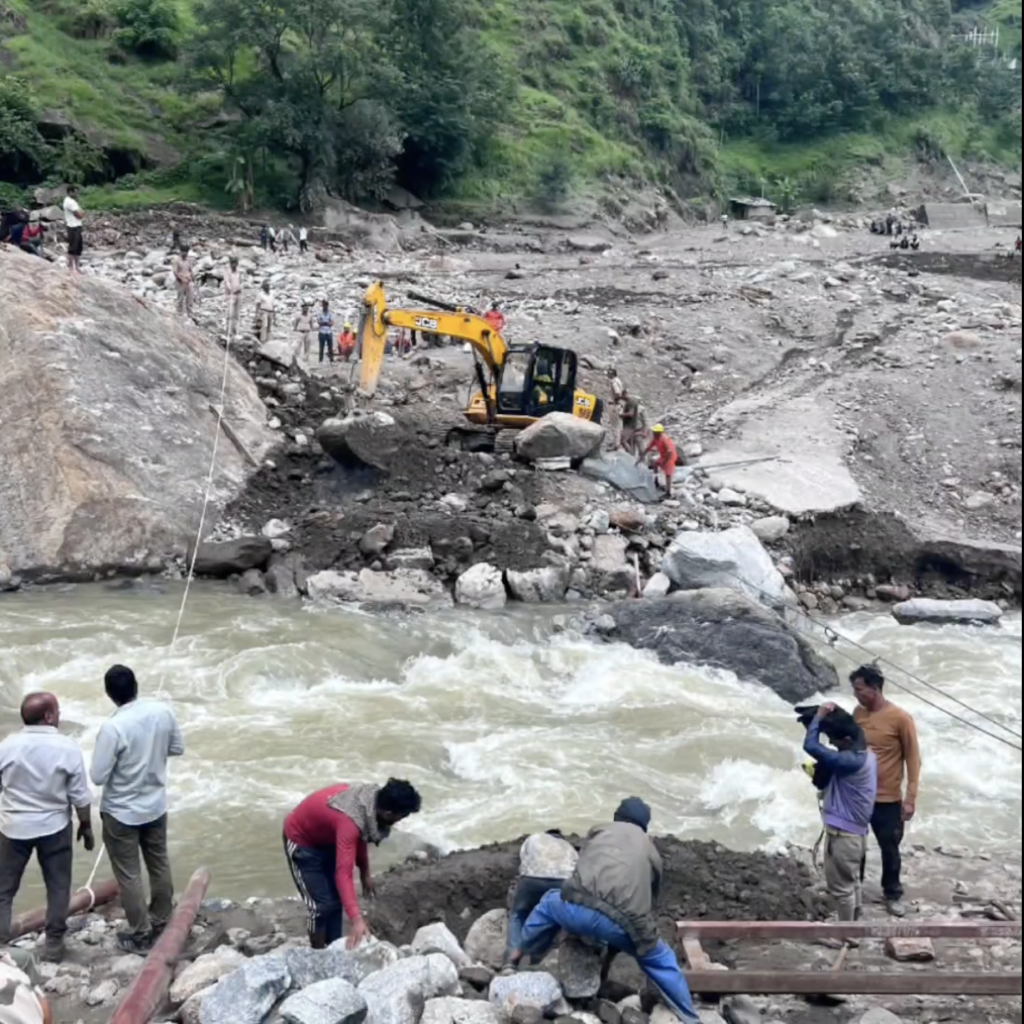
On August 3, a review meeting confronted a practical problem. An Army rope bridge had made it possible for people to cross, but it could not carry the heavy equipment and manpower required for the increasingly urgent excavation and search operation.
The answer was not waiting somewhere in a manual.
The Forest Department was asked to build a timber bridge. There was no prepared design, no specialised survey team and no precedent to follow. There was simply a river, a stranded community and a growing rescue operation.
As Singh later framed the larger lesson, “What would your department do without waiting for orders?” The answer in Samej was: build the bridge.
A Bridge Built From Whatever Was Available
The first task was finding a suitable location. The stretch was walked bank to bank, and the narrowest point was selected.
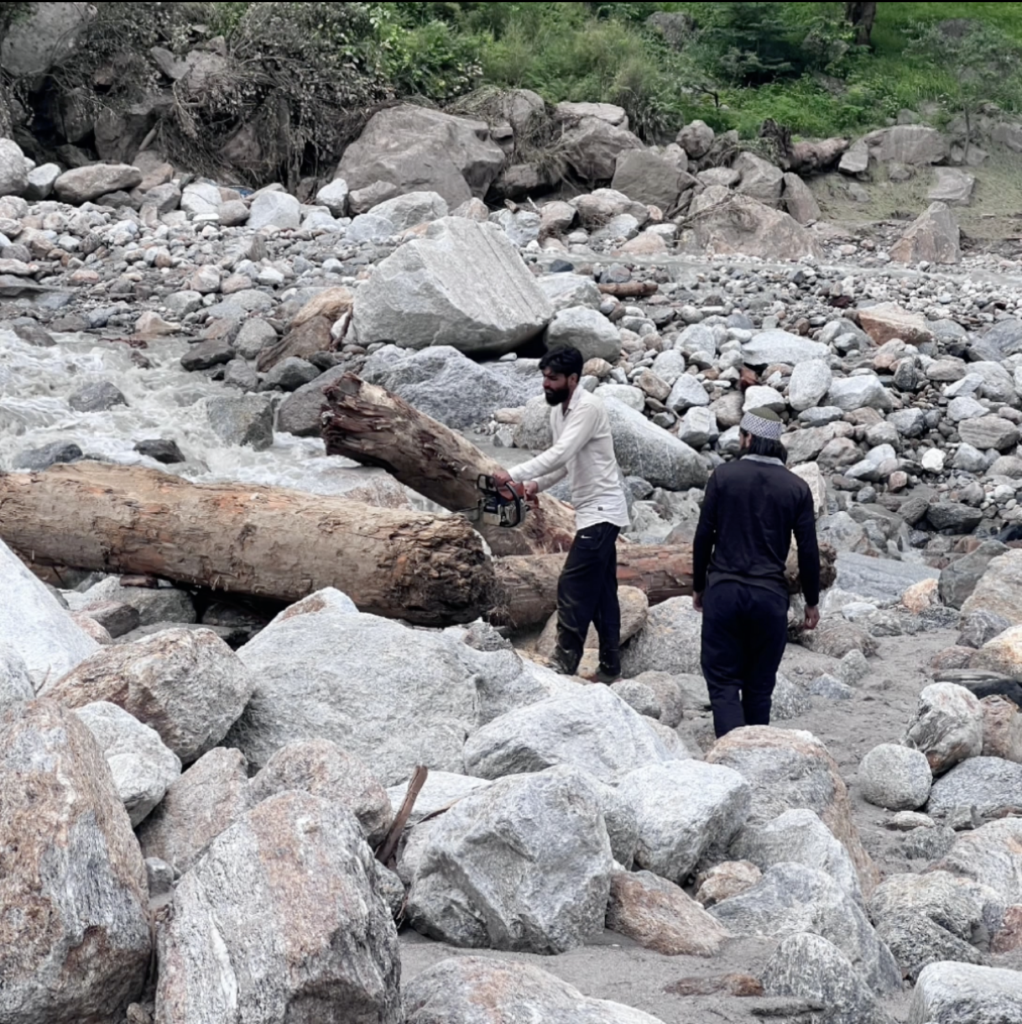
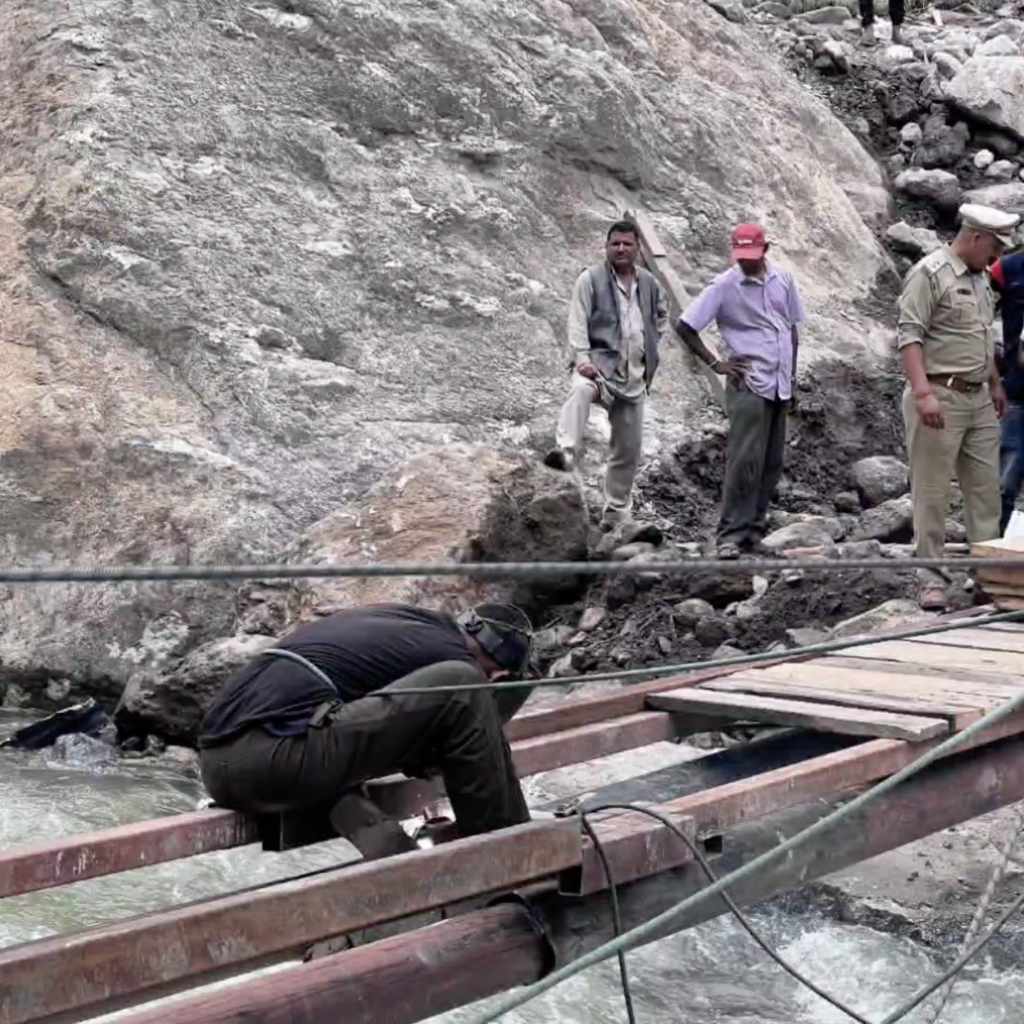
Then came the materials. Large timber logs were being sourced from the forest. But before they could be used, electricity poles had already reached the site, having been lowered almost 100 metres down the cliff. Availability, rather than an ideal engineering plan, dictated the next move.
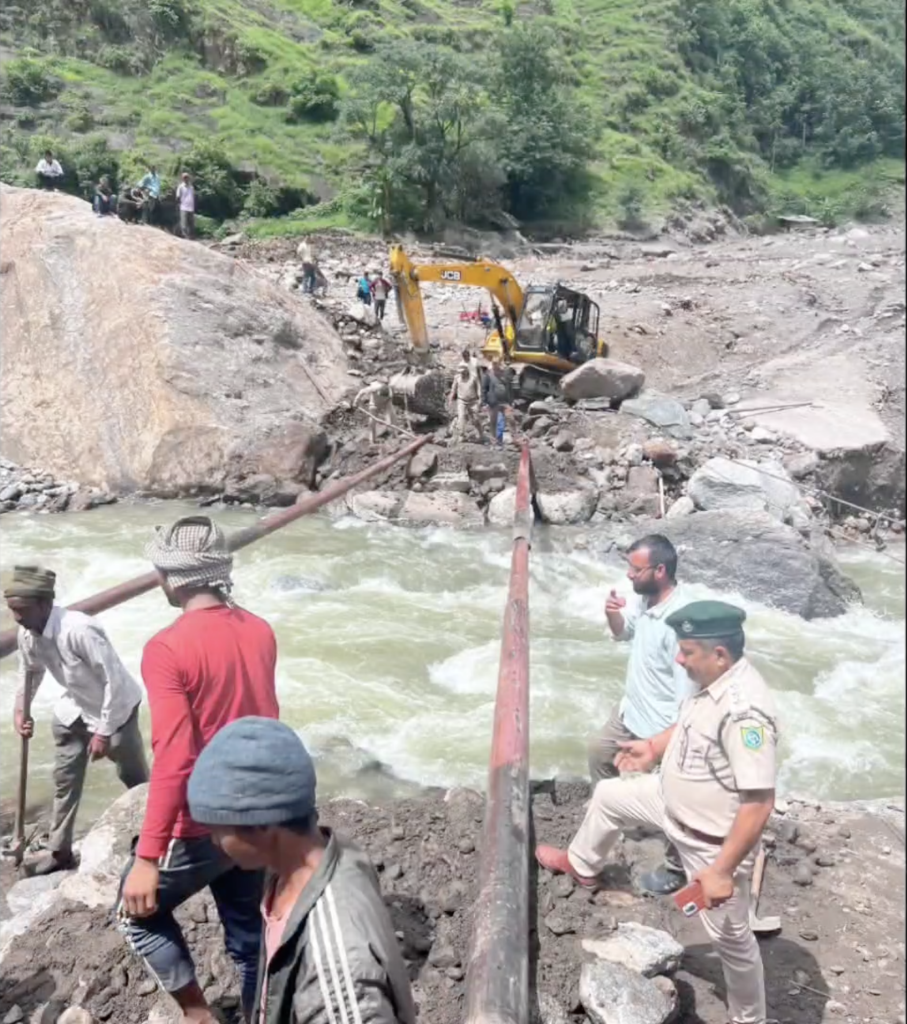
Four poles were joined end-to-end to create two longer supports capable of spanning the Samej stream.
At the same time, iron rods were obtained from the house of the local village Pradhan. They were welded together to form the base that would eventually sit across the poles and support the bridge’s wooden planks.
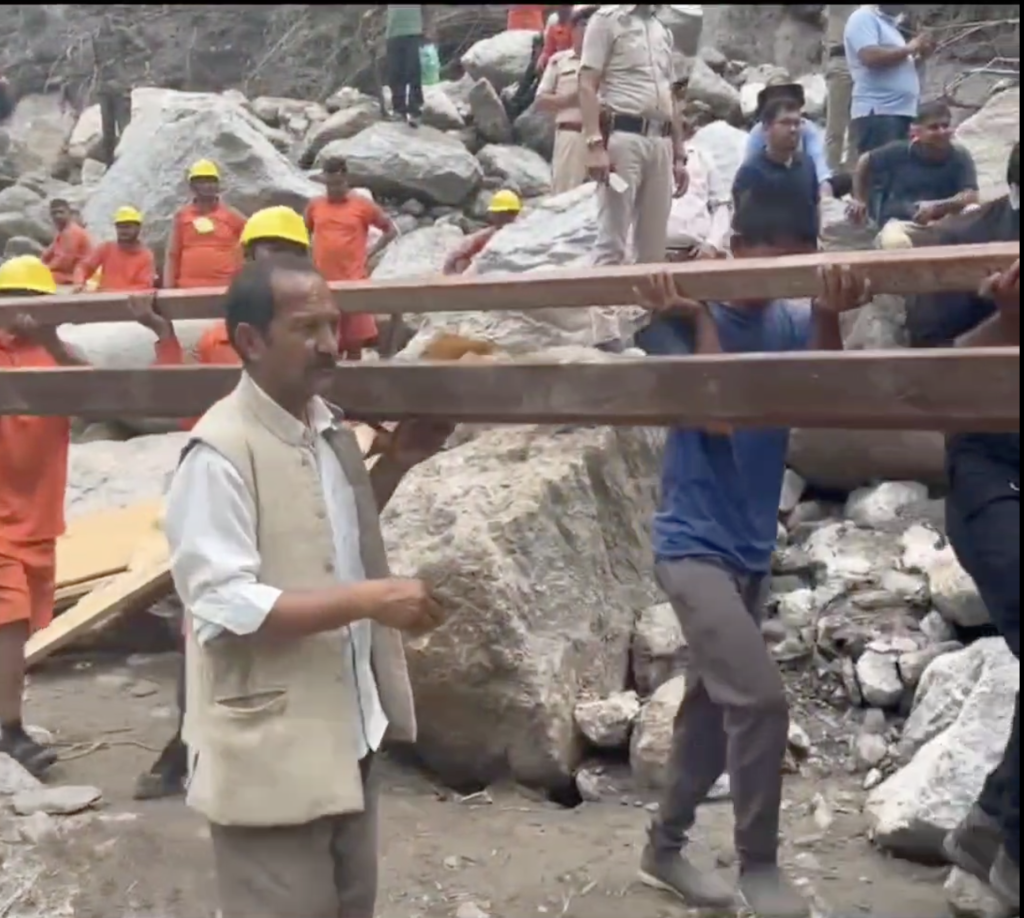
And then there was the problem of manpower.
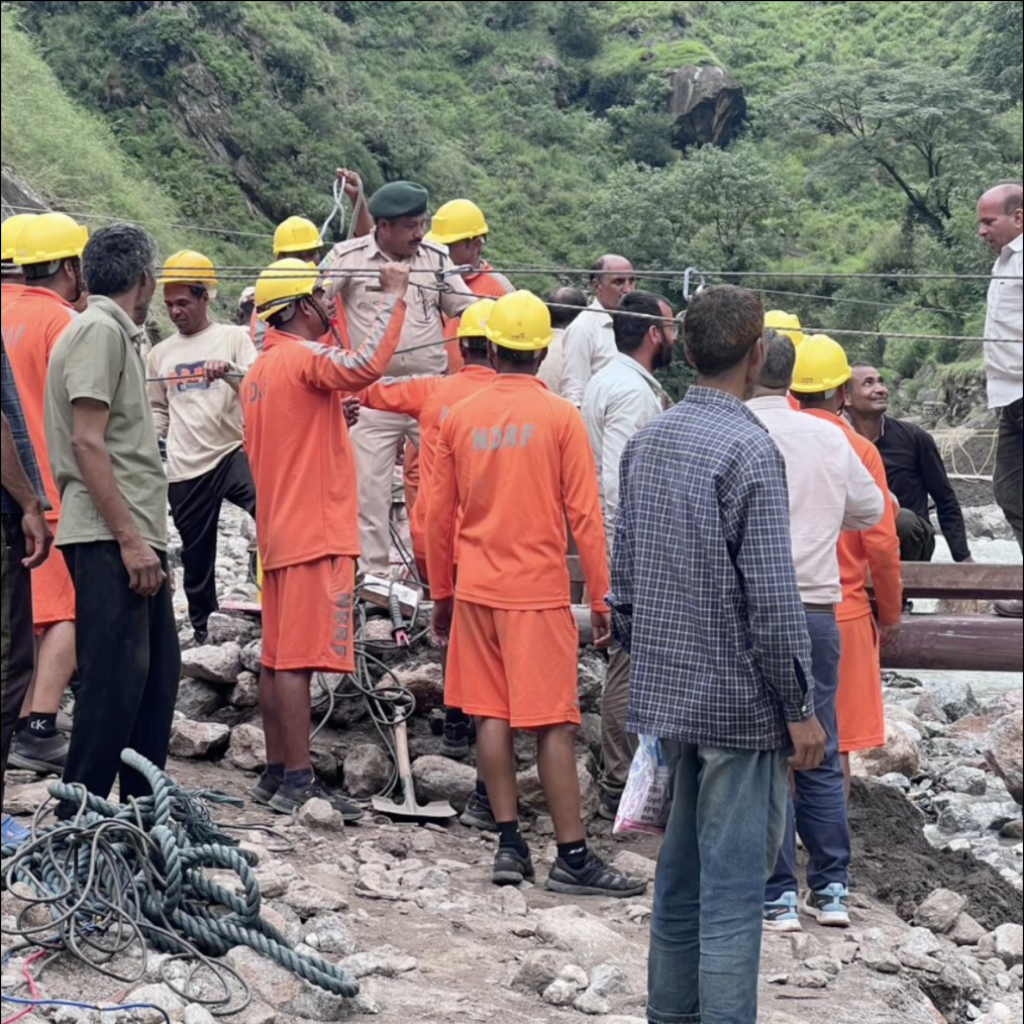
NDRF, ITBP and Home Guards personnel were already at the site, but they belonged to different chains of command. They were ready to work, yet nobody present had the authority to simultaneously direct all three forces.
That gap was filled by Range Forest Officer Kundan Negi, who was nearing retirement. Negi did not take command because a formal order placed him over the forces. He did it because the people on the ground responded to his presence, voice and experience. It was leadership by person rather than designation.
When Chance Supplied the Engineer
Another unlikely piece fell into place. HPPWD engineer Dhani Ram happened to be at the site. He had not been assigned to construct the bridge. Nobody had called him there. But he had built bridges before and understood the practical details of structure, knots and load.
His experience became the engineering judgement behind a structure that had never been formally designed on paper. The two long poles were pulled across the stream by rope, with a JCB already positioned on the opposite bank helping to haul them into place.
The welded iron rods were laid over the poles. Then came the planks.
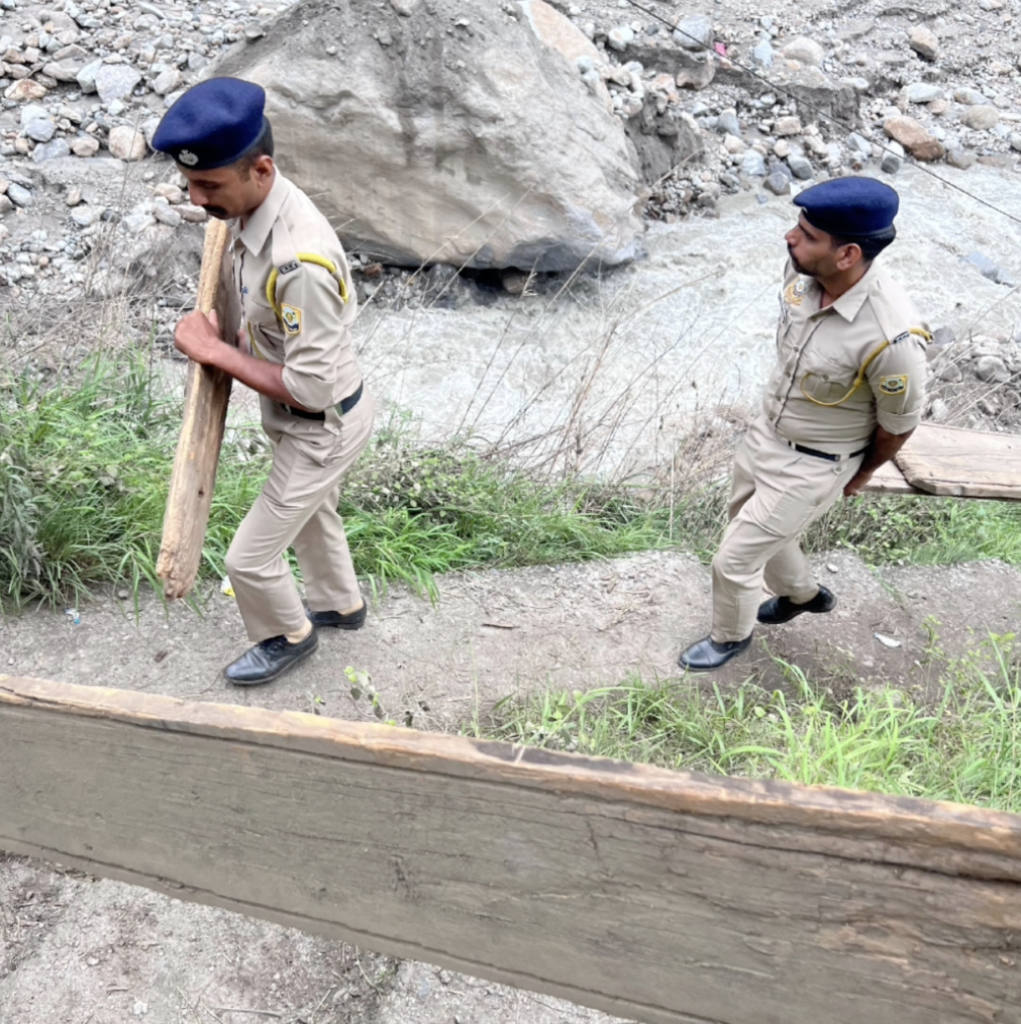
The flood that had destroyed Samej had also carried huge quantities of timber downstream. That debris was cut into planks at multiple locations and turned into construction material.
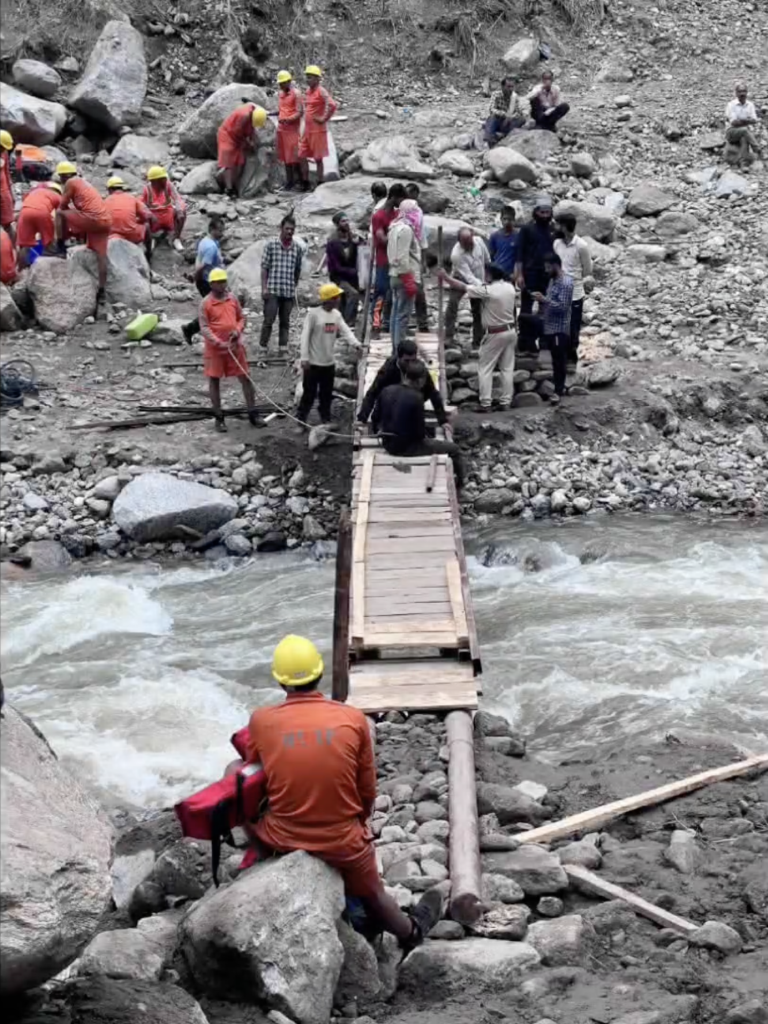
Local youth carried the planks alongside police personnel. Forest officials worked with NDRF and ITBP. NDRF personnel tied safety ropes around Forest Department Rapid Response Team members as they moved onto the structure to lay the planks.
There was no neat organisational chart on that bridge. There were people from different departments doing whatever the situation demanded.
Six Hours That Reconnected a Village
The entire bridge was built in roughly six hours.
When Singh finally walked across it, he was walking over a structure assembled by people who had never trained together for such a crisis, using materials that had simply been available around them.
The bridge allowed rescue teams and heavy equipment to reach the affected area and helped reconnect the isolated forest-fringe village of Nanti. Its impact did not stop at Samej.
News of the bridge travelled upstream to Nanti, where villagers asked whether their own connectivity could be restored in the same manner. Their earlier bridge, constructed by the Forest Department only a year earlier through a tendered process, had also been washed away.
From One Bridge to a New Role
The Samej response soon led to a wider institutional role. The Deputy Commissioner, Shimla, tasked the Forest Department with carrying out accessibility and catchment surveys across the Ganvi, Samej and Taklech areas. Teams prepared hand-drawn maps and monetary estimates and submitted them within two to three days.
The department’s field presence, knowledge of difficult terrain and access to local resources suddenly became valuable disaster-response assets.
The work also opened discussions around emergency infrastructure, restoration surveys and dredging proposals, including the Forest Department’s legal and administrative position under the Van (Sanrakshan Evam Samvardhan) Adhiniyam, 2023, and provisions concerning wastelands and nalas in Himachal Pradesh.
By February 2025, a permanent HPPWD bridge had been constructed beside the original emergency structure.
Yet the six-hour bridge was still standing.
The Bridge That Changed the Question
For Gurharsh Singh, the significance of Samej was larger than a single emergency structure. It was about breaking departmental silos when lives were at stake and recognising capabilities that government systems do not always place on the disaster-response map.
His closing question remains simple: “What is your department’s undiscovered role?” And perhaps the most fitting line from his presentation is also the simplest: “Every department has a bridge it hasn’t built yet.”
In Samej, the Forest Department found one. It took timber, electricity poles, flood debris, village iron, a JCB, ropes, dozens of hands and six extraordinary hours.
More importantly, it took people willing to stop asking whose job something was, and simply do what the mountain needed.
Also read: How IFS Dharam Singh Meena Revived Uttarakhand’s Heval River Through Science and Forest Restoration