A soldier posted far from home has enough to think about. The last thing he should worry about is whether his family is able to get a land record corrected, a certificate issued, a pension matter resolved or a government benefit delivered.
Yet, for a family in a rural district, even a routine government matter can become difficult when the person serving in the armed forces is away.
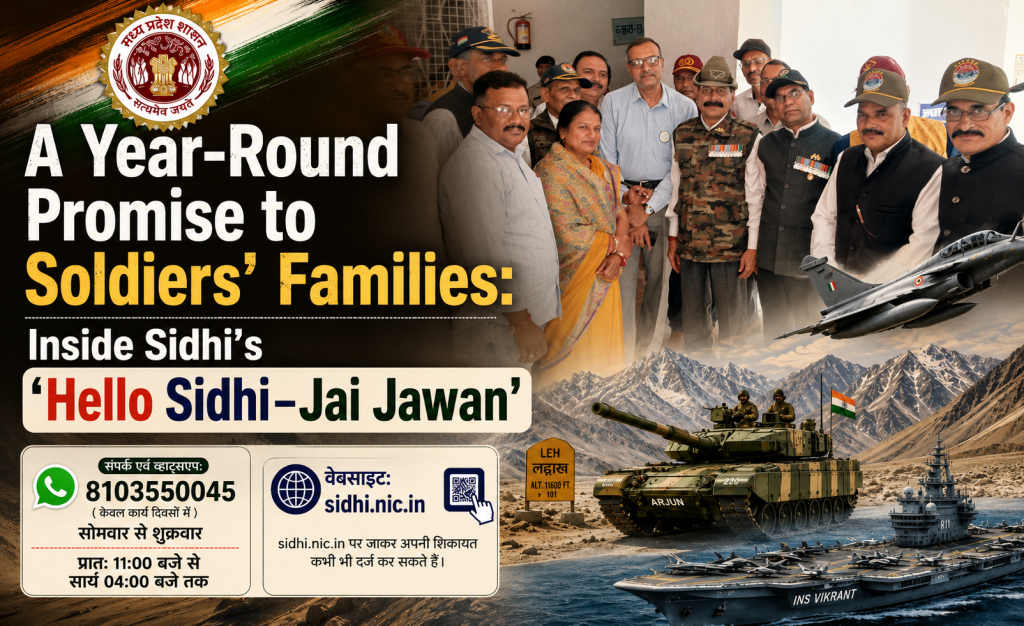
This gap in everyday governance has led the Sidhi district administration in Madhya Pradesh to create ‘Hello Sidhi–Jai Jawan’, a dedicated mechanism for soldiers and their families. The idea is simple. A soldier serving the country should not have to chase different government offices from a distance to solve an administrative problem affecting his family.
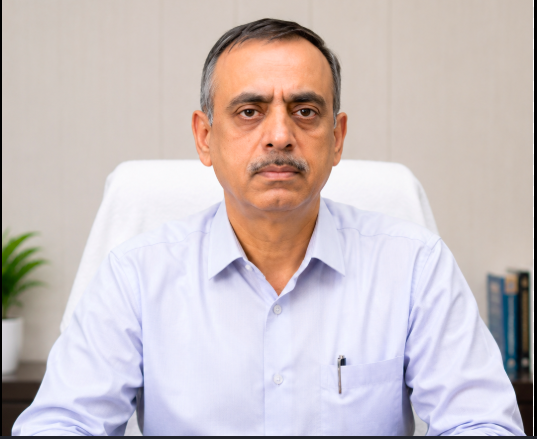
Vikas Mishra, a 2013-batch Indian Administrative Service (IAS) officer of the Madhya Pradesh cadre, is currently serving as the District Collector and District Magistrate of Sidhi. The district administration’s official profile confirms his current posting.
Speaking to Indian Masterminds, Mishra explained that the initiative did not emerge from one particular case. It came from recognising a larger need.
Also read – How Savita Dahiya Helped Turn Jaswantgarh into a New Home for Blackbucks and Birds
When a Small Administrative Issue Becomes a Big Worry
For the administration, a revenue or certificate-related matter may appear routine. But for the family of a soldier serving away from home, getting the issue resolved can mean repeated visits to offices, following up with different officials and dealing with uncertainty.
The soldier, meanwhile, may be stationed hundreds or even thousands of kilometres away.
Mishra believes this is precisely where administration needs to step in.
“The idea came from a simple thought: a soldier serving the nation away from home should not have to worry about an administrative problem affecting his family back home,” he told Indian Masterminds.
According to him, matters related to revenue, land, certificates, pensions or government schemes may appear small administratively, but can become major concerns for families when the soldier is away.
The initiative, therefore, is not based on treating soldiers’ families as a special category that needs a favour. It is about creating a system that recognises the practical difficulties they may face.
One Point of Contact Instead of Many Offices
At the centre of Hello Sidhi–Jai Jawan is a single-window approach.
Instead of expecting a soldier or family member to understand which department handles a particular problem, the administration provides one point of contact. Once a grievance is received through the dedicated channel, it is registered and sent to the concerned department.
But there is an important difference.
The administration does not consider its responsibility over once the complaint has been forwarded.
The grievance continues to be monitored at the district level until it reaches its logical conclusion.
This is where the initiative moves beyond being just another grievance channel. It seeks to create a clear chain of responsibility.
“We have kept clear timelines: acknowledgement within four working days and a target of resolution within the following six working days, wherever the nature of the matter permits,” Mishra said.
The timelines are meant to give families clarity about what happens after they raise a grievance. More importantly, the district administration intends to keep track of the case instead of leaving the family to follow it up repeatedly.
“For me, accountability means taking ownership of the grievance, not merely forwarding it,” Mishra told Indian Masterminds.
The Administration Must Stand by the Family
The larger idea behind the initiative is closely linked to the nature of military service.
A soldier may be deployed far from his village or town. His family, however, continues to interact with the civilian administration at home.
This creates a simple responsibility for the district administration: make sure an avoidable government-related problem does not become an additional burden for the person serving away from home.
Mishra sees Hello Sidhi–Jai Jawan as both a welfare initiative and a broader effort to strengthen the relationship between the civil administration and the military community.
“I see it as both. It provides a dedicated support mechanism for soldiers’ families, but at a broader level it strengthens the relationship between the civil administration and the military community,” he said.
For him, the message should extend beyond ceremonial occasions.
The administration’s responsibility towards soldiers and their families, he believes, cannot be restricted to Independence Day, Republic Day or other national events. It needs to be visible in everyday governance.
Not a One-Day Gesture, But a Year-Round System
This is perhaps the most important distinction in the initiative.
Military personnel are often publicly remembered on national days. Their service is acknowledged through ceremonies, tributes and official events.
But their families continue to deal with ordinary life and ordinary administrative problems throughout the year.
A pension issue does not wait for Republic Day. A land matter does not wait for Independence Day. A certificate or government scheme-related issue can arise at any time.
That is why Mishra wants Hello Sidhi–Jai Jawan to develop into a permanent mechanism.
“I would like it to evolve into a permanent, year-round institutional mechanism—with better grievance tracking, feedback and identification of recurring issues,” he said.
Such a system could also help the administration identify patterns. If similar complaints keep coming from soldiers’ families, the problem may not lie with individual cases alone. It could point to a larger gap in service delivery.
That feedback can then be used to improve the system itself.
A Larger Idea of Administrative Responsibility
For Mishra, the initiative also reflects a wider belief about public administration.
An administrator’s role is not simply to receive complaints and forward them to the appropriate department. The more important task is to understand the problem, identify responsibility, monitor action and ensure that the citizen does not get lost in the process.
This approach also fits into Mishra’s larger emphasis on accessibility and direct citizen interaction in Sidhi. The district administration has been taking steps to make grievance redressal more accessible, including taking public hearings closer to citizens in the rural district.
But Hello Sidhi–Jai Jawan brings this philosophy into a specific context—the families of those serving the country.
“If Soldiers Stand by the Nation, We Must Stand by Their Families”
Ultimately, the initiative rests on a simple exchange of responsibility.
A soldier serving at the border cannot be physically present to deal with every administrative issue at home. The civil administration can help ensure that his absence does not become a disadvantage for his family.
Mishra puts the idea in simple words:
“If our soldiers stand by the nation at the borders, the administration must stand by their families at home.”
That sentence captures the spirit of Hello Sidhi–Jai Jawan.
The initiative is still, at its core, about solving administrative grievances. But its larger significance lies in the message it sends: service to the nation does not end at the border, and the responsibility towards those who serve does not end with a ceremony.
For a soldier posted far from home, knowing that his family has a direct line to the administration can remove one small but important worry.
And for the administration, that is precisely what good governance should do—solve a problem before it becomes a burden.
Also Read – How Science, Intelligence and Community Power Are Giving Similipal’s Tigers a New Lease of Life