
Conservation is no longer only about protecting forests and counting wildlife. In an increasingly complex landscape, saving a species demands science that can anticipate threats, technology that can see beyond human limits, intelligence that can dismantle organised networks and, above all, communities that see conservation as their own cause. In Odisha’s Similipal Tiger Reserve, this integrated approach is beginning to produce remarkable results.
At the heart of this transformation is Dr Prakash Chand Gogineni, an Indian Forest Service officer (IFS) of the 2009 batch, who took charge as Field Director of Similipal Tiger Reserve on March 6, 2023. Over the past three years, he has led a fundamental shift in the way the 2,750-sq-km reserve is protected and managed – moving from conventional patrolling to intelligence-led enforcement, deploying artificial intelligence for surveillance and fire management, strengthening the morale of frontline personnel, reducing dependence of forest-fringe communities on forests, and spearheading India’s pioneering genetic rescue effort for Similipal’s tigers.
The results are visible not only in enforcement figures but also in the forest itself. Wildlife offenders have been arrested, illegal firearms seized, forest fires sharply reduced and, in a landmark development, a translocated tigress from Maharashtra has given birth to four cubs after mating with a resident Similipal male.
Speaking to Indian Masterminds, Dr Gogineni, Field Director of Similipal Tiger Reserve and Regional Chief Conservator of Forests, Baripada Circle, Odisha, explained that the transformation began with a fundamental question: Was the existing protection system actually delivering results?
When Numbers Were Not Telling the Real Story
Similipal is one of India’s largest tiger reserves, with 96 per cent forest cover. Located in the eastern part of the Chotanagpur Plateau in northern Odisha, it is the only landscape in the plateau with breeding tigers.
Yet its tiger numbers remained dangerously low. The All India Tiger Estimates photographed only five tigers in 2014, eight in 2018 and 16 in 2022.
“The numbers were alarming, and the possibility of local extinction was real,” Dr Gogineni said.
Read Also: From Conflict to Conservation: How IFS Manish Singh Is Reimagining Forest Protection in Pilibhit
One of the biggest threats was poaching. Communities around the reserve have traditionally depended on forests, and bush-meat hunting had contributed to low prey and predator populations.
The challenge became even more painful in early 2023, when two forest personnel, Bimal Kumar Jena and Mathi Hansdah, died from gunshot injuries inflicted by poachers.
“The staff morale was down,” Dr Gogineni recalled. “The path we took forward started with systemic analysis of the issues and finding solutions to them.”
From Patrolling Kilometres to Intercepting Poachers
The reserve had around 1,000 personnel operating from 215 camps. Their performance was largely assessed through conventional indicators—how many kilometres they had patrolled and how many grids they had covered.
But Dr Gogineni found that this approach was not necessarily preventing poaching.
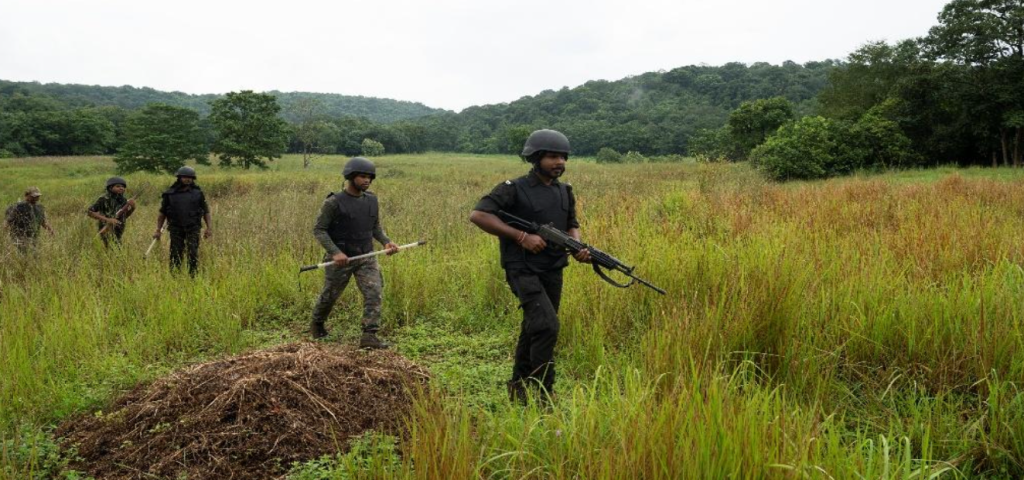
The strategy was therefore redesigned around poaching routes rather than grids. Footpaths leading from villages towards likely hunting areas were mapped, and patrols were systematically concentrated along these routes.
The focus also shifted from kilometres covered to time spent inside the forest and interception of suspects.
“Interception of poachers inside the forest will have an outsized impact because the poachers will now feel threatened and hunted. That itself becomes a barrier to entry,” he explained.
Protection efforts were also concentrated first in the core area, making it increasingly difficult for illegal activities to penetrate the most sensitive habitat.
Instead of relying heavily on highly visible flag marches and mass patrols, teams increasingly adopted concealment and ambush techniques.
The philosophy was simple: outcomes had to matter more than optics.
Turning the Special Force Into a Real Protection Force
Technology alone could not solve the problem. The frontline force itself needed confidence, training and a sense of purpose.
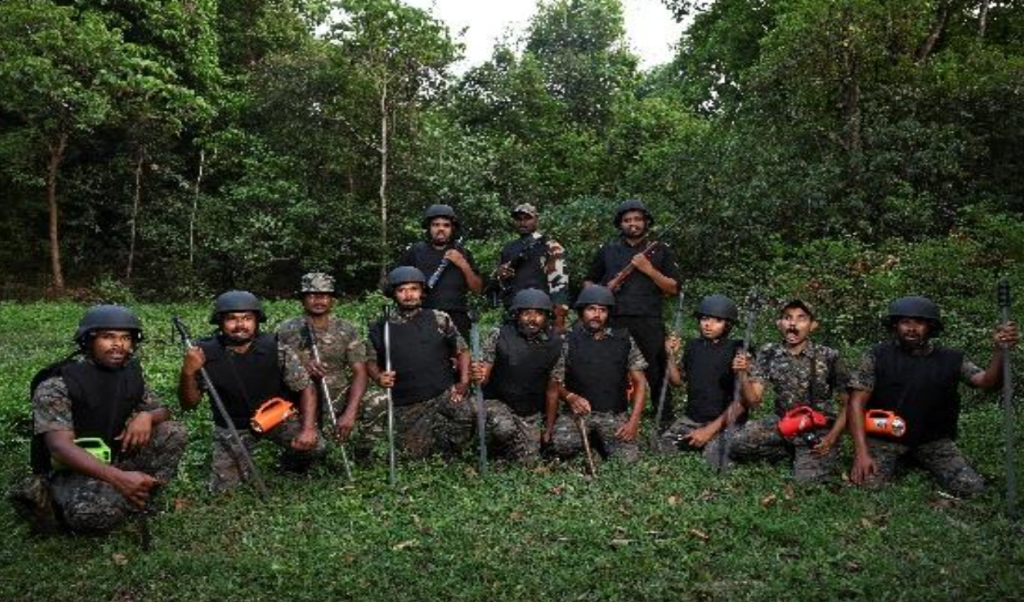
The Special Tiger Protection Force (STPF), with a sanctioned strength of 81, had originally been envisioned as a commando-style force capable of confronting armed poachers. However, it had not been adequately armed or trained and was functioning largely as ordinary forest guards.
That was changed.
The force was reorganised, equipped with advanced weapons such as INSAS rifles, Excalibur rifles and pistols, provided bulletproof jackets and given specialised commando-style training and a separate uniform.
The objective was not merely to strengthen enforcement capacity, but also to restore pride among personnel working to protect Similipal.
Protection Assistants, many of whom work on a temporary basis, were also provided rations in addition to wages. Since 2024-25, around ₹2 crore annually has been made available from the Foundation for this purpose.
AI Enters the Forest
Technology became another pillar of the new protection model.
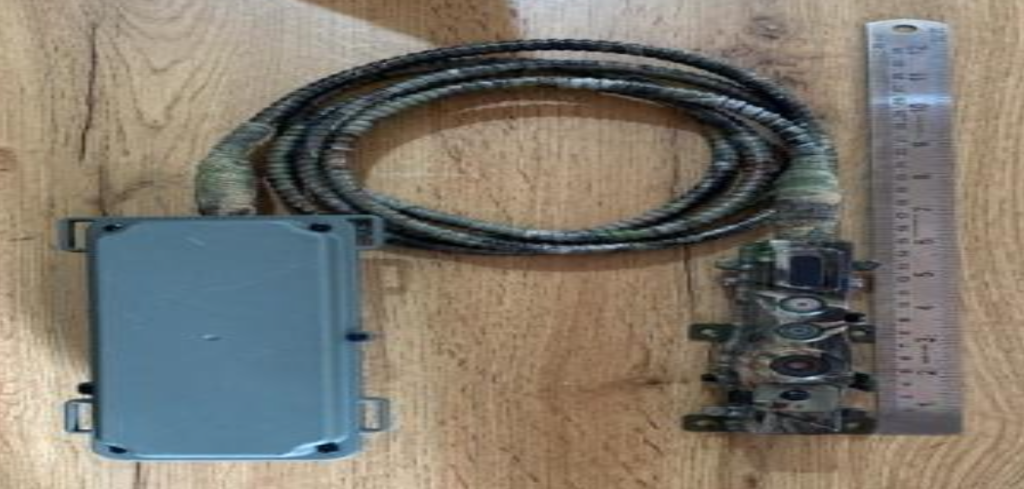
More than 700 AI-enabled surveillance cameras have now been deployed across roughly 60 per cent of Similipal. Small and camouflaged, measuring only 147 mm by 38.3 mm, the cameras are strategically positioned along routes used by suspected poachers.
They provide real-time information on illegal movement.
Although direct interception following a camera alert has accounted for less than 20 per cent of cases, the photographic evidence has proved invaluable in identifying and subsequently arresting suspects.
Read Also: When Technology Meets the Forest: How IFS Nitish Kumar Is Reimagining Conservation in Odisha
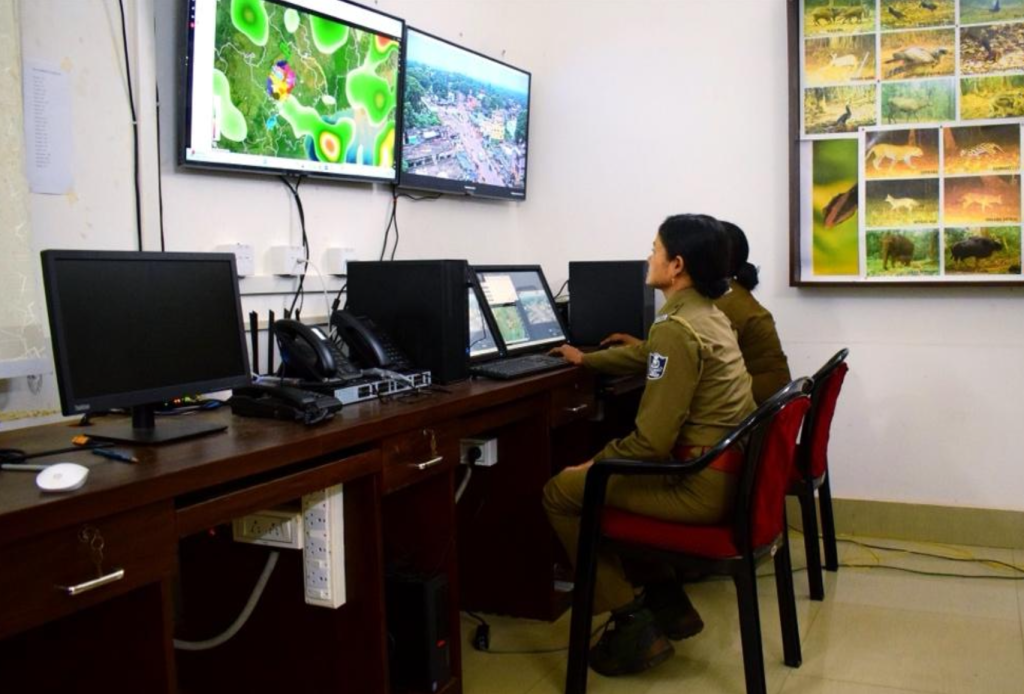
To complement this system, the Similipal Wildlife Intelligence Network (S-WIN) was established.
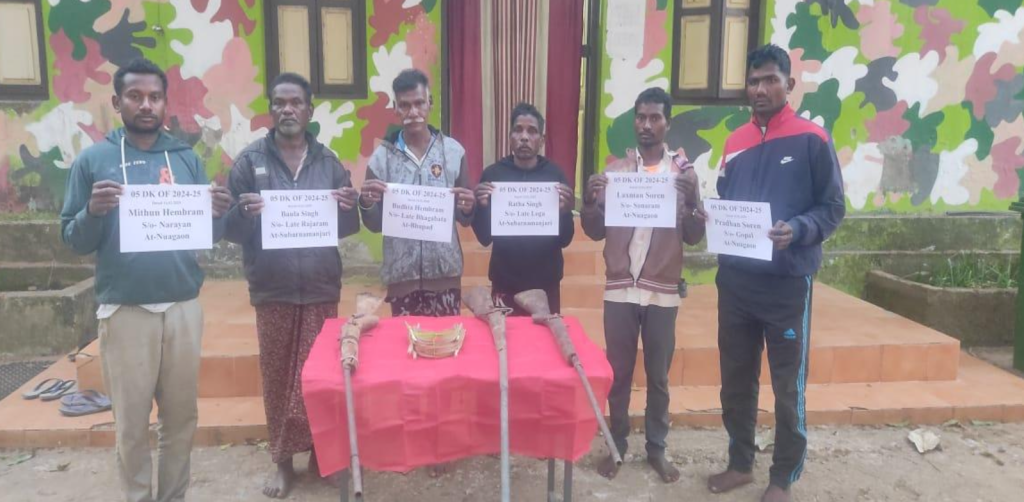
The intelligence network tracks individuals involved in poaching, maintains photographic records and monitors the progress of investigations. Intelligence inputs are then used to conduct targeted raids and recover illegal weapons.
The result has been dramatic.
Between 2023-24 and 2025-26, 323 people were arrested for illegal activities under the Wildlife Protection Act, while 269 guns were recovered.
- 2023–24: 113 arrests; 41 guns recovered
- 2024–25: 133 arrests; 165 guns recovered
- 2025–26: 77 arrests; 63 guns recovered
- Total: 323 arrests; 269 guns recovered
For Dr Gogineni, however, an arrest is not the endpoint.
“The focus was identifying all the persons involved in poaching activities,” he said, emphasising that the aim was to uproot the entire network rather than simply apprehend individual poachers.
Fighting Forest Fires With Artificial Intelligence
Poaching was not the only challenge.
Similipal’s deciduous forests and hilly terrain make it highly vulnerable to fires, particularly during March and April. In 2021, one of the worst fire seasons saw around 2,300 fire points recorded.
Conventional satellite alerts from the Forest Survey of India could involve delays of two to six hours—enough time for a fire to spread rapidly.
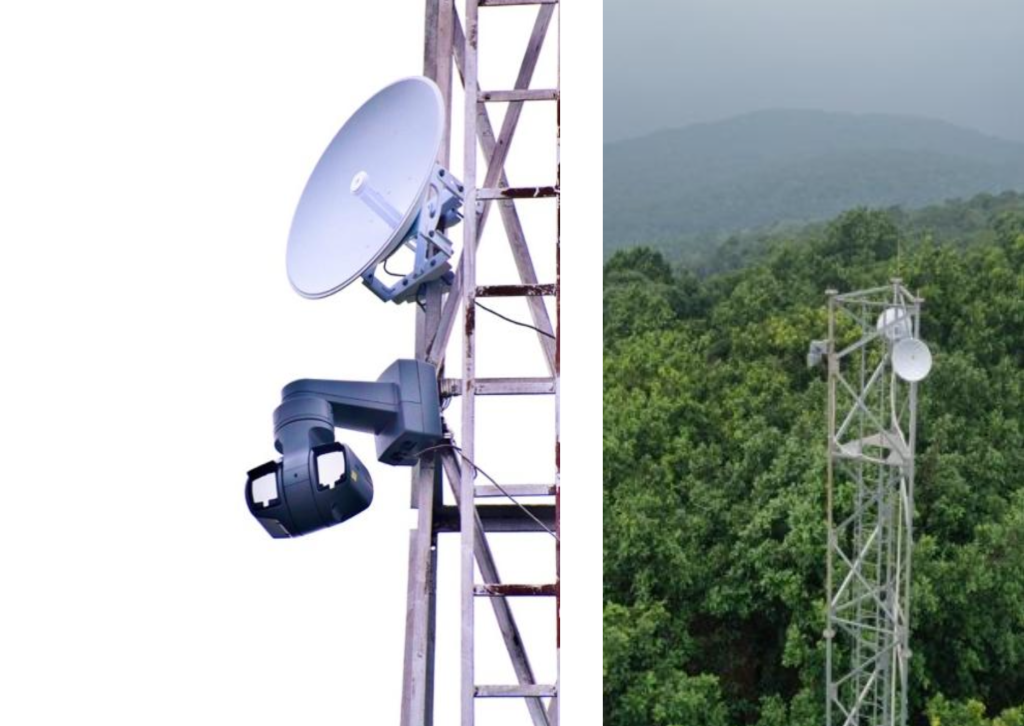
The solution came through a network of 15 high-power, long-range AI-enabled thermal cameras installed at strategic locations.
The cameras rotate 360 degrees and can detect smoke from distances of approximately five to 20 kilometres, generating real-time alerts.
The impact has been striking. Fire points dropped from around 2,300 in 2021 to fewer than 100 in 2025 and 2026, making Similipal one of India’s best-managed forest-fire landscapes.
Conservation Cannot Succeed Without Communities
Protecting wildlife also requires addressing why people enter forests in the first place.
While only one village remains inside Similipal’s core area, around 60 villages are located in the buffer and nearly 300 villages lie along the fringes, with many families dependent on forest resources.
To reduce this dependence, Dr Gogineni proposed the Ama Similipal Yojana.
After two years of pursuing the proposal, the ₹125-crore programme was approved. It will cover 250 villages and focus on livelihood and income-generating activities through Eco-Development Committees, including support through revolving funds.
The idea is to ensure that conservation and community welfare move together.
A Genetic Rescue Mission for Similipal’s Tigers
Perhaps the most ambitious intervention has been the genetic rescue programme.
Similipal’s tiger population had passed through a genetic bottleneck. Years of very low numbers meant closely related animals were breeding with each other, resulting in one of the lowest levels of genetic diversity among tiger populations.
The Odisha Forest Department therefore planned to introduce tigers from Maharashtra’s Tadoba-Andhari Tiger Reserve, whose population had already exceeded its carrying capacity.
After obtaining permission from the Ministry of Environment, Forest and Climate Change in September 2024, two tigresses—Jamuna and Zeenat—were translocated to Similipal in October-November 2024.
The journey was not without setbacks.
Zeenat travelled nearly 250 km into Jharkhand and West Bengal after her release. With sustained efforts by Similipal’s frontline staff and cooperation from the West Bengal Forest Department, she was recaptured and brought back to Similipal on January 1, 2025.
After acclimatisation in an eight-hectare enclosure, she was released into the wild again in April 2025.
She subsequently mated with a resident male but did not conceive initially. After moving freely through the landscape and establishing a territory, she mated again in January 2026.
Then came the breakthrough.
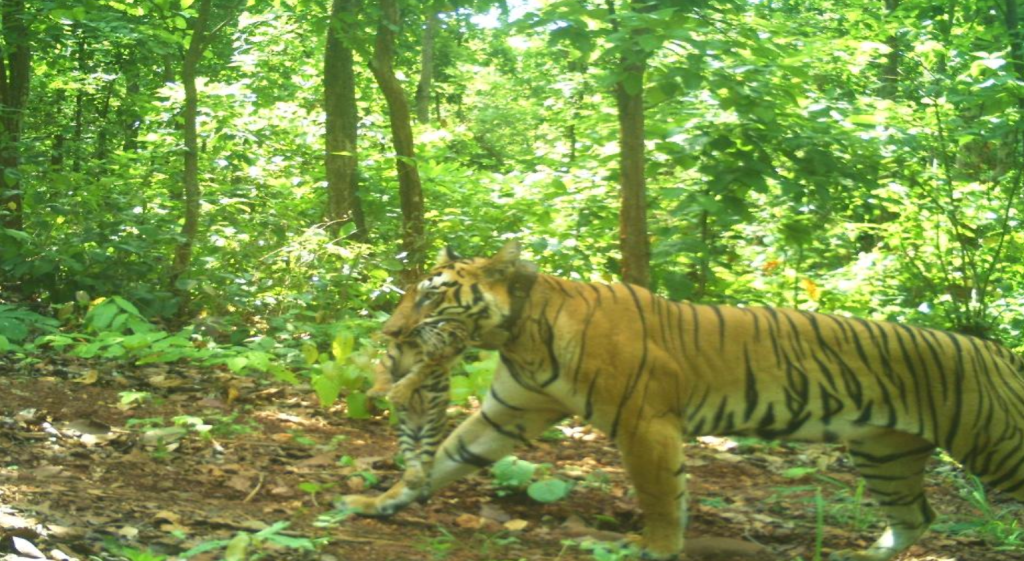
In May 2026, Zeenat was photographed carrying her cubs. She had given birth to four normal-coloured cubs inside Similipal’s core area.
The tigress and cubs continue to be monitored through satellite collar signals, VHF tracking and camera traps, while teams maintain continuous patrols around the area.
A Story of Science, Resilience and Teamwork
For Similipal, the birth of the four cubs represents more than an increase in numbers. It is the first major confirmation that the genetic rescue strategy can work—bringing together a tigress from Tadoba and a resident Similipal male to produce offspring with greater genetic diversity.
“This is a story of resilience, science and teamwork,” Dr Gogineni said.
From replacing kilometre-counting with intelligence-led interception to putting AI cameras deep inside the forest, from strengthening the men and women who guard Similipal to investing in the livelihoods of surrounding communities, the transformation demonstrates that conservation is most powerful when it brings multiple disciplines together.
And in the quiet forests of Similipal, four tiger cubs now carry that promise forward – a new generation born from an ambitious effort to ensure that one of India’s most important tiger landscapes does not merely survive, but thrives.
Read Also: From Tiger Rescues to 12 Wetlands: How IFS Akash Deep Badhawan Is Transforming Conservation in UP