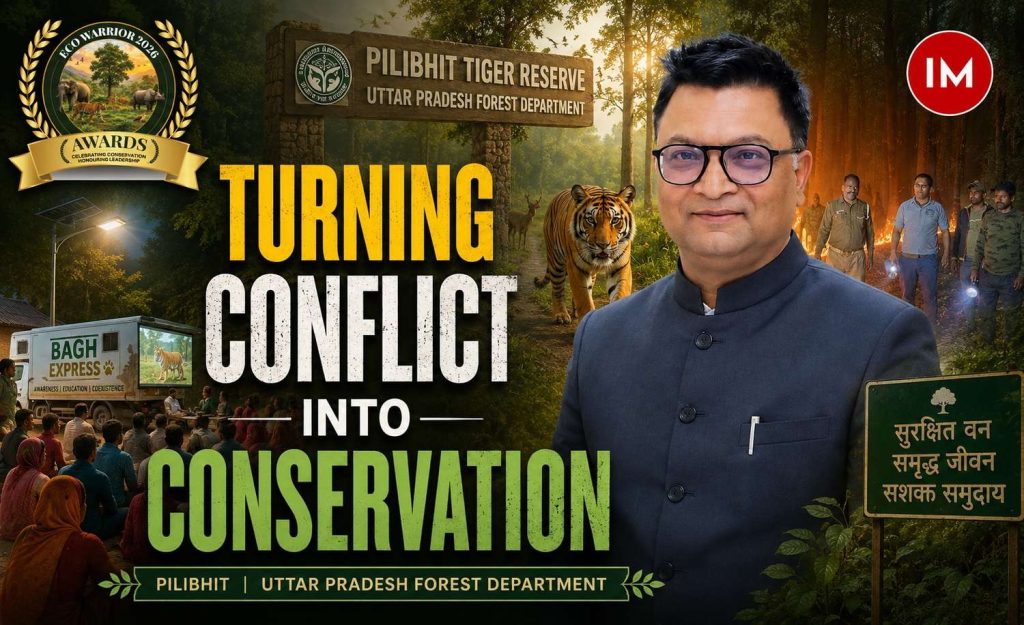
Conservation is no longer just about protecting forests from outside threats; it is about creating a relationship in which wildlife, forests and the communities living alongside them can coexist. In Pilibhit, this approach has taken a distinctly practical shape, combining technology-driven surveillance, solar energy, community engagement, habitat restoration and innovative human-wildlife conflict mitigation. From lighting up vulnerable village edges to taking conservation awareness directly to people through the Bagh Express, the initiatives have turned several long-standing challenges into measurable outcomes.
At the centre of this effort is Manish Singh, an Indian Forest Service (IFS) officer of the 2013 batch of the Uttar Pradesh cadre, whose tenure has focused on strengthening protected-area management, forest security and wildlife conservation. IFS Singh joined Pilibhit Tiger Reserve in March 2024 and quickly identified two immediate priorities: reducing human-wildlife conflict and earning the confidence of local communities.
To understand the vision behind these initiatives, their implementation on the ground and the impact they have created, Indian Masterminds spoke with Mr Singh about his experience, priorities and approach to conservation in Pilibhit.
How It Started: Tackling Human-Wildlife Conflict
For Singh, understanding the pattern of conflict was the first step towards addressing it.
“Look, one of the most important initiatives is that of Bagh Express,” IFS Singh told Indian Masterminds, explaining that awareness had become essential in areas witnessing tiger-human conflict.
A detailed analysis showed that most attacks occurred around dawn and dusk, when villagers travelled to or returned from their fields. At the same time, tigers were particularly active and visibility was poor.
Read Also: From Tiger Rescues to 12 Wetlands: How IFS Akash Deep Badhawan Is Transforming Conservation in UP
The response was simple but scientific: 1,750 street lights were installed on the outskirts of 90 highly sensitive villages with CSR support from Signify. The lighting was strategically placed after studying animal movement patterns.
“The movement of the tiger has reduced a lot,” Mr Singh said, adding that the intervention had significantly reduced the scope for conflict.
The results became particularly visible during the last two sugarcane and wheat harvesting seasons, when no tiger or leopard attack was reported.
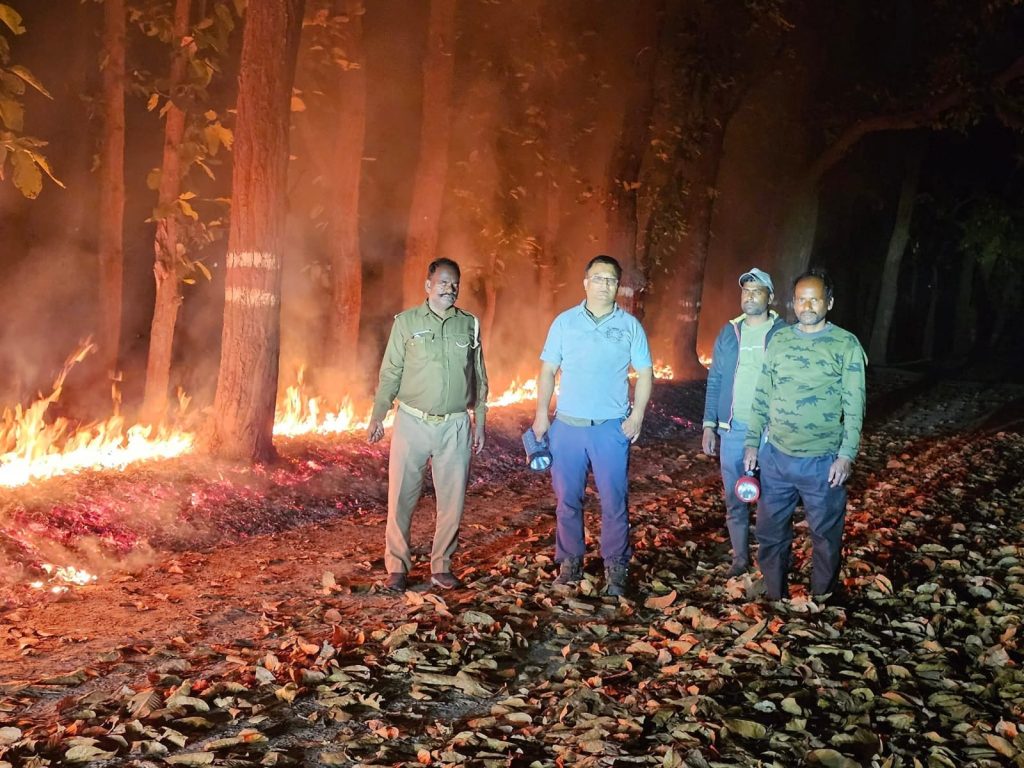
Bagh Express Takes Conservation to the Villages
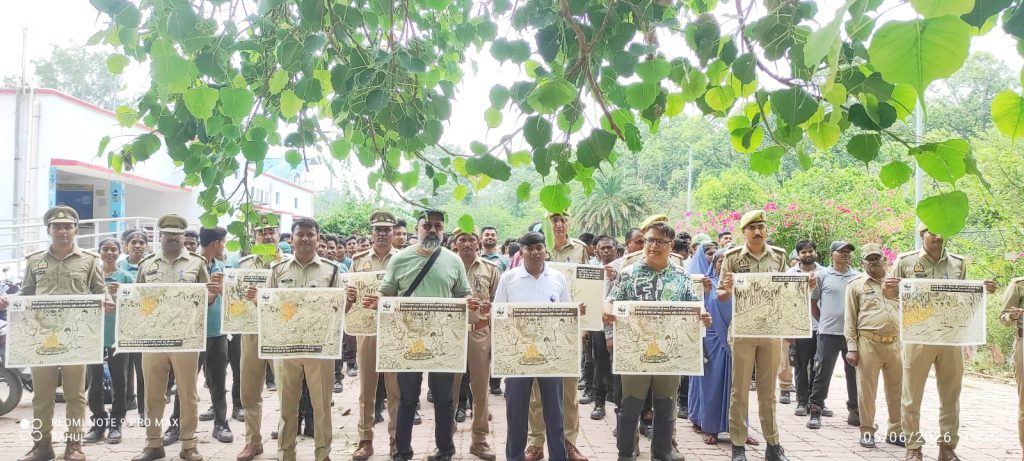
In Nov 2024, Pilibhit Tiger Reserve launched Bagh Express, a dedicated awareness campaign supported by the M3M Foundation. A specially equipped vehicle travels to sensitive villages, reaching two villages every day with audio-visual material, local nukkad nataks and short films.
The objective is not limited to teaching people how to behave around tigers. The programme also informs villagers about government schemes and other initiatives of the forest department and administration.
“We started it in November 2024 and it is going on. We have awakened more than 2.5 lakh people through this,” IFS Singh said.
The campaign has therefore become a bridge between the forest department and communities, bringing conservation messaging directly to people rather than expecting villagers to seek it out.
Building Communities as Partners
Mr Singh’s approach places communities at the heart of conservation. Eco-Development Committees (EDCs) have been strengthened, while new community and Bagh Mitra EDCs have been formed.
“The EDCs have been strengthened a lot. Because of that, their social visibility has increased. People feel that we are strengthened,” he said.
The impact is also economic. Bagh Mitras – local volunteers working for wildlife protection – have emerged as important partners during forest fires and human-wildlife conflict. With CSR support from M3M Foundation, ₹7.60 lakh in scholarships has been provided to 28 children of Bagh Mitras, encouraging more villagers to participate in conservation.
In 2025, five new Bagh Mitra EDCs and three new Community EDCs were formed.
Community welfare has also been addressed directly. Saat Jhaal village, adjoining the forest, remained without grid electricity since Independence until October 2025. With CSR support from Unity Bank, a 20-kW solar plant was installed, providing connections to 60 families along with a fan and socket. In Selha village, 67 solar street lights now benefit more than 3,500 people.
Solar Power Strengthens Forest Protection
Pilibhit has also emerged as a major example of solar-powered forest management. Eighty-four forest outposts have received 1-kW solar systems with a fan and socket, with CSR support from ICICI Foundation. Another 80 solar street lights have been installed around watchtowers and patrolling camps.
Water availability inside the reserve has also been improved. Twenty-five new water holes with solar-powered pumps have been created, taking the total number of solar-powered water holes to 62. Better water availability is helping reduce wildlife movement towards human habitations.
The reserve has additionally adopted a plastic-free approach, with food served at its canteen without plastic materials.
Stronger Surveillance, Stronger Enforcement
Technology has become another pillar of forest protection. Thirteen PTZ cameras installed in sensitive areas and along the Pilibhit-Uttarakhand boundary provide 24×7 virtual surveillance over approximately 3,536 hectares, connected to a control room.
At the field level, 38 watchtowers have been strengthened with facilities including solar lighting, toilets, bedding, furniture, water filters and solar fans.
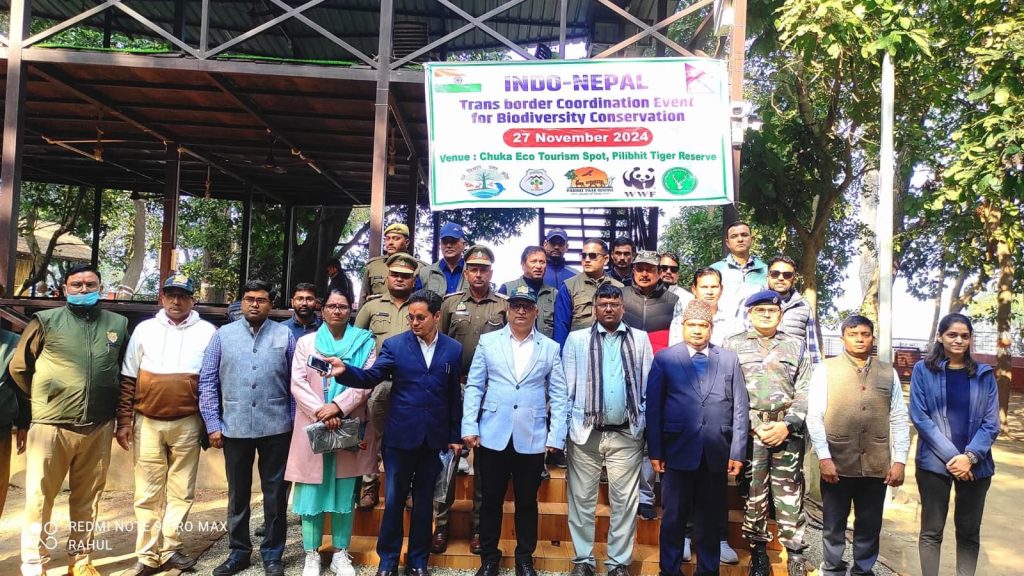
Pilibhit’s sensitive location along the Nepal and Uttarakhand borders has also necessitated close inter-agency coordination. During Singh’s tenure, seven Indo-Nepal meetings were organised. A total of 180 H2 cases were issued, including 54 related to illegal hunting and 13 to illicit felling. Twenty-four accused were sent to jail, FIRs were lodged in 12 cases and 10 vehicles were confiscated.
Among the significant enforcement cases were the recovery of spotted deer meat and a rifle following a 2024 hunting incident, the interception of a vehicle carrying 135 Schedule-I turtles in 2025, and action against a group involved in wild-boar hunting in 2026.
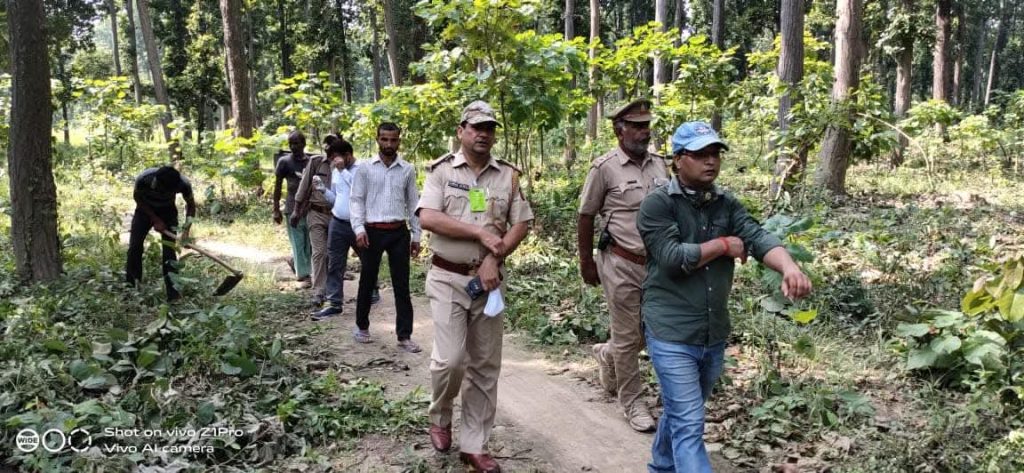
Restoring Habitats and Creating Safe Passage
Conservation efforts have extended beyond protection to habitat restoration. In 2026, 43.5 hectares of forest land in Shahjahanpur, under encroachment for more than six decades, was cleared and earmarked for plantation.
The Gadha Corridor is another innovative intervention. Farmers have been encouraged to grow sugarcane along a 1.5-km passage between Mala and Deoria ranges, creating a safer route for wildlife. Lalpur EDC, 10 Bagh Mitras, farmer training, seed distribution and 24×7 camera-trap monitoring were brought together for the initiative. Tigers with cubs, bears and leopards have already been recorded using the corridor.
Conservation Beyond Pilibhit
Singh’s conservation work also includes species protection and wildlife rescue. Gharial conservation was strengthened through the release of 120 hatchlings into the Gandak River in 2018 and 2019, while Darjeenia Taal in Sohagibarwa Wildlife Sanctuary was developed as a crocodile conservation and eco-tourism centre.
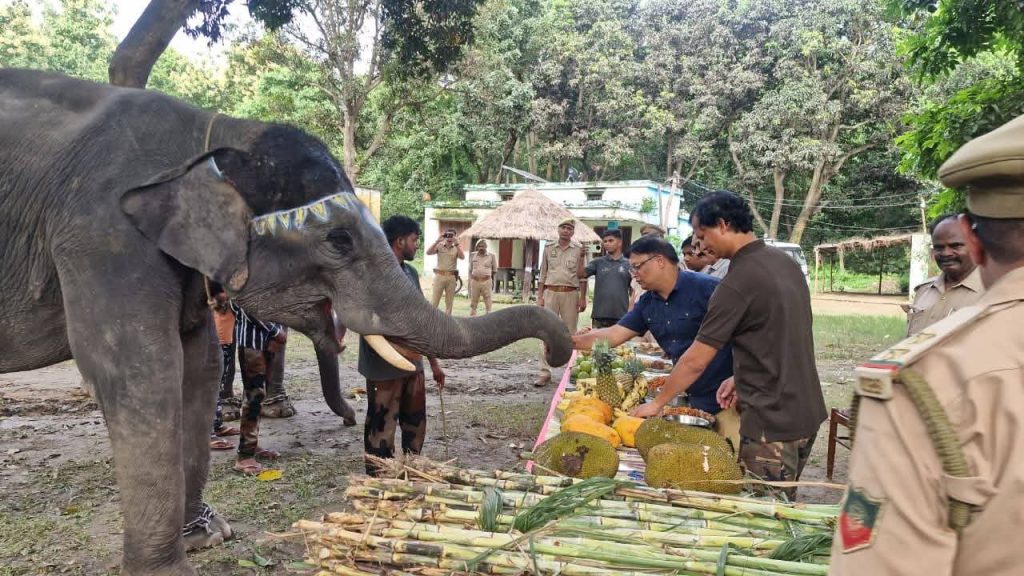
Wildlife rescue has remained another crucial responsibility, with multiple tigers and leopards rescued from human habitations between 2024 and 2025. An abandoned elephant calf brought to Pilibhit in December 2025, weak and injured, was nursed back to health despite the harsh Terai winter.
Tourism With a Community Dividend
Conservation has also been linked with livelihoods. Two new tourist gates – Mahof and Barahi – have opened, encouraging investment in surrounding villages. Three homestays have been developed near each gate, while boating at Chuka and a new parking facility at Mustafabad have created additional livelihood opportunities.
Tourism more than doubled in 2024 compared with 2023, and Pilibhit Tiger Reserve’s first Coffee Table Book was released by the Uttar Pradesh Chief Minister. A long-pending draft notification for the reserve’s Eco-Sensitive Zone was also notified in 2026.
Meanwhile, the Divya Darshan programme has enabled more than 500 Divyang students to experience safari inside the reserve.
A Model Built on People, Technology and Nature
From solar-powered forest outposts and waterholes to village-level awareness, surveillance cameras, stronger enforcement and community-led conservation, Singh’s approach demonstrates that effective wildlife protection can be both technologically advanced and deeply human.
The most significant change may be the shift from viewing communities as merely people living near protected forests to recognising them as active partners in protecting those forests.
In Pilibhit, conservation is thus becoming more than the protection of a tiger reserve. It is evolving into a broader model where safer villages, empowered communities, secure habitats and thriving wildlife are treated as interconnected goals—a vision that turns the difficult balance between people and nature into an opportunity for coexistence.
Read Also: When Technology Meets the Forest: How IFS Nitish Kumar Is Reimagining Conservation in Odisha