Every operation in a conflict zone carries two competing responsibilities: achieving the mission and bringing personnel home safely. In the forests of Bastar, Chhattisgarh, where Maoist insurgency has challenged security forces for decades, balancing these responsibilities requires more than courage. It demands careful planning, coordination, adaptability and the willingness to learn from every setback.
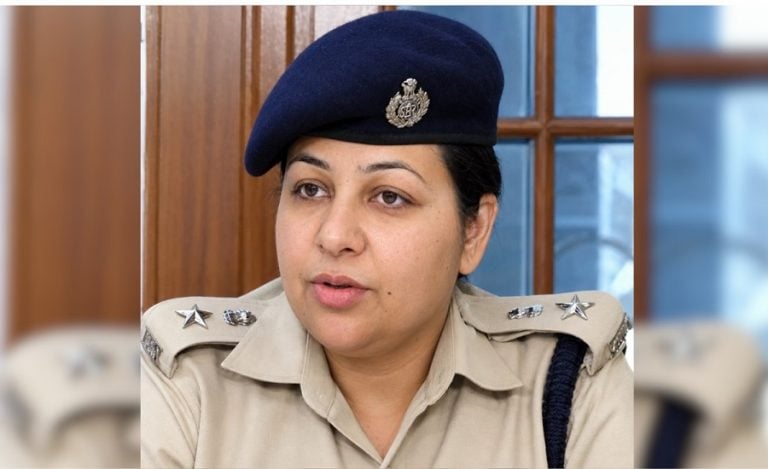
For Gaurav Rai, an Indian Police Service (IPS) officer of the 2019 batch, this became the defining principle of his work in one of India’s most challenging internal security theatres. When he took charge as Superintendent of Police (SP) in Dantewada in May 2023, the district was still grappling with the aftermath of a devastating IED blast that had killed ten security personnel and a civilian driver the previous month. The tragedy underscored the risks faced by those operating in Maoist-affected areas and the need to reassess how operations were conducted.
Rai, who had earlier served as Additional Superintendent of Police (Operations) in neighbouring Bijapur, brought an understanding of the region’s terrain and security challenges. Rather than treating the posting as merely another assignment, he saw an opportunity to improve operational effectiveness and reduce casualties. He is currently posted as Superintendent of Police (SP) of Balodabazar-Bhatapara district in Chhattisgarh.
LEARNING BEFORE LEADING
Rai’s first priority in Dantewada was to understand the conflict from the perspective of those dealing with it every day. He spent his initial weeks listening to officers, commanders and personnel, studying the operational challenges and learning about the local tribal society and geography. The objective was to understand why security forces continued to suffer losses despite their experience, resources and repeated operations.
Also Read – Why Technology Cannot Replace Human Connection in Governance: P.K. Jena
He gradually concluded that the problem was not a lack of courage or commitment among the personnel. Instead, operational planning, coordination and the ability to adapt to guerrilla tactics needed greater attention. Maoist groups were familiar with the terrain and relied on surprise, mobility and their knowledge of forest routes. Security forces had greater manpower, equipment and logistical support, but these advantages did not always translate into better outcomes.
“I first wanted to understand my men, understand the enemy and understand the local society,” Rai explained, describing his approach to the assignment.
This emphasis on listening helped him identify practical improvements that could strengthen the force without overlooking the realities of working in difficult terrain.
REBUILDING CONFIDENCE AFTER A TRAGEDY
The April 2023 IED attack had left a deep impact on the force. The loss of colleagues in a sudden and devastating attack inevitably affected morale, even when personnel continued to carry out their duties with determination. Rai understood that rebuilding confidence would require more than formal briefings or motivational speeches.
He encouraged regular conversations with his teams, inviting them to discuss the difficulties they faced and suggest improvements. These discussions helped create an environment in which operational shortcomings could be examined honestly, without treating every setback as an individual failure.
The broader objective was to improve results while reducing risks to personnel. In a conflict where eliminating every possibility of loss is difficult, he believed that careful preparation and better coordination could make a meaningful difference.
This approach also helped reinforce the idea that operational success should not be measured only by the outcome of an encounter. The safety of the personnel involved, the quality of intelligence and the lessons carried forward into future missions were equally important measures of performance.
CLARITY, COORDINATION AND CONTINUOUS LEARNING
One of the key principles Rai emphasised was clarity of responsibility. In complex operations involving multiple teams, confusion over roles, communication or movement can create serious difficulties. Ensuring that personnel understand their responsibilities before an operation begins can improve coordination and help them respond more confidently under pressure.
Planning was followed by systematic reviews. Teams examined what had worked, where coordination could have been better and what lessons could be carried into subsequent operations. Even successful missions were evaluated, allowing the force to identify areas for improvement instead of assuming that a favourable outcome meant every decision had been optimal.
“Every operation teaches something. Even when we achieved our objective, we asked ourselves how we could have performed better,” Rai said.
The approach encouraged a culture in which experience became a source of continuous learning. Small improvements in communication, preparation, coordination and decision-making could collectively strengthen the force’s ability to operate in an unpredictable environment.
BREAKING THE MOMENTUM OF INSURGENCY
The benefits of improved coordination became evident in operations across the Bastar region. Rai’s experience in Bijapur reinforced the importance of cooperation between neighbouring districts, particularly because Maoist groups operated across administrative boundaries. When security forces worked in isolation, district borders could create gaps that insurgents could exploit.
Greater coordination among districts such as Dantewada, Bijapur, Narayanpur, Kanker and Sukma helped strengthen the broader security response. Intelligence-sharing and joint planning became important elements of the effort to prevent Maoist groups from exploiting jurisdictional divisions.
Rai recalled an operation in Bijapur in which security forces neutralised 13 Maoists without losing a single member of their force. Another major operation, conducted jointly with Narayanpur district, resulted in 38 Maoists being killed, with no casualties among the security personnel involved, according to the account of his experience. A prolonged operation lasting nearly three weeks further demonstrated the importance of endurance, logistical preparation and coordination among different units.
One particularly significant operation resulted in the killing of CPI (Maoist) General Secretary Basavaraju, a senior leader of the organisation. The operation, carried out through coordination between forces from Bijapur and Narayanpur, marked a major development in the campaign against the insurgency.
These outcomes reflected the importance of coordinated action and sustained institutional learning. They also reinforced the need to evaluate operations carefully, recognising that success in counter-insurgency depends on numerous interconnected factors rather than a single tactical change.
BEYOND ENCOUNTERS: THE NEED TO BUILD PUBLIC TRUST
For Rai, the challenge of Left Wing Extremism could not be addressed through security operations alone. While action against armed cadres remained necessary, lasting peace also depended on improving the relationship between the state and communities that had lived for years amid conflict.
In remote areas, people need access to public services, development opportunities and institutions they can approach with confidence. Reconnecting isolated villages with governance and ensuring that development reaches conflict-affected populations are essential parts of a sustainable response.
“The security response is essential, but lasting peace can only come when people begin to trust the system,” Rai said.
This perspective places policing within a broader framework of governance. Security creates space for development, while responsive administration and public trust help strengthen the conditions needed for peace.
A CULTURE OF RESPONSIBILITY AND IMPROVEMENT
Rai’s experience in Bastar highlights an important lesson in leadership: operational effectiveness is built not only through individual courage but also through the systems that support personnel on the ground. Listening to teams, learning from setbacks, improving coordination and clearly defining responsibilities can help security forces respond more effectively to complex challenges.
His approach also underscores the importance of recognising the human cost of counter-insurgency. Every improvement in planning and coordination matters when it can help reduce the risks faced by personnel working in difficult conditions.
Now serving as SP of Balodabazar-Bhatapara, Rai’s experience in the Maoist-affected districts of Chhattisgarh offers a perspective on policing that combines operational discipline with a broader understanding of peace. The fight against insurgency may demand difficult decisions and sustained security efforts, but its lasting success ultimately depends on more than encounters. It requires institutions that learn, personnel who are supported and communities that can place their trust in the state.
Also Read – The IAS Officer Who Put People Before Paperwork: How PK Jena Challenged Corruption and Reformed Governance