One doesn’t necessarily qualify UPSC Civil Services Examination to qualify for a job in the elite Indian Forest Service (IFS). Now, Forest Rangers, too, will be considered to be part of the State Forest Service (SFS) under the Indian Forest Service (Recruitment) Rules, 1966, thanks to a Supreme Court judgement. This recognition will lay their claim to be promoted to the IFS.
The verdict, which could reshape career trajectories within India’s forestry services, held that Forest Range Officers (FROs) in Andhra Pradesh, too, are eligible for promotion to the IFS, a domain that has historically remained the preserve of Assistant Conservators of Forests (ACFs) and Deputy Conservators of Forests (DCFs).
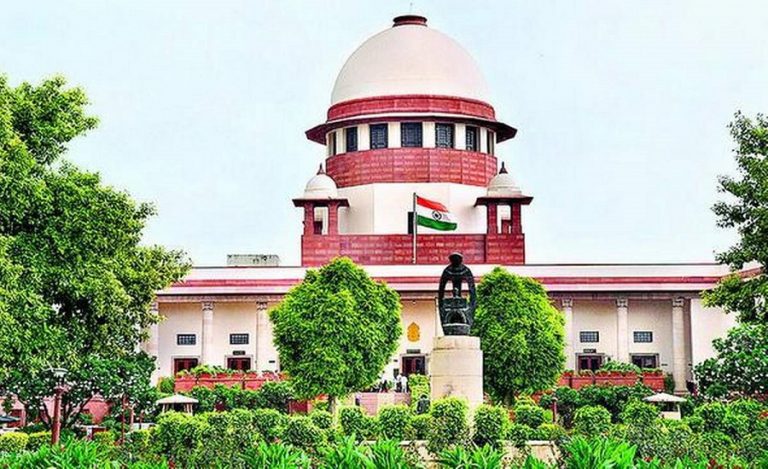
Delivering the judgment in P. Maruthi Prasada Rao vs. State of Andhra Pradesh & Ors., a bench comprising Justice Dipankar Datta and Justice Augustine George Masih set aside the Andhra Pradesh High Court’s earlier ruling and restored the eligibility of FROs for consideration in future IFS promotions. However, the Court refrained from granting retrospective relief to the appellant, citing procedural delays and seniority concerns.
The Case: From Tribunal to Apex Court
The controversy began when P. Maruthi Prasada Rao, an officer appointed as a Forest Range Officer in 2006 and promoted to ACF in 2020, petitioned that his cadre service as an FRO should be recognised as part of the State Forest Service. He contended that exclusion of FROs from the promotion pipeline to IFS violated the equality provisions under Articles 14 and 16 of the Constitution.
The Central Administrative Tribunal (CAT), Hyderabad, had ruled in his favour in 2022, directing the state to treat FROs as SFS officers and consider them for IFS promotions. However, the Andhra Pradesh High Court overturned this verdict in 2023, holding that FROs were not covered under the SFS definition since the Central Government had not expressly approved their inclusion.
The Supreme Court’s ruling now restores the CAT’s interpretation, clarifying that FROs in Class A of the Andhra Pradesh Forest Service, having gazetted status, do indeed form part of the State Forest Service – provided the service itself is deemed approved under the Recruitment Rules.
Key Judicial Findings
Definition of State Forest Service (Rule 2(g))
The Court emphasised that approval under Rule 2(g) of the 1966 Recruitment Rules pertains to the service as a whole, not to individual posts. Since Andhra Pradesh Forest Service (APFS) includes FROs, ACFs, and DCFs in its Class A structure – all with gazetted status – FROs cannot be excluded merely by interpretation.
Eligibility for Promotion
With this declaration, FROs in Andhra Pradesh with substantive appointments and eight years of continuous service become eligible for consideration for IFS promotion alongside ACFs and DCFs.
No Retrospective Relief
While ruling in principle for the appellant, the Court denied immediate relief, citing his delayed challenge and the presence of senior officers above him in the FRO cadre. Promotions already processed will not be disturbed.
Binding Future Practice
The Court directed that in all future promotion exercises, FROs must be treated as part of the State Forest Service, thereby widening the pool of officers eligible for induction into the IFS.
Implications for Indian Forest Service Officers
The ruling has triggered widespread discussion among IFS officers and state forest cadres across India, particularly because it addresses a long-standing demand of Range Officers for parity and career progression.
1. Expanded Pool of Eligible Officers
Until now, promotions to IFS largely came from ACFs and DCFs, creating a relatively narrow funnel. With FROs included, hundreds of additional officers – in Andhra Pradesh alone, 295 FROs – will now be eligible to compete for limited IFS vacancies. This could intensify competition and dilute the prospects of ACFs and DCFs, who previously enjoyed an assured edge.
2. Seniority and Backlog Issues
The judgment stops short of disturbing past promotion exercises, but it acknowledges that since 2015, several vacancies have remained unfilled due to eligibility disputes. Going forward, senior FROs who meet the criteria may push to be accommodated in upcoming select lists, potentially unsettling established hierarchies.
3. Impact Across States
Though the ruling directly concerns Andhra Pradesh, it sets a precedent likely to be invoked by FROs in other states where service rules are similar. If adopted nationally, the inclusion of Range Officers could significantly alter the landscape of IFS cadre recruitment.
4. Pressure on UPSC and State Governments
The Union Public Service Commission (UPSC) now faces the challenge of revising its consideration lists to include FROs. State governments, too, will have to revisit their forest service rules and reconcile cadre management practices with this interpretation.
5. Career Morale and Motivation
For FROs, traditionally seen as frontline field officers with limited upward mobility, this judgment comes as a morale booster. It acknowledges their role as gazetted officers in forest administration and opens a pathway to one of the country’s most prestigious All India Services. Conversely, some serving IFS officers worry that the influx of Range Officers into the eligibility pool could lower the seniority benchmark and alter the professional dynamics within the cadre.
A Balancing Act by the Supreme Court
The Court struck a delicate balance: it recognised the principle of equality for FROs while avoiding retrospective disruption of promotions already processed. Justice Datta, writing for the bench, observed that although the appellant “succeeds insofar as the legal issue is concerned, [he does so] without any real relief of promotion at least at this stage.”
By doing so, the Court respected established seniority structures while ensuring that future exercises do not perpetuate the earlier exclusionary interpretation.
Expert Reactions
- Former IFS Officer’s View:
“This judgment democratises the entry point into the IFS. Range Officers are the backbone of field operations, and recognising their eligibility is long overdue. However, the government must ensure that merit and seniority principles are not compromised.” - Forest Bureaucracy Analysts:
Observers note that this ruling could slow down promotions for existing ACFs and DCFs, as the number of candidates will now multiply. It could also fuel inter-cadre rivalry unless carefully managed. - Legal Experts:
The Court’s interpretation of Rule 2(g) as service-based, not post-based, may have far-reaching consequences for other technical services where similar ambiguities exist.
What Lies Ahead
The immediate repercussion is that the upcoming IFS promotion panels in Andhra Pradesh will include Range Officers, provided they meet the substantive service and seniority requirements. The UPSC will have to redraw its select lists, and state governments may face fresh representations from FRO associations.
At a broader level, this ruling could embolden Range Officers’ associations across India to seek similar recognition, potentially rewriting the promotion pipeline to the IFS nationwide.
For IFS officers already in service, the ruling may be seen as both a challenge and an opportunity: while competition for limited vacancies will intensify, the cadre will also benefit from the inclusion of officers with rich field-level experience.
Conclusion
The Supreme Court’s judgment in P. Maruthi Prasada Rao marks a turning point in India’s forest bureaucracy. By extending recognition of FROs as members of the State Forest Service, it opens a long-shut door for their entry into the elite Indian Forest Service.
While the ruling carefully avoids retrospective upheavals, its forward-looking mandate ensures that FROs’ contribution is formally acknowledged in cadre progression. For IFS officers, the decision introduces a new dynamic – one that may reshape hierarchies, promotions, and the very character of the service in years to come.
In the dense and contested world of India’s forestry administration, the reverberations of this judgment will be felt for a long time.