In the delicate space where forests meet human settlements, a few seconds can make the difference between coexistence and conflict. At Maharashtra’s Tadoba Andhari Tiger Reserve (TATR), an unconventional idea is changing how that crucial window is managed: using Artificial Intelligence to detect wildlife before it reaches vulnerable human settlements and alert people in time.
Led by Lt. Kushagra Pathak, an Indian Forest Service (IFS) officer of 2016 batch from Maharashtra cadre and Deputy Director (Buffer), TATR, the initiative has brought AI-powered surveillance into India’s forest conservation landscape for the first time, creating a technology-enabled early-warning system aimed at protecting both people and wildlife. The effort is rooted in a simple philosophy – conservation should not merely respond to conflict after it happens; it should anticipate danger and enable communities and forest teams to act before tragedy strikes.
Indian Masterminds interacted with Lt. Pathak to understand the journey behind this pioneering initiative, how AI is being deployed on the ground, and the impact it has had on reducing human-wildlife conflict while strengthening coexistence between forest-fringe communities and wildlife.
How It Started: From Human-Wildlife Conflict to Coexistence
The initiative is based on the Chandrapur Tiger Landscape, where villages and forests exist in close proximity and human-wildlife conflict has remained a major conservation challenge.
According to IFS Pathak, the central objective was to find practical solutions for the interface between forests and villages.
“This initiative is based on the Chandrapur Tiger Landscape. It targets the problem of human-wildlife conflict and looks for solutions. Basically, it focuses on co-existence,” he explained.
Read Also: From Conflict to Conservation: How IFS Manish Singh Is Reimagining Forest Protection in Pilibhit
The approach was to identify the vulnerable fringe areas – the zones where wildlife moving out of forests could come into contact with villagers – and place surveillance cameras at strategic locations.
The system was developed around Wildlife Eye, an award-winning AI-powered video intelligence platform developed by Valiance. It uses computer vision and edge analytics to detect, identify and classify wildlife through camera networks.
The intervention was unprecedented for India’s forest sector. As Mr Pathak explained, AI had not previously been deployed in this manner for wildlife conservation in the country. The initiative began in February 2023, according to the project account provided for the interview, and subsequently attracted attention beyond Maharashtra, including invitations to present the work at international wildlife forums and universities.
Bringing AI to the Forest
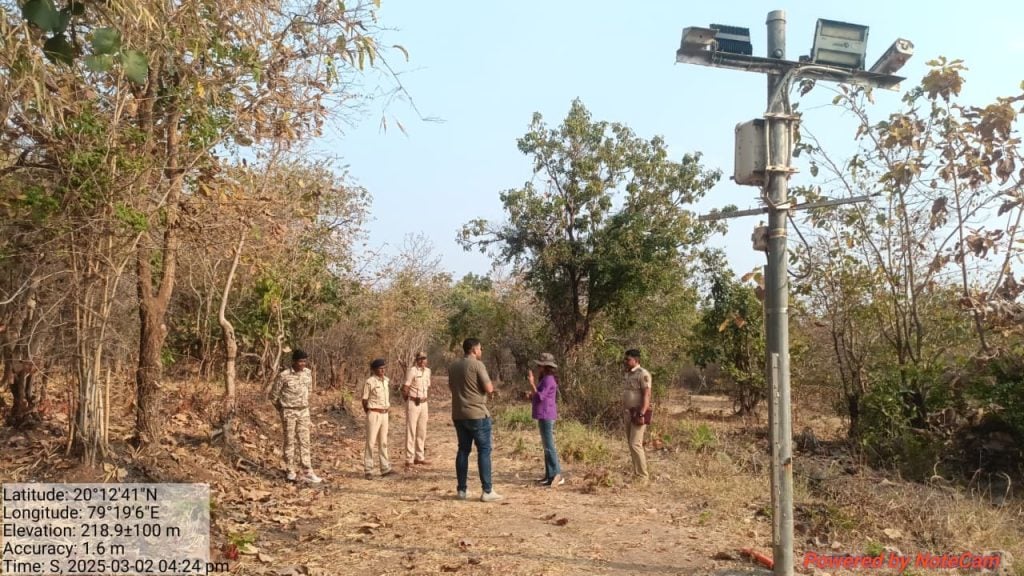
Wildlife Eye was deployed in high-conflict buffer areas around Chandrapur, Mul, Shioni and Moharli in TATR, allowing the landscape to be monitored around the clock without requiring humans to watch camera feeds continuously.
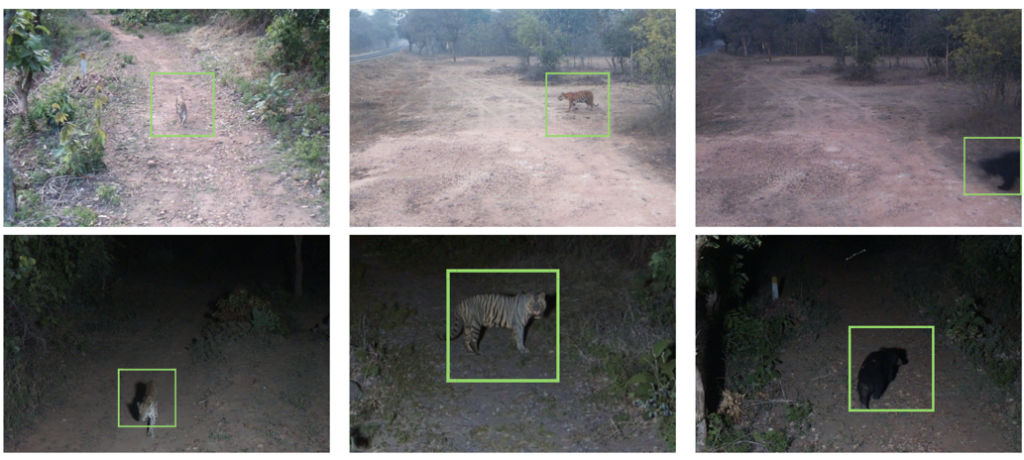
The system currently focuses on three high-risk species identified in the Chandrapur landscape: tiger, leopard and sloth bear.
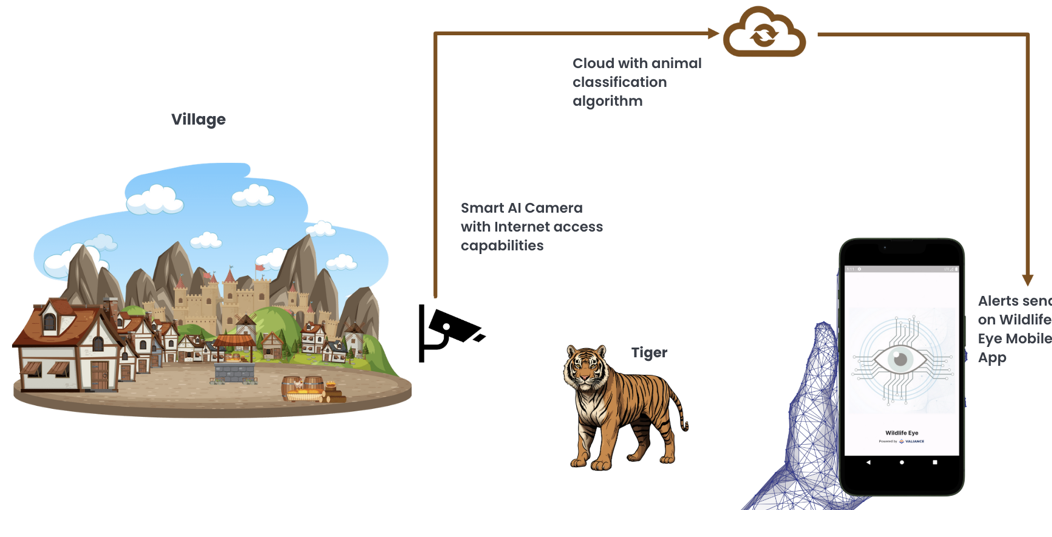
IFS Pathak explained the concept simply: “We install cameras there. As soon as the tiger or any dangerous animal is about to enter the village boundary, it hits the cameras and raises alerts through a mobile app.”
The technology essentially converts a conventional surveillance camera into an intelligent warning system. Instead of merely recording an animal after it has appeared, AI analyses the visual information and identifies the species.
When a high-risk animal is detected, alerts are transmitted to forest officials and, where applicable, communities, enabling frontline teams to respond proactively.
From Detection to Action in Seconds
The system combines computer vision, edge analytics and cloud intelligence. Cameras placed in vulnerable locations continuously monitor movement. Once an animal is detected, AI processes the visual information and classifies the species.
The project materials indicate that the complete detection-to-alert cycle can take under three seconds.
The Wildlife Eye mobile application provides responders with instant push notifications containing information such as the species detected, image and location. Officers can access camera feeds, verify alerts, record field observations and coordinate action with frontline response teams.
This is particularly important in remote forest areas, where manpower is limited and manually monitoring hundreds of camera feeds around the clock is neither practical nor sustainable.
A Physical Warning for Villagers
The innovation does not stop with a digital notification.
At camera locations, the system can also generate a non-disturbing sound-based physical alert. The objective is to make nearby villagers aware that an animal is approaching without unnecessarily disturbing the animal itself.
“The villagers get the idea that the animal is about to cross, and they should not do what they used to do there,” Lt. Pathak said, describing the behavioural change the system seeks to create.
The result is a shift from reaction to preparation. Villagers can alter their route, avoid vulnerable areas or refrain from travelling alone during high-risk periods.
Read Also: When Technology Meets the Forest: How IFS Nitish Kumar Is Reimagining Conservation in Odisha
Impact: Saving Lives and Building Trust
The most significant achievement of the initiative is its focus on prevention.
The project has helped trigger proactive responses to potential conflict situations, while reducing the need for continuous manual surveillance and allowing forest personnel to concentrate on high-risk areas.
According to the project data, the system has generated more than 100 alerts per month across key buffer zones. The implementation has also reported no human fatalities in the covered areas following deployment, while the project data cites an 87 per cent reduction in cattle kills in Mul, from 78 to 10 cases, and a 90 per cent reduction in crop-damage incidents in Chandrapur, from 47 to six.
Community awareness reportedly reached 85 per cent, while 75 per cent of respondents reported an increased sense of safety.
For IFS Pathak, however, technology is only useful when it improves the relationship between people and the forest administration.
The initiative has helped build community confidence because warnings reach people in time, while forest teams receive better information about animal movement and can plan their response accordingly.
More Than Conflict Management
The AI system is also creating a new source of conservation intelligence. Repeated alerts can reveal patterns in animal movement, helping officers understand which routes wildlife uses and where conflict risks are likely to emerge.
That information can subsequently support conservation planning, patrol deployment and decision-making.
The project’s impact has also attracted wider recognition. Its implementation was featured by BBC Marathi in a documentary, while the initiative has received national appreciation, including recognition of technology-led approaches to wildlife conservation during Prime Minister Narendra Modi’s Mann Ki Baat address on World Wildlife Day in March 2024.
From Wildlife Eye to Garuda
The technology-led approach is now evolving further through the Garuda Smart Alerting System, an internally developed monitoring platform designed to bridge the gap between detection and immediate field response.
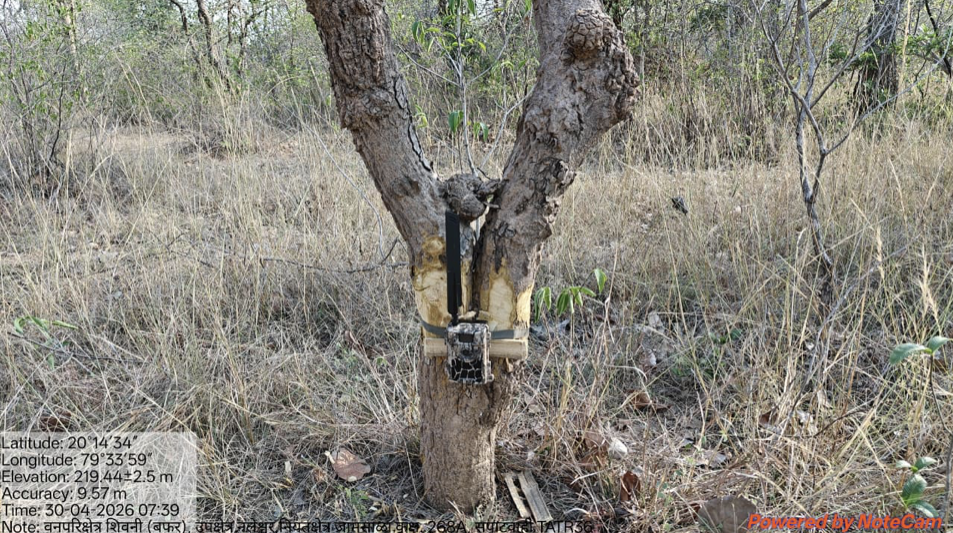
Garuda uses portable cameras connected to an in-house server, keeping sensitive visual data under the control of the end user rather than relying entirely on third-party cloud storage. With a hardware cost of approximately Rs 41,000 per camera unit, the system aims to provide a more affordable model for wider deployment.
Alerts can be delivered through a dedicated mobile application and Telegram notifications.
Its next phase is expected to introduce zone-specific alerts, so that only people in relevant geographical areas receive warnings, along with automated alarm systems and active deterrence mechanisms aimed at reducing conflict and preventing unauthorised entry into sensitive fringe zones.
The technology has also been integrated into regular camera traps, reportedly reducing the per-unit cost by around 80 per cent, while the initiative has expanded to another 10 villages.
A New Model for Coexistence
The Tadoba experiment represents a larger shift in conservation thinking. Forest protection is no longer limited to patrols, physical barriers and responding after an incident. With AI, the forest administration can begin seeing patterns, anticipating risks and communicating warnings in real time.
At its heart, the initiative is not about replacing people with machines. It is about giving forest personnel better information and giving communities more time to make safer decisions.
As Pathak put it, the concept is ultimately about “co-existence.”
Tadoba’s experience demonstrates how traditional conservation knowledge and next-generation technology can work together to create a safer balance between people and wildlife. What began as an effort to address human-wildlife conflict has evolved into a pioneering model of proactive conservation – one in which technology does not stand apart from nature, but becomes another tool for protecting it.
For that reason, the Wildlife Eye and Garuda initiatives represent a compelling example of technology-driven conservation and a strong contender under Best Use of Technology (Research and Innovation) at the Eco Warrior Awards 2026.
Read Also: From Tiger Rescues to 12 Wetlands: How IFS Akash Deep Badhawan Is Transforming Conservation in UP