Deep in the green hills of Jashpur, Chhattisgarh, where the forests breathe stories older than maps, humans and elephants have walked the same paths for centuries. Here, the ancient bond between people and these gentle giants has always been one of uneasy friendship, an unspoken pact of sharing land and life.
But over the past few decades, that fragile balance has cracked. Expanding roads, new mines, and vanishing forests have pushed elephants out of their old corridors and into fields and villages. Fear has grown on both sides. Elephants trudge into farmlands at night, and villagers stay awake listening for the rumble in the dark.
Amid this growing conflict, one young forest officer is quietly changing how this story unfolds.
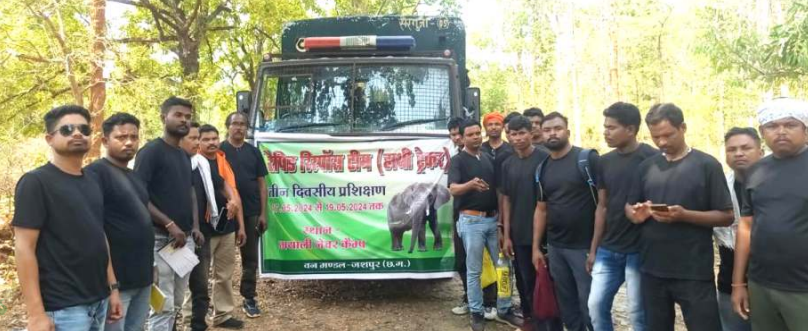
MEET SHASHI KUMAR, GUARDIAN OF COEXISTENCE
Shashi Kumar, an Indian Forest Service officer of the 2018 batch, now serves as the Divisional Forest Officer of Jashpur, one of Chhattisgarh’s most elephant-heavy districts, sharing borders with Odisha and Jharkhand.
“Instead of forcing elephants out or cutting them off, our approach aims to help people and elephants share the same land safely, just as they did for generations,” he shared exclusively with Indian Masterminds.
That’s when he and his team came up with ‘Gajrath,’ a first-of-its-kind initiative rooted not in confrontation but in understanding, education, and the wisdom that coexistence starts with children.
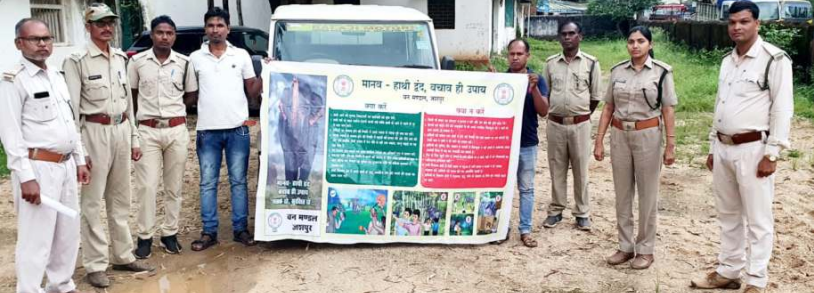
WHAT IS GAJRATH?
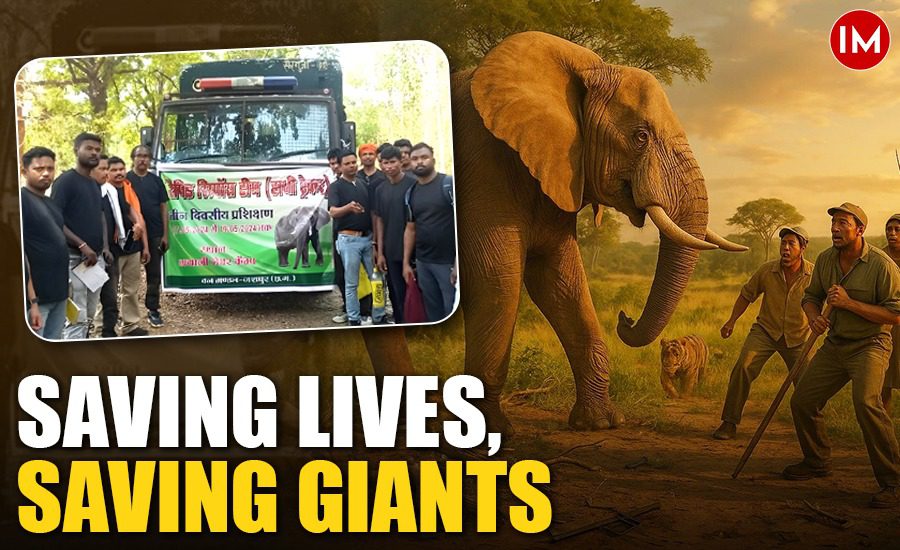
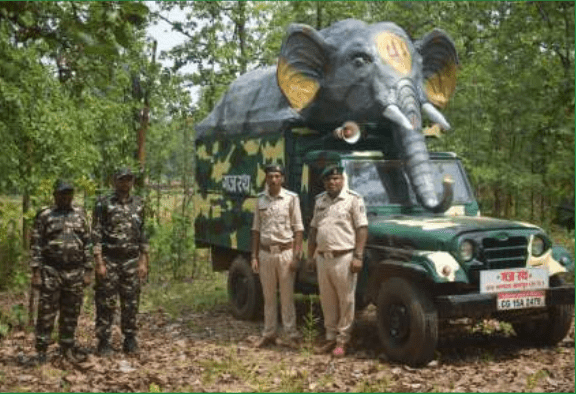
‘Gajrath,’ which means ‘Elephant Chariot,’ is more than just a campaign. It’s a rolling classroom, a promise to rebuild trust between villagers and elephants, and a call for communities to remember what they’ve always known: the forest belongs to all.
Through Gajrath, the forest department is rewriting the narrative of conflict by knocking on school doors, painting village walls with messages of coexistence, and setting up early warning systems that speak before a tusker does.
WHY ELEPHANTS MATTER MORE THAN WE THINK
Ask any child in these villages about Lord Ganesha, the elephant-headed god, and they will fold their hands with reverence. But beyond religion, Shashi Kumar wants them to see elephants for what they truly are: keepers of the forest.
Elephants scatter seeds far and wide through their dung, growing new trees wherever they wander, earning them the name “Gardeners of the Forest.” Their huge bodies carve hidden paths that smaller animals use. Without elephants, entire ecosystems would crumble. Forests they help grow, capture carbon, fighting climate change in a world gasping for breath.
“In every step an elephant takes, a forest finds new life. But when those steps cross into paddy fields, the balance tilts dangerously,” stated the officer.
WHERE CONFLICT BEGINS
So, what changed? Shashi Kumar explains it simply: forests are shrinking, but needs aren’t. Roads cut across age-old trails. Villages spread deep into forest lands. Farmers and elephants now compete for the same crops, water, and fruits.
When an elephant destroys a season’s harvest in one night, anger is inevitable. To protect their fields, people use loud crackers, fire, stones, and even illegal electric fencing. The frightened animals strike back. Homes are smashed, granaries flattened, and lives lost on both sides.
COUNTING THE COST
The damage is real and heavy. In Jashpur alone, families have lost crops, livestock, and even loved ones. In the worst cases, people are killed. In retaliation, elephants get injured, electrocuted, or poisoned. Under the Wildlife (Protection) Act, 1972, harming these protected giants is a serious crime with up to seven years in jail and a fine of up to one lakh rupees.
To help families cope, the government offers compensation of ₹6 lakh for human death, ₹2 lakh for permanent disability, ₹59,100 for injuries, ₹30,000 for lost livestock, and ₹9,000 per acre for damaged crops. But money alone doesn’t heal old fears.
HOW GAJRATH IS DIFFERENT
Gajrath steps in long before tragedy strikes. The programme is built on four pillars: awareness, prevention, technology, and community trust.
1. Awakening Young Minds
In schools, forest officials spend afternoons teaching children why elephants matter and how to stay safe when they wander close. Books, short films, posters… every tool is used to turn fear into respect. Competitions like poster making, essay writing, and street plays help kids become messengers in their own homes.
2. “Sajag” Early Warning System
Villagers now get real-time updates through mobile alerts and GPS tracking of elephant herds. Instead of being surprised at midnight, families know when to keep watch.
3. Walls that Speak
Walls in villages wear new colours now; bright paintings and slogans remind everyone that elephants are not enemies but neighbours. Street plays in local dialects drive the message home.
4. Communities at the Frontline
Villagers themselves form the first line of response. Rapid Response Teams (RRTs) and ‘Elephant Friends’ patrol fields, guide herds back to forests, and warn neighbours when danger approaches.
WHERE THE CHANGE BEGINS
The Gajrath programme works village by village. Areas with the most conflict are classified Red, Yellow, or Blue based on past casualties. Every day, two schools are covered, and evenings bring film screenings in village squares, turning a routine night into a learning camp.
The message is clear: coexistence is not an old tale; it’s the future.
CLEAR TARGETS, REAL IMPACT
Shashi Kumar isn’t throwing slogans in the wind. Gajrath has clear goals:
- Cut down human and elephant deaths by half.
- Ensure every compensation claim is cleared within 30–45 days.
- Reduce crop and property loss.
- Strengthen patrolling and monitoring.
- Bring neighbouring states together to guard elephant corridors.
And at its heart, trust the children. Lessons learned young last forever.
WHAT’S AHEAD?
The forests of Jashpur still echo with the footsteps of elephants. They also echo with the footsteps of forest rangers, children holding books instead of sticks, and villagers who know that loud noises and fire don’t solve anything.
Gajrath is a bet on understanding. It’s a bet that an old bond can be mended not by driving elephants away but by giving people the tools and knowledge to stand with them.
And somewhere deep in the forest, under the shade of sal and teak, Shashi Kumar’s chariot rolls on, carrying stories, lessons, and the hope that one day, both giants and humans will walk these paths without fear.