New Delhi: India’s ambitious Agni-6 ICBM programme has entered a crucial phase after Defence Research and Development Organisation (DRDO) Chairman Dr. Samir V. Kamat confirmed that the agency is technically ready to move ahead with the missile project and is awaiting final government approval.
Soon after his statement, the Bharatiya Janata Party (BJP) said that Agni-6 is “ready to make history,” sparking fresh discussions about India’s next-generation strategic missile capability.
DRDO Says Agni-6 ICBM Programme Ready For Next Stage
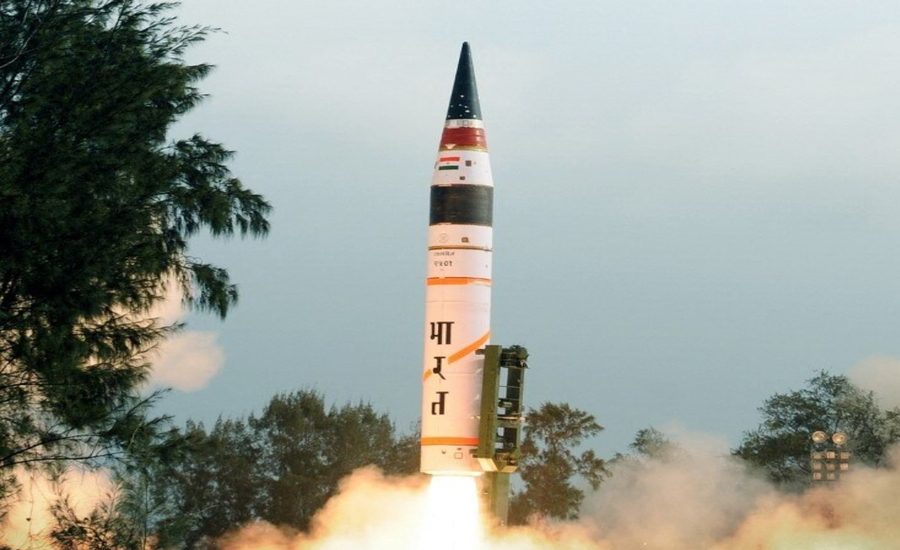
According to recent statements by DRDO Chairman Dr. Samir V. Kamat, the organisation is fully prepared to advance the Agni-6 missile programme once it receives approval from the central government. Reports suggest that the missile is expected to become India’s first true intercontinental ballistic missile (ICBM) with a strike range exceeding 10,000 kilometres.
Read also: Made-in-India Hypersonic Glide Missile Gains Speed, Strengthening National Security Capabilities
The Agni-6 missile is believed to be under development as the most advanced missile in the Agni series. Defence experts say it could significantly improve India’s long-range strategic deterrence capabilities.
BJP’s “Ready To Make History” Statement Raises Speculation
Soon after DRDO’s remarks, BJP posted on X that Agni-6 was “ready to make history.” The party described the missile as a major step toward making India a stronger global power.
The post highlighted that Agni-6 may feature:
- More than 10,000 km strike range
- MIRV technology
- Advanced strategic capabilities
- Stronger nuclear deterrence
The BJP also said that only a few countries currently possess operational ICBM capability and that India’s entry into this group would mark a major strategic achievement.
What Makes Agni-6 ICBM Different?
Agni-6 is expected to become India’s most advanced ballistic missile platform. Although official technical specifications remain classified, several reports suggest the missile may include advanced systems not seen in previous Agni missiles.
Expected Features Of Agni-6
Range Above 10,000 Kilometres
The missile is expected to have intercontinental range capability, allowing India to target locations far beyond its regional boundaries.
MIRV Technology
One of the biggest expected upgrades is MIRV (Multiple Independently Targetable Re-entry Vehicle) technology.
This system allows a single missile to carry multiple warheads that can hit different targets separately.
Improved Survivability
Reports suggest Agni-6 may include manoeuvrable re-entry vehicles (MaRV), decoys, and advanced penetration systems designed to bypass modern missile defence shields.
Land And Possible Submarine Launch Capability
Some reports indicate the missile could eventually support both land-based and submarine-based launch systems, strengthening India’s nuclear triad capability.
NOTAM Over Bay Of Bengal Fuels Test Speculation
Speculation around a possible long-range missile test increased after India issued a Notice to Airmen (NOTAM) restricting airspace over a large area of the Bay of Bengal from May 6 to May 9.
The restricted zone reportedly stretches around 3,560 kilometres from Abdul Kalam Island off the Odisha coast. Defence observers believe such notices are usually issued before major missile tests.
However, the Indian government has not officially confirmed any Agni-6 test schedule.
India’s Expanding Strategic Missile Capability
India has steadily strengthened its strategic missile forces over the last two decades through the Agni missile series.
The Agni-V missile already gives India long-range strike capability, while the Agni-6 programme is expected to further enhance deterrence against distant threats.
India recently demonstrated progress in other advanced missile systems as well, including the Long Range Anti-Ship Hypersonic Missile (LR-AShM), which reportedly achieved speeds close to Mach 10 during testing.
Why Agni-6 ICBM Matters For India
Strategic experts believe Agni-6 could play a major role in:
- Expanding India’s global deterrence reach
- Strengthening second-strike capability
- Enhancing nuclear triad readiness
- Improving missile defence penetration ability
- Increasing India’s strategic influence globally
The missile may also place India among a small group of nations possessing advanced ICBM systems with MIRV capability.
Government Approval Still Pending
Despite growing public discussion, official government approval for the Agni-6 programme is still awaited.
DRDO officials have maintained that the organisation is technologically prepared, but final decisions regarding testing and deployment will depend on the Government of India.
Until then, reports and political statements are likely to continue fueling speculation regarding India’s next major strategic missile milestone.