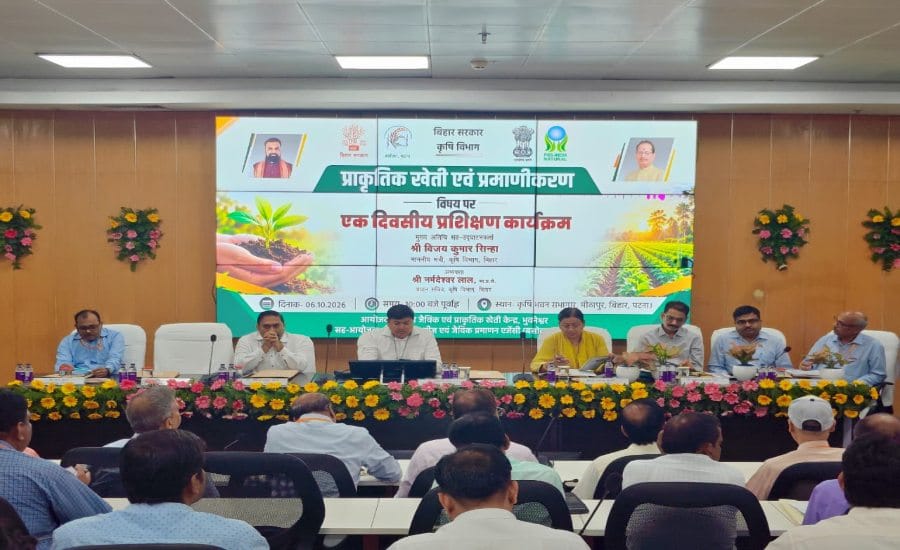
Patna: Bihar will provide financial assistance for setting up new millet processing units as part of efforts to expand millet cultivation, processing and value addition in the state. Under the National Food Security and Nutrition Mission, eligible applicants can receive a subsidy of up to ₹5.40 lakh for purchasing processing machinery.
The scheme provides different subsidy levels for general and SC-ST applicants. General category beneficiaries can receive 40% of the project cost, subject to a maximum subsidy of ₹4.32 lakh. For applicants belonging to Scheduled Caste and Scheduled Tribe communities, the assistance will cover 50% of the project cost, subject to a maximum of ₹5.40 lakh, whichever is lower.
Online applications have been invited for setting up new millet processing units. Farmer Producer Organisations (FPOs), entrepreneurs, individual applicants and other registered institutions can apply under the scheme.
Processing Units to Create Local Value Addition
The initiative aims to encourage processing of millets closer to the areas where they are cultivated. Instead of farmers depending only on the sale of raw produce, local processing can help convert millets into products with greater market value.
Agriculture Minister Vijay Kumar Sinha said the government is providing support to farmers and entrepreneurs to promote millet cultivation and processing in Bihar. He highlighted the potential of processing units to increase local value addition, generate employment and help farmers get better returns for their produce.
The government has invited eligible beneficiaries to use the scheme to establish millet-based enterprises and build businesses around the growing demand for nutritious grains.
The processing units established under the scheme will have a prescribed capacity of 100 to 200 kg per hour. Financial assistance will primarily support the purchase of processing machinery required for the unit.
Who Can Apply for the Millet Subsidy?
The scheme is open to several categories of applicants, allowing both organised groups and individual entrepreneurs to participate.
Eligible applicants include:
- Farmer Producer Organisations
- Entrepreneurs
- Individual applicants
- Other registered institutions
For FPOs, the organisation must have been registered and operational for at least two years.
Individual applicants must be at least 21 years old to qualify for the scheme.
The eligibility conditions are designed to ensure that the units are established by applicants with the capacity to operate and maintain the facilities over the required period.
Subsidy Up to ₹5.40 Lakh
The financial support varies according to the applicant category. The subsidy will be calculated against the eligible project cost.
For general category applicants, the government will provide 40% of the project cost or ₹4.32 lakh, whichever is lower.
For SC and ST beneficiaries, the assistance will cover 50% of the project cost or ₹5.40 lakh, whichever is lower.
Applicants will also need to contribute at least 15% of the project cost from their own resources. In addition, obtaining a bank loan is mandatory under the scheme.
The combination of government subsidy, beneficiary contribution and bank finance is intended to support the establishment of viable processing units rather than one-time assistance without long-term operational capacity.
Land and Operational Costs Not Covered
The subsidy will focus on eligible processing machinery and will not cover several other expenses associated with establishing or running the unit.
The government will not provide subsidy for:
- Purchase of land
- Electricity connection
- Human resources
- Other operational expenses
The processing unit must also be operated and maintained at the designated premises for at least three years. This condition is aimed at ensuring that subsidised machinery remains functional and continues to serve the intended purpose.
The subsidy amount will be transferred directly to the beneficiary’s bank account through Direct Benefit Transfer (DBT).
Machinery Must Be Purchased Through OFMAS Portal
Applicants receiving assistance under the scheme will have to purchase the required machinery from vendors listed on the OFMAS portal.
This condition creates a defined procurement mechanism for the machinery covered under the scheme. It also provides applicants with access to vendors listed on the designated agricultural machinery platform.
Since the subsidy is linked to machinery procurement, applicants will need to follow the prescribed process while purchasing equipment for their millet processing units.
Documents Required for Application
Applicants will have to submit supporting documents along with their online application. These documents are intended to establish the applicant’s identity, financial arrangements and eligibility for the scheme.
The required documents include:
- Detailed Project Report (DPR)
- Bank loan sanction letter or consent letter
- Aadhaar details
- Bank account details
- Registration certificate for institutional applicants
Applicants should ensure that the information provided in the application matches the supporting documents to avoid delays during processing.
Applications Open Through Bihar Agriculture Portal
The application process for the scheme began on September 8, 2026.
Interested applicants can apply online through the Bihar Agriculture Department’s farm mechanisation portal at www.farmech.bihar.gov.in or through the Bihar Agriculture App.
The online system is expected to make it easier for eligible farmers, FPOs, entrepreneurs and registered institutions to submit applications and access the scheme without relying entirely on physical processes.
Boosting Bihar’s Millet Economy
The focus on processing is significant because the economic potential of millets extends beyond cultivation. Processing, packaging and value-added products can create additional opportunities for rural entrepreneurs while generating demand for locally produced millets.
For farmers, the availability of nearby processing facilities can potentially create stronger local markets for their produce. For entrepreneurs and FPOs, the subsidy can reduce the initial cost of purchasing machinery and make it easier to establish millet-based enterprises.
The scheme also aligns agriculture with employment and rural enterprise development by supporting activities beyond primary farming.
By encouraging new processing units with defined capacity, government assistance and digital application mechanisms, Bihar is seeking to build a stronger ecosystem around millet cultivation and processing. The initiative could help connect farmers with local enterprises while creating additional economic opportunities in rural areas.
Read also: A New Way to Give Back: Bihar to Expand “Danveer” Asset Donation Drive