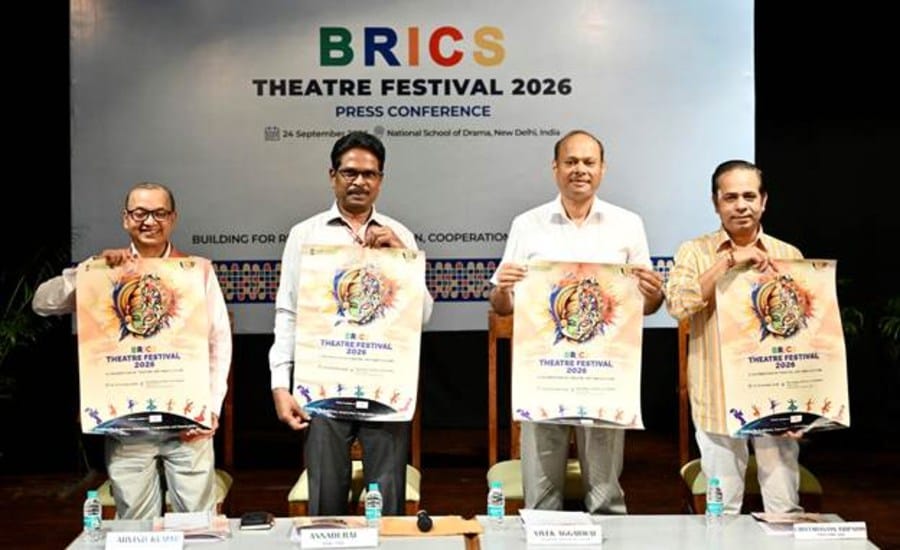
New Delhi: New Delhi is set to become a meeting point for diverse theatrical traditions this October as India hosts the BRICS Theatre Festival 2026 from October 12 to 14 under its BRICS Presidency.
Organised by the Ministry of Culture, the three-day festival will bring together more than 100 theatre practitioners, scholars, students and cultural representatives from nine BRICS member and partner countries. Themed “Shared Stories, Shared Futures”, the festival will use theatre as a platform for cultural exchange and professional interaction.
The event will feature performances, workshops and discussions covering different languages, theatrical traditions and contemporary forms of creative expression.
Nine Countries to Take the Stage
The festival will feature participation from India, Thailand, Indonesia, Russia, Vietnam, Iran, South Africa, Kazakhstan and Ethiopia.
India will showcase two theatre productions, while participating countries will present productions reflecting their respective languages, cultural traditions and contemporary theatre practices. Russia will be represented by two theatre groups.
The diverse participation is expected to give audiences an opportunity to experience different approaches to performance, storytelling and stagecraft on a common platform.
Read also: ₹285 Crore Push for India’s Indigenous ePlane as Ubifly Targets TRL-9
National School of Drama to Host Inauguration
The BRICS Theatre Festival will be inaugurated at the National School of Drama (NSD) on October 12.
Performances will take place at several established theatre venues across New Delhi, including the National School of Drama’s Abhimanch Auditorium and Sammukh Auditorium, along with Kamani Auditorium, LTG Auditorium and Meghdoot Theatre.
The National School of Drama, an autonomous institution under the Ministry of Culture, will serve as the nodal agency for organising the festival.
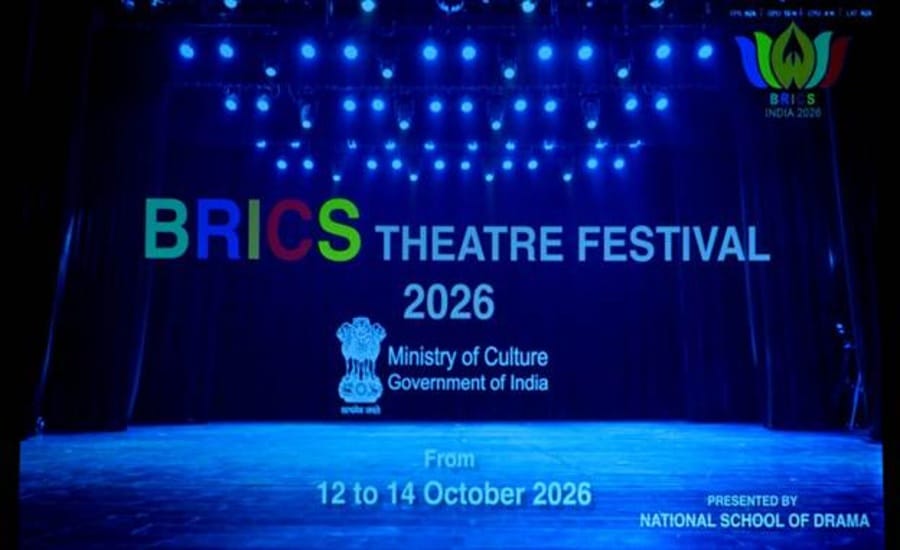
Classical, Contemporary and Experimental Theatre
The BRICS Theatre Festival will not be limited to one style of performance. The programme will bring together classical, contemporary and experimental forms of theatre.
Alongside performances, the festival will create opportunities for theatre professionals to discuss the creative and technical aspects of their work.
Interactive workshops and discussions will involve directors, artistes and production teams, with sessions focusing on areas such as:
- Artistic vision and performance traditions
- Acting methodologies
- Stagecraft
- Technical and production design
These interactions are intended to allow theatre practitioners to exchange professional knowledge beyond the performances themselves.
Festival Builds on Bhopal Declaration
The festival is being organised in the broader context of cultural cooperation under India’s BRICS Presidency 2026.
Culture Ministry Secretary Vivek Aggarwal said the festival builds on the Bhopal Declaration, adopted at the BRICS Culture Ministers’ Meeting in August 2026. The declaration emphasised greater cultural cooperation, people-to-people exchanges and stronger networks among artists and cultural practitioners.
India had also proposed a voluntary Artist Registry to facilitate exchanges among artists and cultural practitioners.
The theatre festival carries this broader cultural-exchange approach into a live platform where artists can perform, interact and build professional connections.
Cultural Exchange Beyond Formal Diplomacy
The festival also connects with the wider BRICS emphasis on people-to-people relations.
The BRICS Leaders’ Declaration welcomed the Bhopal Declaration and noted initiatives aimed at strengthening cultural cooperation, cultural exchanges and people-to-people ties.
In this context, theatre offers a direct way for artists and audiences to encounter different cultural expressions. Performances can bring together traditional forms and contemporary creative work while allowing practitioners to discuss how theatre is created and presented in different countries.
For participating artists, the festival also provides an opportunity to engage with fellow practitioners, directors and production teams from other cultural backgrounds.
Why the BRICS Theatre Festival Matters
The BRICS Theatre Festival 2026 adds a cultural dimension to India’s BRICS Presidency by placing artists and creative practitioners at the centre of an international exchange.
For theatre audiences in Delhi, the three-day programme will provide access to productions representing multiple countries and theatrical traditions. For students and emerging practitioners, workshops and professional discussions can offer exposure to different approaches to acting, direction, stagecraft and production.
The festival also reflects how cultural programmes can complement formal international engagement by creating spaces for direct interaction between people.
With more than 100 participants expected from nine countries, the New Delhi festival will bring together performances and professional exchanges under a single artistic theme: “Shared Stories, Shared Futures.”
As the National School of Drama leads the organisation of the event, the festival is set to combine international cultural participation with India’s established theatre ecosystem, giving the BRICS Presidency a distinctive stage for people-to-people engagement.
Read also: India Expands Patient-Safety Net as Centre Approves Biovigilance Programme