New Delhi: The Government of India has approved the Biovigilance Programme of India to strengthen monitoring of adverse events linked to medicines and biological products used in organ and tissue transplantation, Union Minister of State for Health and Family Welfare Anupriya Patel announced on September 21.
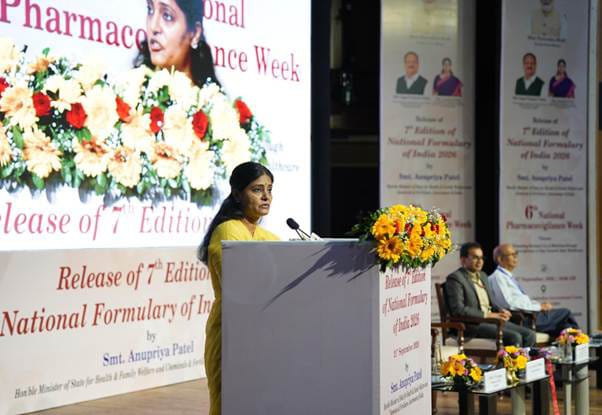
The announcement came during the 6th National Pharmacovigilance Week programme organised by the Indian Pharmacopoeia Commission (IPC) at Dr Ambedkar International Centre in New Delhi.
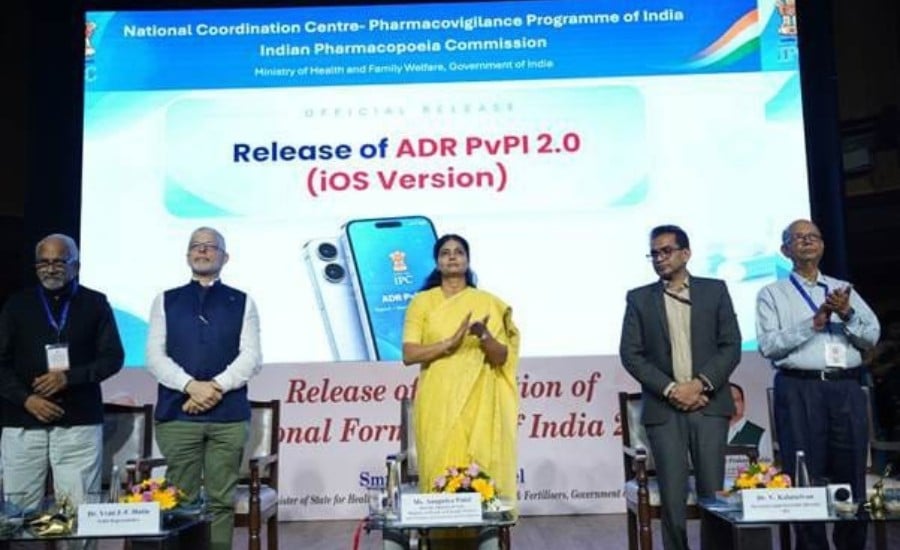
Patel also launched the 7th Edition of the National Formulary of India (NFI) 2026, a guidance document for hospitals on monitoring and reporting medical-device-related adverse events, and the ADR-PvPI 2.0 mobile app for iOS users.
Biovigilance Programme to Cover Transplant-Related Safety
Under the newly approved Biovigilance Programme, the IPC will lead the reporting, assessment, monitoring and prevention of adverse events associated with medicines and biological products used in organ and tissue transplantation.
Read Also: Bank of Maharashtra Appoints IAS Saurabh Kumar as Government of India Nominee Director
The programme will cover products administered to both donors and recipients.
The government said the new initiative will complement existing safety-monitoring programmes covering medicines and medical devices.
Key patient-safety initiatives now include:
- Pharmacovigilance Programme of India (PvPI): Monitoring adverse drug reactions.
- Materiovigilance Programme of India (MvPI): Monitoring adverse events linked to medical devices.
- Biovigilance Programme of India: Monitoring safety concerns associated with products used in organ and tissue transplantation.
India Rises to 8th in WHO Patient-Safety Database Contributions
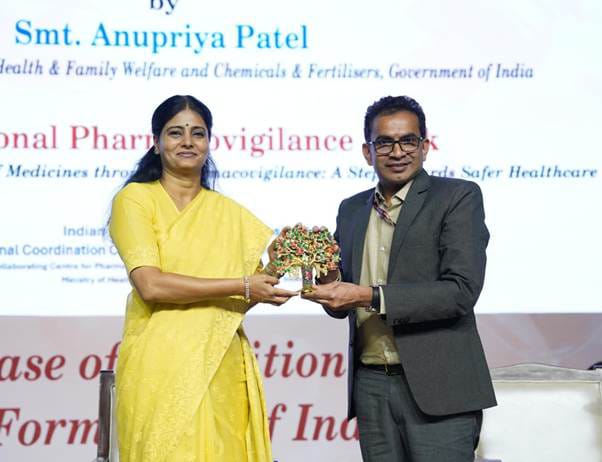
Patel said India has moved from the 123rd position during 2009–2014 to eighth globally in contributions to the WHO patient safety database.
She highlighted the Pharmacovigilance Programme of India, coordinated by the National Coordination Centre at IPC, for collecting, assessing and analysing adverse drug reaction data.
“Medicine safety must become everyone’s responsibility. Every single reported event can save a life,” Patel said.
Around 1,150 adverse drug reaction reporting centres are currently operational across public and private hospitals and medical colleges. The government plans to expand the reporting network to the primary healthcare level.
NFI 2026 Adds 653 Drugs
The 7th Edition of the National Formulary of India has also been made available digitally through NFI Online.
The NFI 2026 contains:
- 34 chapters
- 20 appendices
- 653 drugs
- 42 fixed-dose combinations
- 30 immunologicals
The drug monographs have been revised in line with the National List of Essential Medicines (NLEM) and National Health Programmes.
Published periodically by the IPC since 2009, the NFI is intended to support healthcare professionals in the rational and safe use of medicines.
Government Pushes Digital Tools for Medicine Safety
Patel highlighted digital platforms including NFI Online, IP Online, ADR-PvPI 2.0 and the Adverse Drug Reaction Monitoring System (ADRMS) as tools for improving access to medicine-related information and adverse-event reporting.
She also called for greater use of artificial intelligence and advanced data analytics in medicine-safety systems.
The Minister stressed the need to increase patient participation in adverse-event reporting, describing patient reporting as an area requiring greater attention.
Pharmacovigilance Week Focuses on Rational Medicine Use
The 6th National Pharmacovigilance Week is being observed from September 17 to 23, 2026, with the theme “Promoting Rational Use of Medicines through Pharmacovigilance: A Step Towards Safer Healthcare.”
Patel said medicine safety requires continued monitoring across the lifecycle of medicines and medical devices, from development and manufacture through prescription, dispensing, use and post-market surveillance.
She also noted that around 25 countries recognise and accept the Indian Pharmacopoeia, while the IPC became a member of the Pharmacopoeial Discussion Group in 2023.
The Minister called for greater collaboration among government institutions, regulators, healthcare professionals, researchers, pharmaceutical companies and patients to strengthen medicine safety.
Read Also: Govt Signs Two Key MoUs Through IPC with PMBI and NIPER Hajipur to Boost Drug Quality and Research