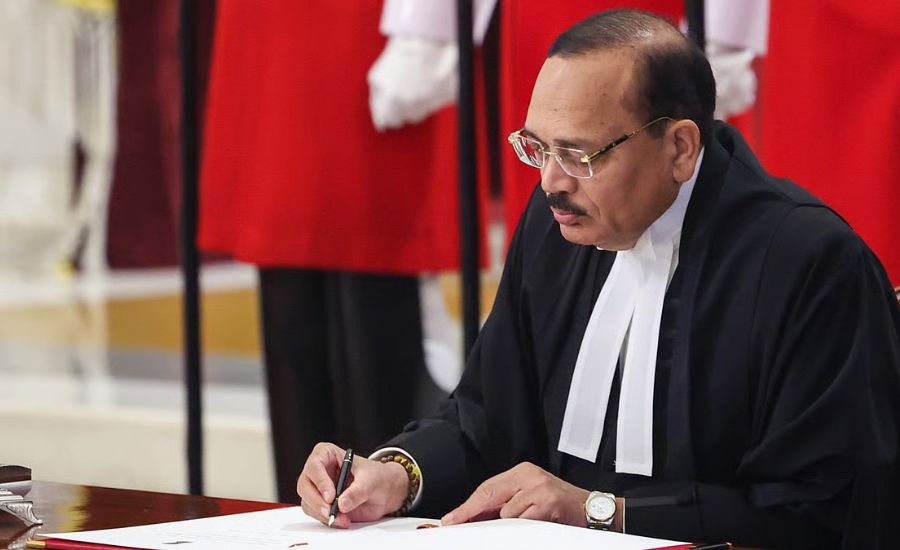
New Delhi: CJI Surya Kant warning on AI has sparked a major discussion in India’s legal community. The Chief Justice of India has clearly told new lawyers not to depend on Artificial Intelligence for legal drafting. In a strong message, he stressed that legal work must be done personally with full responsibility.
This warning comes at a time when AI tools are rapidly entering professional fields, including law. The Supreme Court wants to ensure that justice, accuracy, and accountability are not compromised.
Details of CJI Surya Kant Warning on AI
Chief Justice of India Justice Surya Kant addressed newly inducted Advocates-on-Record (AoRs) and gave a clear warning. He said lawyers should not outsource legal work to AI tools or third parties.
Read also: Why India Needs National Standards for Artificial Intelligence in Governance?
He emphasized that every petition filed in court reflects the professional judgment and integrity of the advocate whose name appears on it.
According to him, legal drafting is not a routine task. It requires careful reading, deep understanding, and personal involvement.
Why AI Use in Legal Work is a Concern
The Chief Justice raised concerns about the growing dependence on AI in legal practice. He highlighted that:
- AI cannot replace human judgment and accountability
- Legal documents require fact-checking and verification
- Errors in legal drafting can directly impact justice
He advised lawyers to treat every case seriously and avoid shortcuts through automation.
Role and Responsibility of Advocates-on-Record
Advocates-on-Record hold a special position in the Supreme Court. Only they are authorized to file and represent cases before the court under its rules.
CJI Surya Kant explained that AoRs are not just lawyers but also officers of the court. This means:
- They carry high ethical responsibility
- They act as a bridge between clients and the judiciary
- Their work directly impacts the quality of justice delivered
“Do Not Treat Filing as a Routine Process”
The CJI clearly stated that filing petitions should never be treated casually.
He advised lawyers to:
- Read every brief carefully
- Verify facts properly
- Build strong legal arguments
He stressed that quality legal work cannot be outsourced, especially to AI tools.
Technology in Judiciary: Support, Not Replacement
Interestingly, the judiciary is not against technology. In fact, official statements show that technology is being encouraged to improve access to justice.
However, the CJI made it clear:
- Technology should assist lawyers, not replace them
- Final responsibility must always lie with the human advocate
Impact of CJI Surya Kant Warning on AI
This warning is important for the future of legal practice in India.
It sends a clear message that:
- Ethics and responsibility are more important than convenience
- AI tools must be used carefully and responsibly
- Human expertise remains central to justice
The move is expected to shape how young lawyers approach legal work in the AI era.