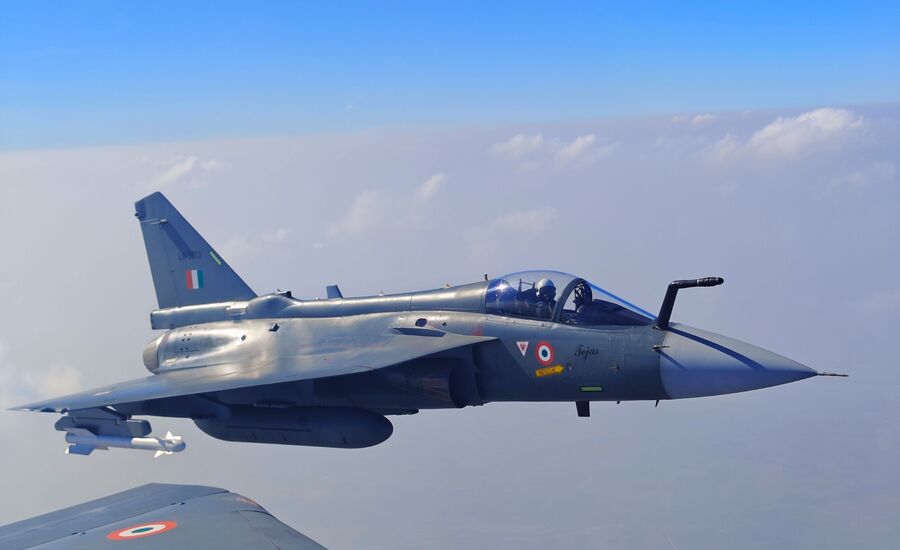
New Delhi: Recent reports say GE is strengthening F404-IN20 production to overcome earlier supply-chain problems in Tejas Mk1A programme. Official GE Aerospace information confirms that the company restarted the F404-IN20 production line after it had remained inactive for five years, following HAL’s order for 99 engines in 2021.
The development is important for Hindustan Aeronautics Limited (HAL), which needs a steady supply of engines to increase production of the Tejas Mk1A for the Indian Air Force (IAF).
Why GE Had to Restart F404-IN20 Production
The F404-IN20 is not a newly developed engine. GE Aerospace had earlier supplied 65 F404-IN20 engines to HAL by 2016. However, with no additional orders expected at that time, the F404-IN20 production line was shut down.
Read also: Make in India Rafale: Safran Ready to Build Engine Line in India, Sources Indicate
The situation changed in 2021 when HAL placed a $716 million order for 99 F404-GE-IN20 engines, along with support services, for the Tejas programme.
GE then faced the difficult task of restarting a production system that had been inactive for about five years and reconnecting its global supplier network. GE Aerospace itself has described restarting a fighter-engine production line as a complex process.
What Is Special About the F404-IN20 Engine
The F404-IN20 was specially adapted for India’s Tejas fighter programme. According to GE Aerospace, it is the highest-thrust member of the F404 family and uses a higher-flow fan, unique single-crystal turbine blades and other specialised components.
The engine also uses Full Authority Digital Engine Control (FADEC), which helps electronically manage engine operation. This makes a stable supply of F404-IN20 engines critical for HAL’s Tejas Mk1A manufacturing plans.
Tejas Mk1A Programme: How Many F404 Engines Could HAL Receive
Recent reports claim that HAL could receive around 20–22 F404-IN20 engines by the end of 2026, followed by a further increase in supplies. The report provided for this story goes further, saying GE could supply another 30 engines next year, potentially taking the combined number to around 50–52 engines across the two periods. However, an important distinction is needed: GE Aerospace’s publicly available official releases reviewed for this article do not currently confirm this exact 20–22 plus 30 delivery schedule or the reported “52 engines” figure.
What GE officially confirms is that it restarted the F404-IN20 production line and its supply chain to meet HAL’s large engine requirement.
Why Engine Supply Matters for Tejas Mk1A Programme
A fighter aircraft cannot be completed and delivered without its engine, making F404 availability one of the most important factors affecting the pace of Tejas Mk1A production.
A faster and more predictable engine supply could therefore allow HAL to complete more aircraft, conduct required testing and hand them over to the IAF at a faster rate. It could also give HAL greater certainty when planning its production schedule.
India Has Ordered Another 97 Tejas Mk1A Aircraft
India’s requirement for F404 engines has grown significantly. On September 25, 2025, the Ministry of Defence signed a contract worth more than ₹62,370 crore, excluding taxes, with HAL for another 97 LCA Mk1A aircraft.
The order consists of 68 single-seat fighters and 29 twin-seat aircraft. Deliveries under this contract are officially scheduled to begin in 2027–28 and continue over six years.
The government says these aircraft will contain more than 64% indigenous content and include 67 additional indigenous items compared with the earlier Mk1A contract.
Tejas Mk1A Programme: HAL Signs Deal for Another 113 F404 Engines
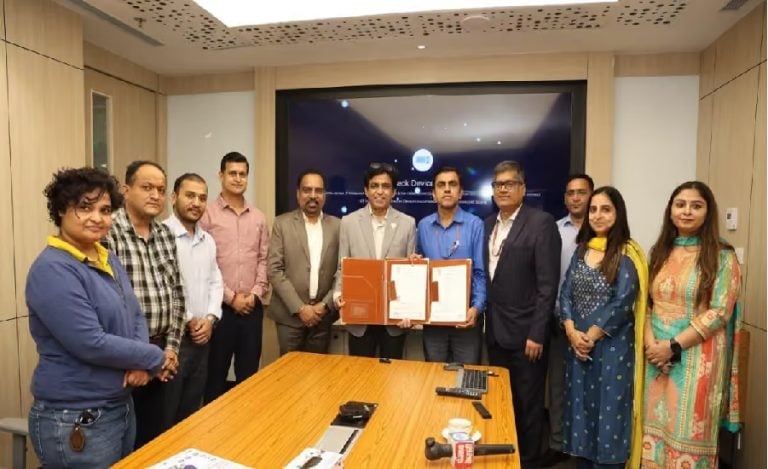
The larger aircraft order has also created another major requirement for engines. HAL signed an agreement with General Electric Company on November 7, 2025, for 113 additional F404-GE-IN20 engines, together with a support package for the 97-aircraft programme.
According to official government information, deliveries of these 113 engines are scheduled from 2027 to 2032. This comes on top of the earlier 99-engine order and makes reliable F404 production increasingly important for India’s long-term Tejas programme.
Tejas Mk1A Is Becoming More Indigenous
While the engine comes from GE Aerospace, India is increasing the amount of locally developed technology used in the Tejas Mk1A. The Ministry of Defence has confirmed that the new batch will integrate systems including the indigenous UTTAM Active Electronically Scanned Array (AESA) radar, Swayam Raksha Kavach and indigenous control-surface actuators.
Around 105 Indian companies are directly involved in supplying components for the programme. The government estimates that the 97-aircraft project could support nearly 11,750 direct and indirect jobs per year during its six-year production period.
India Is Also Building F404 Engine Support Capability
India is not only expanding the Tejas fleet. It is also strengthening infrastructure to maintain its F404 engines. In April 2026, GE Aerospace announced a contract with the Indian Air Force to help establish an in-country depot for F404-IN20 engines.
The facility will be owned, operated and maintained by the IAF, while GE Aerospace will provide technical inputs, training, support personnel, spares and specialised equipment.
Once operational, the facility is expected to reduce dependence on overseas repair centres and improve engine repair turnaround times.
Why This Matters for India’s Fighter Fleet
A stable F404 supply could remove an important production constraint for the Tejas Mk1A programme.
HAL already has major aircraft orders to execute, while the IAF needs new fighters as it modernises its combat fleet. The combination of restarted F404-IN20 production, the additional 113-engine agreement and India’s planned domestic engine-maintenance capability provides a clearer long-term support structure for the Tejas fleet.
The key question now is whether engine deliveries can consistently reach the higher rates being reported.
Read also: India-France Rafale Deal: Why Does IAF Want 40% Indigenous Content, 60% in Final Batch