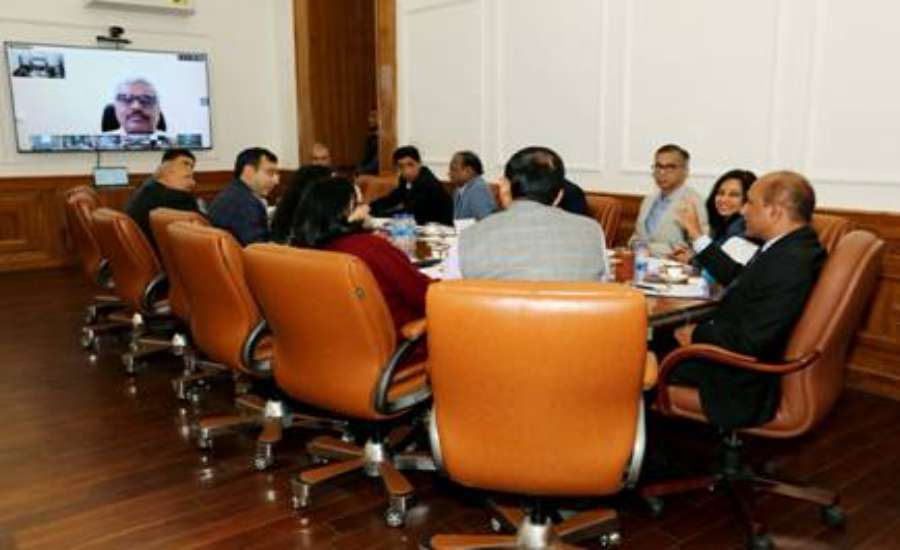
New Delhi: India is taking a decisive step to strengthen academia–defence production collaboration in India as the Ministry of Defence works to align cutting-edge academic research with real defence manufacturing needs.
In a high-level virtual interaction, senior defence leadership engaged with top academic institutions to create a long-term, structured framework for cooperation. The initiative focuses on moving beyond short-term projects and building sustained research partnerships that can directly support India’s defence preparedness, indigenisation goals, and long-term national capability development.
Details of Academia–Defence Production Collaboration
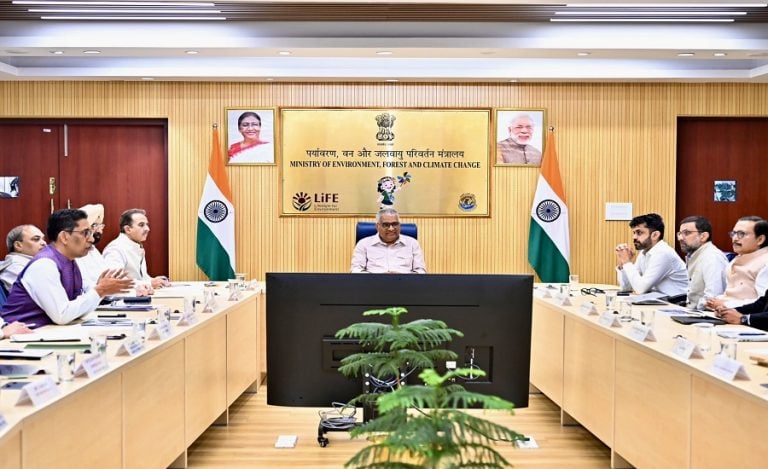
The interaction was chaired by the Secretary (Defence Production) under the ministry of defence, bringing together Directors and Deans from India’s premier academic institutions.
The meeting was held virtually in New Delhi and included participation from leading Indian Institutes of Technology (IITs), National Institutes of Technology (NITs), Indian Institutes of Science Education and Research (IISc), Defence Public Sector Undertakings (DPSUs), and other key stakeholders.
The objective was clear: to align academic research priorities with India’s evolving defence production and technology requirements.
Focus on Long-Term Research Over Short-Term Projects
One of the central themes of the discussion was the need to move away from isolated, short-duration research projects. Instead, the Ministry emphasised long-term, student-driven research programmes that can generate deep technological expertise and innovation over time.
Such an approach ensures that academic research does not remain confined to papers and prototypes but matures into deployable defence technologies.
Long-term engagement also helps institutions develop specialised defence-focused research ecosystems, benefiting both students and national security objectives.
Strengthening Academia–DPSU Collaboration
Another key area discussed was the strengthening of collaboration between academic institutions and Defence Public Sector Undertakings. The interaction highlighted the importance of continuous engagement, rather than one-off collaborations, to ensure effective knowledge transfer.
By working closely with DPSUs, academic researchers can gain exposure to real-world defence production challenges. At the same time, defence manufacturers can access advanced research, fresh talent, and innovative solutions emerging from campuses across the country.
Structured Mechanisms for Sustained Engagement
The Ministry underlined the need for institutionalised and structured mechanisms that allow academia and defence production bodies to work together consistently. These mechanisms are expected to provide:
- Regular consultation platforms
- Clearly defined research priorities
- Long-term technology roadmaps
- Feedback loops between researchers and defence manufacturers
Such systems will help translate academic research into usable defence capabilities more efficiently and at scale.
Translating Research into Deployable Defence Capabilities
A major concern addressed during the interaction was the gap between academic research outcomes and their practical deployment. The Ministry stressed that effective translation of research into field-ready defence systems is critical for India’s strategic autonomy.
Structured collaboration, early involvement of defence production agencies, and alignment with future technology needs are expected to significantly reduce delays in adoption and deployment.
Call for a Consultative Framework with Academia
Expressing appreciation for the valuable inputs from participating institutions, the Secretary (Defence Production) urged academia to adopt a consultative engagement model with the Department of Defence Production.
He noted that such a framework would provide policymakers with deeper insight into academic research capabilities, while allowing institutions to better understand long-term national defence priorities.
Academia–Defence Production Collaboration : Participation from India’s Premier Institutions
The interaction witnessed participation from senior leadership of several leading institutions, including:
- IIT Madras
- IIT Kanpur
- IIT Bombay
- IIT Hyderabad
- IIT Gandhinagar
- IIT Tirupati
- IIT Guwahati
Senior professors and directors from 24 premier academic institutions across India contributed to the discussions, reflecting the nationwide scope of the initiative.
Boost to Self-Reliance and Future Defence Ecosystem
The interaction reaffirmed India’s commitment to building a resilient, self-reliant, and future-ready defence technology ecosystem. By leveraging the intellectual strength of its top academic institutions, India aims to reduce dependence on imports and accelerate indigenous defence innovation.
Collaboration with industry partners alongside academia is expected to further strengthen this ecosystem, ensuring faster development cycles and improved technological outcomes.
Importance of Academia–Defence Production Collaboration
This strategic push is significant because it directly supports:
- Atmanirbhar Bharat in defence manufacturing
- Development of next-generation defence technologies
- Skill development and employment for students
- Faster innovation-to-deployment timelines
- Stronger academia-industry-government collaboration
In the long run, these efforts will help India stay prepared for emerging security challenges while strengthening its global standing as a defence technology innovator.