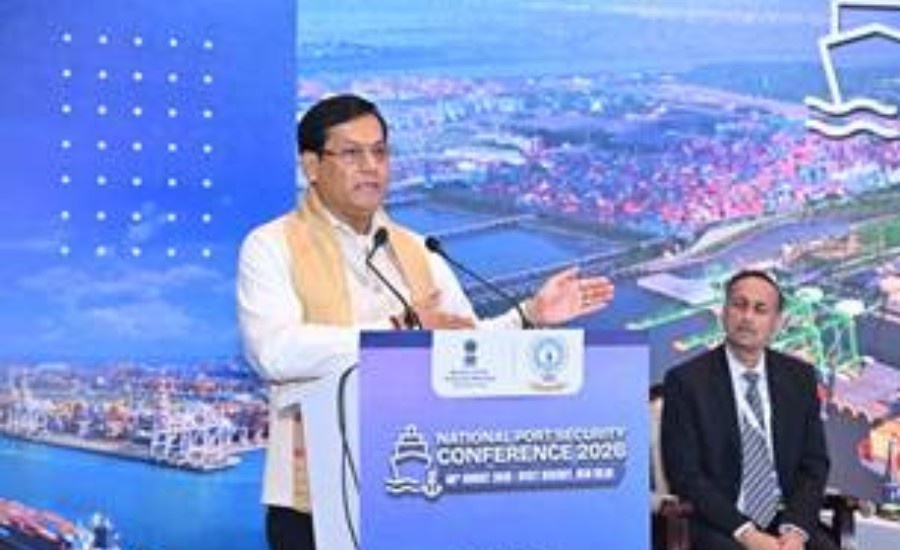
New Delhi: India plans To add 100 merchant ships over 5 years to cut annual $75 billion freight payments is a major initiative announced by the Ministry of Ports, Shipping and Waterways. The plan aims to reduce India’s dependence on foreign shipping companies and lower the massive freight payments made every year to overseas carriers. The announcement was made by Union Minister Sarbananda Sonowal during the inaugural “Sagar Samvad” event organized by the National Shipping Board.
The initiative is part of India’s broader vision to strengthen domestic shipping capacity, improve maritime infrastructure, and support long-term economic growth.
India Merchant Ships Growth Plan: Why India Wants More Merchant Ships
India currently operates a merchant fleet of around 1,600 seagoing ships. Despite being one of the world’s fastest-growing economies, the country still relies heavily on foreign carriers for transporting critical cargo such as crude oil, gas, coal, fertilizers, and other essential commodities. Because of this dependence, India pays nearly $75 billion every year in freight charges to foreign shipping lines.
Read also: Sonowal Sets Out Plan to Add 100 Ships to India’s Fleet, Cut $75 Billion Foreign Freight Bill
The government wants to reduce this outflow of foreign exchange by expanding the Indian-flagged fleet.
India Merchant Ships Growth Plan: Announcement Made At Sagar Samvad
The proposal was discussed during the first-ever “Sagar Samvad” dialogue held in New Delhi. The National Shipping Board recommended a five-point roadmap that focuses on fiscal reforms, assured cargo support, better access to financing, regulatory simplification, and improving ease of doing business in the shipping sector.
The event brought together policymakers, shipping companies, financiers, maritime experts, and training institutions to discuss the future of India’s maritime industry.
How The India Merchant Ships Growth Plan Will Benefit India
A larger Indian merchant fleet will help retain freight earnings within the country. It will also improve India’s control over supply chains and reduce vulnerabilities during global disruptions. Experts believe stronger domestic shipping capacity can improve trade security and economic resilience.
Boosting Employment Opportunities
The shipping sector creates jobs for seafarers, engineers, logistics professionals, and maritime workers. Government officials believe the expansion can generate significant employment opportunities and help India become a leading supplier of skilled maritime manpower globally.
Challenges Facing Indian Shipping
Indian-flagged vessels currently face a cost disadvantage compared to foreign-flagged ships. Industry estimates suggest operating under the Indian flag can be around 16–20 percent more expensive due to taxes, regulations, and financing costs. Addressing these issues is a key objective of the new roadmap.
Need For Better Financing
Ship acquisition requires significant capital investment. The government has already taken steps to strengthen maritime financing through initiatives such as the Maritime Development Fund and policies supporting shipbuilding and ship repair industries.
India Merchant Ships Growth Plan: India’s Long-Term Maritime Vision
The proposal aligns with Maritime India Vision 2030 and Maritime Amrit Kaal Vision 2047. These long-term strategies aim to transform India into a major global maritime power through port modernization, shipbuilding growth, improved logistics, and stronger shipping capabilities.
Part Of A Larger Shipping Expansion Strategy
The government’s broader maritime strategy includes expanding the national fleet, improving shipbuilding capacity, developing shipping finance mechanisms, and reducing logistics costs for Indian trade.
FAQs
India currently has a merchant fleet of approximately 1,600 seagoing ships.
India wants to reduce its dependence on foreign shipping companies and lower the nearly $75 billion paid annually in freight charges to overseas carriers.
The primary goal is to strengthen India’s shipping sector, improve maritime self-reliance, retain freight earnings within the country, and support long-term economic growth.