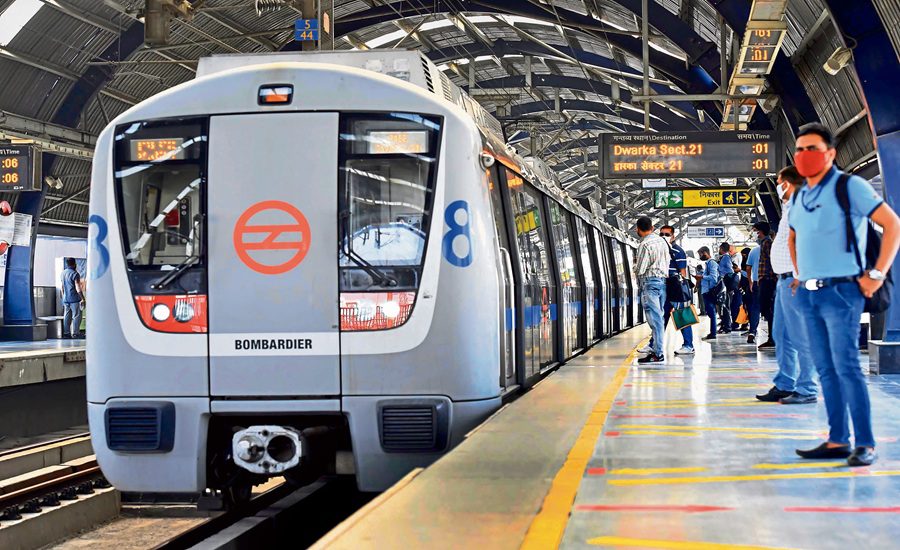
New Delhi: The Delhi Metro Rail Corporation (DMRC) is set to transform the Delhi-NCR public transport network with major expansion plans under Phase-4 and Phase-5(A) projects. The upcoming expansion will develop eight new metro corridors, adding 15 new interchange stations and making travel across the capital region faster and more convenient.
Once completed, the Delhi Metro network will have a total of 46 interchange stations, compared to the existing 31 interchange stations. The expansion aims to strengthen connectivity between different metro lines and reduce travel time for millions of daily commuters.
Delhi Metro to Develop Five New Triple Interchange Hubs
A major highlight of the expansion plan is the creation of five new triple interchange stations, where passengers will be able to switch between three different metro lines.
Currently, Kashmere Gate is Delhi Metro’s only triple interchange station, connecting the Red, Yellow and Violet lines.
After the completion of new projects, the following stations will become triple interchange hubs:
- New Delhi Station – Yellow Line, Airport Express Line and Magenta Line.
- Inderlok Station – Red Line, Green Line and extended Magenta Line.
- Lajpat Nagar Station – Violet Line, Pink Line and upcoming Golden Line.
- Azadpur Station – Yellow Line, Pink Line and Magenta Line extensions.
- Central Secretariat Station – Yellow Line, Violet Line and Magenta Line extension.
These hubs will significantly improve connectivity between different parts of Delhi-NCR.
Read also: CM Rekha Gupta Launches Door-to-Door Waste Collection Project with 917 Modern Vehicles in West Delhi
Delhi Metro Interchange Network to Increase from 31 to 46 Stations
At present, Delhi Metro has 31 interchange stations, including connections with the Noida-Greater Noida Aqua Line and Gurugram Rapid Metro.
The new expansion will increase the number of interchange stations to 46, allowing passengers to switch routes more easily and reducing dependency on long direct journeys.
The additional interchange stations will help commuters travel efficiently between residential areas, business districts, railway stations and the airport.
Phase-4 Expansion to Add Several New Interchange Stations
Under Delhi Metro Phase-4, several important stations will be developed as interchange points.
The upcoming interchange stations include:
- Delhi Gate
- Indraprastha
- Chirag Delhi
- Saket G Block
- Chhatarpur
- Tughlakabad
- Peeragarhi
- Madhuban Chowk
- Pulbangash
- RK Ashram Marg
- Nabi Karim
- Delhi Aerocity
- IGI Airport Terminal-1
The development of interchange facilities at these locations will improve connectivity across major residential and commercial areas.
Phase-5(A) to Add More Interchange Facilities
The Phase-5(A) expansion plan will further strengthen Delhi Metro connectivity by developing additional interchange stations.
The planned interchange stations under this phase include:
- Shivaji Stadium
- Kalindi Kunj
These additions will improve route flexibility and provide passengers with more travel options.
Magenta Line to Become Delhi Metro’s Biggest Interchange Corridor
After the completion of expansion projects, the Magenta Line is expected to become the Delhi Metro corridor with the highest number of interchange stations.
Expected interchange numbers after expansion:
- Magenta Line: 22 interchange stations.
- Blue Line: 15 interchange stations.
- Pink Line: 14 interchange stations.
The increased interchange capacity will allow passengers to switch routes quickly without taking longer alternative routes.
Most Metro Passengers Depend on Interchange Connectivity
According to a DMRC analysis, interchange facilities play a crucial role in daily metro travel.
A study conducted between October 2023 and March 2024 found that:
- Only around 20–30% of passengers complete their journey on the same metro line.
- Around 70–80% of passengers change to one or more metro lines to reach their destinations.
The findings highlight the importance of developing a stronger interchange network along with new metro corridors.
Ongoing Phase-4 Metro Construction Projects
Construction work is currently underway on five major corridors under Phase-4.
These include:
- Krishna Park Extension–Deepali Chowk corridor.
- Inderlok–Indraprastha Magenta Line extension.
- Delhi Aerocity–Tughlakabad corridor.
- Saket G Block–Lajpat Nagar Golden Line corridor.
- Rithala–Kundli Red Line extension.
These projects are expected to expand the metro network and improve last-mile connectivity.
Phase-5(A) Projects to Further Expand Delhi Metro Network
Under Phase-5(A), DMRC plans to develop three additional corridors:
- Tughlakabad–Kalindi Kunj corridor.
- Aerocity–Terminal-1 corridor.
- RK Ashram Marg–Indraprastha corridor.
The completion of these projects will make Delhi Metro more integrated and passenger-friendly.
Delhi Metro Expansion to Improve Travel Experience Across NCR
DMRC officials said the objective of the expansion is not only to add new metro lines but also to create a better-connected network where passengers can travel seamlessly across Delhi-NCR.
The new interchange stations are expected to:
- Reduce travel time.
- Improve route connectivity.
- Strengthen public transport infrastructure.
- Provide smoother journeys for daily commuters and tourists.
With these developments, Delhi Metro is set to become a more efficient and interconnected transport system for the growing needs of the National Capital Region.