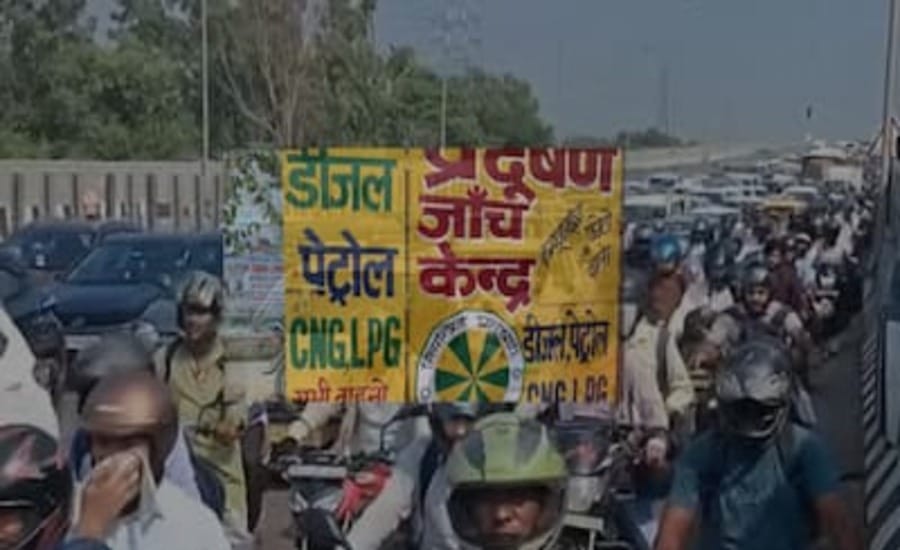
New Delhi: Delhi is set to strengthen monitoring of vehicle pollution and fitness checks with a major technology upgrade at Pollution Under Control (PUC) centres across the Delhi-NCR region. Chief Minister Rekha Gupta has announced that PUC centres will be equipped with cameras to improve monitoring, transparency and compliance.
The announcement comes alongside the commissioning of two fully automated vehicle testing stations at Nand Nagri and Tehkhand. Together, the new facilities are expected to have the capacity to test around 72,000 vehicles annually.
PUC Centres to Come Under Camera Surveillance
The Delhi government plans to strengthen surveillance at pollution testing centres, including those operating around petrol pumps. Cameras will be used to monitor testing activity and improve transparency in the process.
The move is aimed at ensuring that vehicles undergo the required emissions testing properly and that the certification process remains compliant with prescribed procedures.
Delhi already has a digital system for PUC testing. A January 2026 Transport Department circular directed PUC centres to upload video clips of emission tests on the VAHAN portal. The recordings are required to show the vehicle registration number, the surrounding area and the proper insertion of the testing probe into the exhaust pipe.
The new camera-based monitoring initiative is therefore part of a broader effort to increase oversight of pollution testing and reduce gaps in compliance.
Read Also: Delhi’s Mega Seva Sankalp: ₹13,820 Crore Projects Set to Reshape the Capital
What is a PUC Certificate?
A Pollution Under Control certificate confirms that a vehicle’s emissions remain within the permissible limits prescribed under the applicable rules.
The certificate records details such as the vehicle registration number, emission readings and validity period. Vehicle owners are required to maintain a valid PUC certificate, and enforcement systems can identify vehicles that do not have one.
Delhi has already strengthened enforcement through Automatic Number Plate Recognition (ANPR) cameras installed at strategic locations. According to a Delhi Assembly document, around 500 locations have ANPR cameras, which are used to identify vehicles without valid PUC certificates. The system, along with manual enforcement, generated 2,88,864 challans for vehicles without valid PUC certificates during 2025.
The latest plan focuses on monitoring the testing process itself, adding another layer to the city’s vehicle pollution-control system.
Two Automated Testing Stations Added
Along with surveillance at PUC centres, Delhi has announced two automated testing stations at Nand Nagri and Tehkhand for commercial vehicle fitness inspections.
These facilities use digital testing systems with minimal human intervention. The objective is to make vehicle fitness and emissions checks more systematic and reduce dependence on manual assessment.
Delhi already has an automated testing station at Jhuljhuli in southwest Delhi. The addition of the two new facilities will expand the city’s automated vehicle-testing infrastructure.
The combined annual capacity of the two new centres is around 72,000 vehicles.
Nand Nagri Centre to Test Multiple Vehicle Categories
The Nand Nagri automated testing station has been designed with multiple testing lanes to handle different categories of vehicles.
The facility has four automated lanes:
- Two lanes for heavy motor vehicles
- One lane for light motor vehicles
- One lane dedicated to two-wheelers
The centre is housed in a 40-metre by 26-metre pre-engineered building and is equipped to carry out several vehicle checks. These include emissions testing, brake performance, suspension inspection, underbody examination and headlamp alignment.
The facility is expected to handle up to 72,000 vehicles annually, including around 20,000 two-wheelers.
Digital Testing to Improve Transparency
The use of automated systems is intended to make vehicle fitness inspections more consistent and transparent. Digital testing can record the results of different checks and reduce the scope for manual intervention during the certification process.
For commercial vehicle owners, fitness certification is an important part of maintaining compliance with transport regulations. Automated testing can also create a more structured system for checking vehicle condition and emissions.
The Delhi government’s move comes at a time when vehicle emissions remain an important part of the wider air pollution challenge in the National Capital Region. The new measures combine monitoring at PUC centres with upgraded facilities for vehicle fitness testing.
Delhi Expands Technology-Based Pollution Monitoring
The latest announcements add to Delhi’s growing use of technology for vehicle and pollution-related enforcement. The existing ANPR network monitors vehicles on roads, while the PUC system tracks emission certification.
The government has now announced additional surveillance at PUC centres and automated facilities for commercial vehicle testing, creating a wider technology-based framework for monitoring vehicle compliance.
The Delhi Assembly’s 2026 pollution-related records also show that the Transport Department has been carrying out inspections of PUC centres and taking action in cases of non-compliance. During 2025, the department reported inspections of 1,288 PUC centres, with warnings, show-cause notices, suspensions and cancellations issued in cases where violations were found.
With cameras at PUC centres and expanded automated testing capacity, Delhi’s vehicle compliance system is moving further towards digital monitoring and automated assessment. The stated focus is on improving transparency in pollution certification while strengthening the infrastructure used to check vehicle fitness and emissions across the capital.
Read Also: Big Relief for Delhi’s Frontline Health Workers: ASHA Incentive Doubled to ₹6,000 Monthly