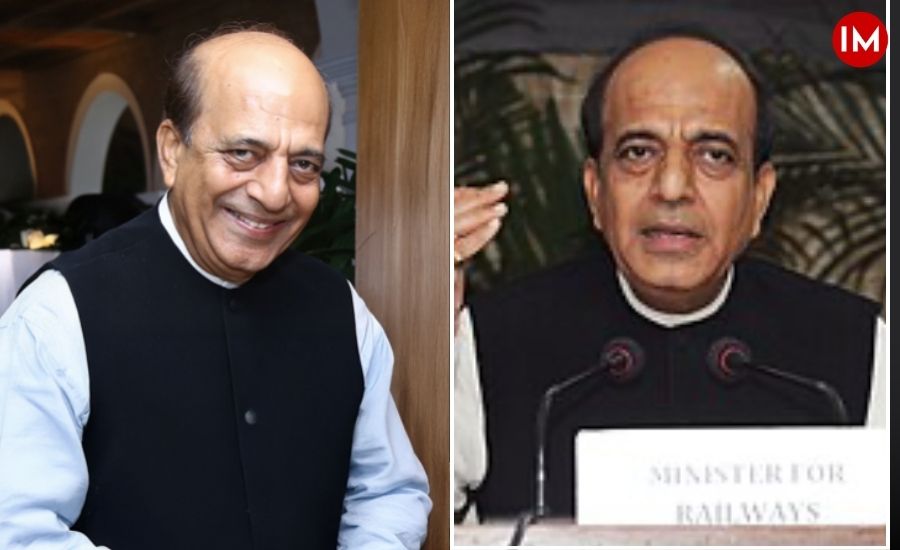
India has appointed former Union Minister Dinesh Trivedi as its new High Commissioner to Bangladesh, marking a notable shift from the traditional practice of appointing career diplomats to such posts. The move reflects New Delhi’s intent to strengthen political and strategic ties with Dhaka at a crucial time in regional relations.
Trivedi’s appointment is being seen as a signal that India wants deeper political engagement with Bangladesh. With his roots in West Bengal and long experience in governance, he is expected to bring both regional understanding and political insight to the role.
Political observers say this is a clear departure from convention, where Indian Foreign Service (IFS) officers usually hold such positions. Instead, the government has chosen a seasoned political leader, indicating the importance it attaches to India-Bangladesh relations.
A POLITICAL APPOINTMENT WITH STRATEGIC INTENT
Dinesh Trivedi’s posting comes at a time when India is looking to maintain strong ties with its eastern neighbour. Bangladesh is a key partner in trade, security, and connectivity.
Also Read – The Constitutional Friction: DoPT’s Mandate, the CAPF Act of 2026, and the Legal Battle for Parity
His Bengal connection is expected to help him better understand cross-border issues, including migration, culture, and regional development. Analysts believe he will focus on strengthening political communication and ensuring stability in bilateral relations.
The appointment also follows recent remarks from Bangladesh’s leadership, which indicated a steady and evolving relationship with India built on shared history and geography.
WHO IS DINESH TRIVEDI?
Dinesh Trivedi is a veteran politician with decades of experience in public life. Born on June 4, 1950, he has been an active figure in Indian politics across multiple parties and roles.
He has served as a Member of Parliament in both the Lok Sabha and the Rajya Sabha. He represented the Barrackpore constituency in West Bengal in the Lok Sabha from 2009 to 2019.
Earlier, he was a Rajya Sabha member during two separate terms—1990 to 1996 and 2002 to 2008.
KEY ROLES IN GOVERNMENT
Trivedi has held important positions in the Union government. He served as the Minister of State for Health and Family Welfare in 2009.
In 2011, he became the Union Railway Minister. During his tenure, he pushed for reforms in the Indian Railways. He supported fare rationalisation and spoke about modernising the system.
His Railway Budget in 2012, which included a fare hike, created political controversy. However, it was also praised for focusing on safety and long-term development.
POLITICAL JOURNEY AND PARTY SHIFT
Trivedi started his political career with the Congress party. He later joined the Janata Dal in 1990.
In 1998, he became one of the founding members of the Trinamool Congress (TMC) along with Mamata Banerjee. He played a key role in building the party.
In 2021, he resigned from the TMC and also gave up his Rajya Sabha seat. Soon after, he joined the Bharatiya Janata Party (BJP).
EDUCATION AND EARLY LIFE
Trivedi was born into a family that migrated from Karachi during Partition. He studied in boarding schools in Himachal Pradesh.
He completed his graduation in commerce from St. Xavier’s College, Kolkata. Later, he pursued an MBA from the University of Texas at Austin.
Before entering politics, he worked in the private sector and also started his own business in air freight.
OTHER ACHIEVEMENTS AND INTERESTS
He has been recognised for his parliamentary work and received the Outstanding Parliamentarian Award for 2016–17.
Trivedi has also been active in public interest issues. He once approached the Supreme Court seeking the release of the Vohra Report, which dealt with criminalisation in politics.
Apart from politics, he has a keen interest in music and is a trained sitar player.
A NEW DIPLOMATIC ROLE
As High Commissioner to Bangladesh, Trivedi steps into a role that requires both political skill and diplomatic balance. His experience in governance and policy-making may help him navigate complex issues.
His appointment reflects a broader shift in how India is approaching diplomacy—bringing in political figures for key international roles.
The coming months will show how his political experience translates into diplomatic success in one of India’s most important neighbourhood relationships.