New Delhi: The Defence Research and Development Organisation (DRDO) has announced the full integration of steps required for its new long-range radar (LRR) system. This means all the major subsystems have been designed, realised and brought together.
The integration took place at a designated test site and marks a key milestone before full operational trials begin.
What is DRDO Long Range Radar GaN AESA
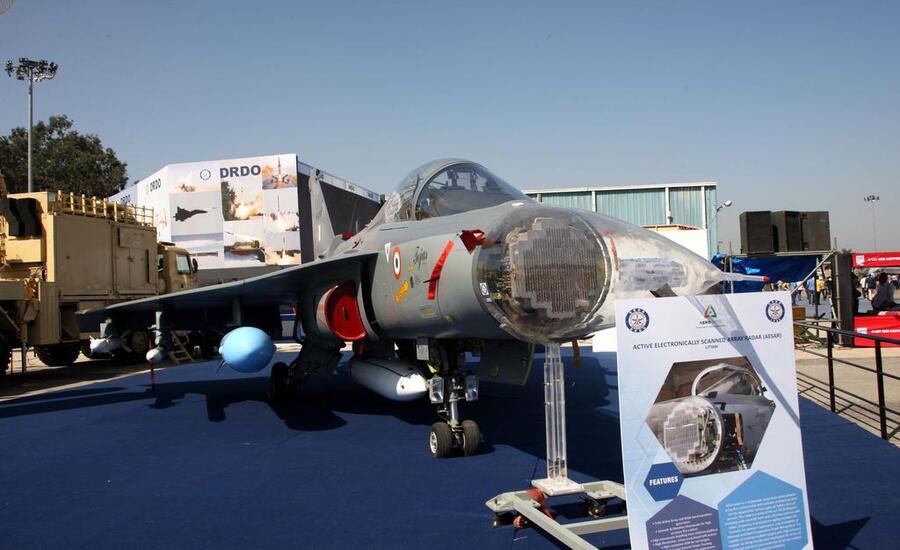
The long range radar is described as an advanced L-Band Active Electronically Scanned Array (AESA) radar. It is designed to detect and track small radar-cross-section (RCS) targets and high-speed aerial threats at extended ranges.
Read also: Make in India Boost: DRDO Fuel-Cell AIP System to Anchor Next-Gen Submarines Under Project-76
Significantly, the system uses Gallium Nitride (GaN)‐based Transmit-Receive (TR) modules. GaN technology offers high power efficiency, better thermal performance and improved signal gain compared to older materials.
Major Significance of DRDO Long Range Radar GaN AESA
With this radar, India strengthens its capability for air surveillance, especially against modern threats such as stealth fighters, cruise missiles and tactical ballistic projectiles.
By using indigenous technology, it aligns with the “Make in India” and self-reliance goals in defence electronics.
Key Features of DRDO Long Range Radar GaN AESA
- L-Band AESA radar architecture; allows broad area scanning and tracking.
- GaN TR-modules; higher efficiency, improved signal strength, greater reliability.
- Designed to handle small, low-observable targets and high-speed threats.
- Full subsystem integration completed — ready to move to the next phase of testing.
- Developed domestically—reducing dependence on foreign tech and suppliers.
- Boosts India’s domestic defence electronics manufacturing.
- Gives Indian industry experience in complex radar system integration.
- Strengthens strategic autonomy in key sensor systems.
- Paves the way for exports in future, showcasing home-grown radar tech.
- Encourages private-sector and industry partnership in defence innovation.
Why the GaN-AESA Advantage is a Game-Changer
GaN (Gallium Nitride) modules are more efficient than traditional Gallium Arsenide (GaAs) or other older technologies.
They offer:
- Higher power output for the same size.
- Better heat-handling, less cooling required.
- Greater reliability in demanding environments.
- Improved signal to noise ratio and longer detection ranges.
- India’s move to GaN-AESA radar places it closer to global cutting-edge radar tech.
Key Challenges & Considerations
- Transition from testing to full operational deployment will require rigorous validation.
- Integrating this radar into the wider air-defence network will demand infrastructure and training.
- Competing global radar technologies continue to evolve—India must maintain pace.
- Ensuring supply-chain robustness for GaN modules and manufacturing at scale is vital.
Big Picture: Strategic Implications of DRDO Long Range Radar GaN AESA
In the context of evolving regional threats, the completion of this integration enhances India’s ability to monitor and defend its airspace more effectively. Having indigenous long-range radar helps reduce vulnerabilities and dependence on foreign-supplied sensors.
It also sends a message that India is serious about developing next-generation defence electronics and achieving self-reliance in critical military technologies.
Way Forward
While integration of subsystems is complete, full operational trials and certification will follow. The test site phase is crucial to validate real-world performance. Also, the broader radar ecosystem in India is moving forward with other projects such as the indigenous AESA radar developments for fighter jets and upgrade programmes.
If successful, this radar could become a backbone of India’s long-range air-surveillance grid and air-defence network.