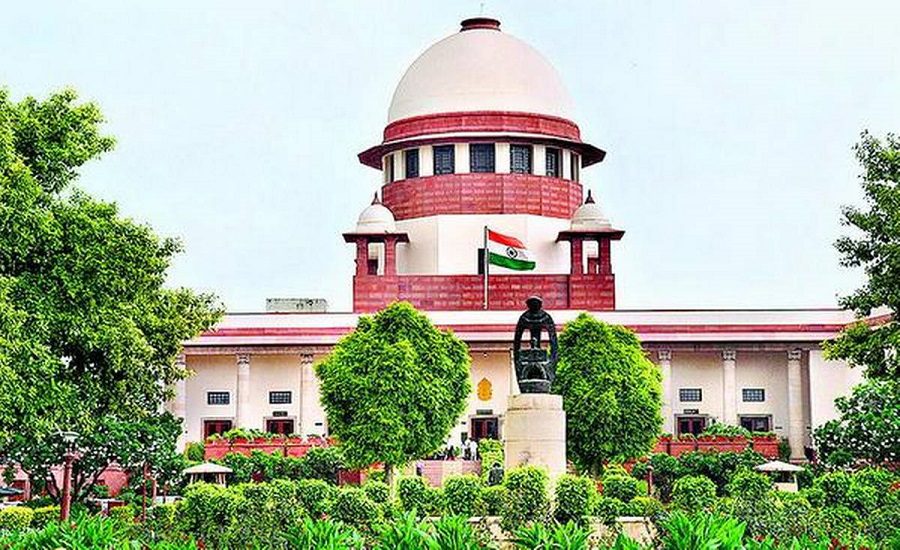
New Delhi: Family court judges’ high court elevation has once again come under legal scrutiny after the Supreme Court refused to reconsider its earlier ruling on the issue. The Court declined a petition filed by 7 family court judges from Maharashtra who sought recognition as holders of a “judicial office” under Article 217 of the Constitution for eligibility to become High Court judges.
The decision reaffirms the precedent set in the landmark S.D. Joshi case and has significant implications for judicial appointments in India.
Family Court Judges High Court Elevation: Supreme Court Rejects Plea
A three-judge Bench comprising Chief Justice of India Surya Kant, Justice Joymalya Bagchi, and Justice V. Mohan declined to entertain the petition filed by seven Family Court judges from Maharashtra.
The petitioners argued that they should be considered holders of a judicial office and therefore be eligible for appointment as High Court judges under Article 217(2)(a) of the Constitution. However, the Bench held that the issue had already been settled by the Supreme Court in the S.D. Joshi judgment and there was no sufficient reason to revisit that precedent.
Details of the Family Court Judges High Court Elevation Petition
The seven judges argued that Family Court judges in Maharashtra are recruited from the judicial service and have long years of judicial experience.
According to the petitioners, all Family Court judges appointed in Maharashtra over the past 36 years have come from the judicial service and not from outside sources. They claimed this factual position distinguished their case from the circumstances considered in the earlier judgment.
Petitioners Relied On Changed Circumstances
Senior Advocate R. Basant, appearing for the petitioners, argued that the situation had evolved significantly since the S.D. Joshi ruling. He submitted that Family Court judges in Maharashtra had consistently been appointed from the judicial service and therefore should be treated as judicial officers for the limited purpose of Article 217 eligibility.
The petitioners also pointed out that many of them had completed more than seven years of judicial service, fulfilling one of the constitutional requirements for elevation to a High Court.
Why Did The Supreme Court Refuse To Reconsider The Issue
The Supreme Court repeatedly asked whether there had been any major change in law or constitutional interpretation that would justify reopening the earlier ruling. The Bench observed that merely presenting a different factual situation was not enough to overrule a settled judgment of the Court.
Family Court Judges High Court Elevation: Court Reaffirmed S.D. Joshi Judgment
The Court noted that the S.D. Joshi judgment had already examined the nature of Family Court judges’ duties and compared them with judges in the regular District Judge cadre.
That judgment concluded that judges belonging to a separate Family Court cadre could not automatically be treated as holding a judicial office under Article 217(2)(a).
As a result, the Bench found no legal basis to revisit the precedent.
Supreme Court Questions Separate Family Court Cadre
During the hearing, Chief Justice Surya Kant raised questions about the existence of a separate Family Court cadre in Maharashtra.
The Court observed that in many other states, Family Court judges are drawn from the regular judicial service and posted to Family Courts on deputation. These judges continue to remain part of the mainstream judicial cadre.
Family Court Judges High Court Elevation: Policy Issue May Need Administrative Solution
The Bench suggested that if there is a structural issue arising from the separate Family Court cadre, the matter may require administrative or policy reforms rather than judicial intervention. The Court indicated that the State Government and the concerned High Court could consider reviewing the existing appointment framework if necessary.
Article 217 And Eligibility For High Court Judges
Article 217 of the Constitution lays down the qualifications for appointment as a High Court judge.
A person must either have held a judicial office for at least ten years or have practiced as an advocate of a High Court for at least ten years. The dispute in this case centered on whether Family Court judges in a separate cadre qualify as holders of a judicial office under this provision.
Constitutional Interpretation Remains Unchanged
The Supreme Court made it clear that no new legal interpretation had emerged that would justify departing from the established constitutional position.
The Court therefore refused to use an Article 32 petition as a mechanism to review or recall an earlier judgment.
FAQs
Under the current Supreme Court interpretation, judges serving in a separate Family Court cadre are not considered to hold a judicial office under Article 217(2)(a) for High Court appointments.
The Supreme Court held that the issue had already been decided in the S.D. Joshi judgment and found no legal reason to reconsider that precedent.
The Court questioned the need for a separate Family Court cadre and suggested that any reforms should be addressed by the State Government and the High Court through policy measures.