Gandhinagar: The GOBARdhan Scheme under the Swachh Bharat Mission (Gramin) is transforming rural Gujarat by converting livestock waste into clean energy and organic manure. More than 14,000 biogas plants have become operational across 88 clusters in the state since 2023–24, helping farmers and livestock rearers adopt cleaner cooking solutions and sustainable farming practices.
The Gujarat government has planned the installation of another 20,000 individual biogas plants during 2026–27 at an estimated cost of ₹25 crore, further expanding the state’s rural clean-energy network. The initiative promotes rural sanitation, renewable energy, organic manure usage and the concept of a circular economy, where agricultural and livestock waste is converted into valuable resources.
Gujarat Expands Biogas Infrastructure Through Cluster Approach
To ensure effective implementation of the GOBARdhan Scheme, Gujarat has adopted a cluster-based approach.
- Phase I: 7,423 individual biogas plants were established across 38 clusters with support from the National Dairy Development Board (NDDB), Amul, Banas Dairy and Dudhsagar Dairy.
- Phase II: The Gujarat government set a target of 10,000 biogas plants across 50 clusters with complete state funding. In partnership with the Gujarat Cooperative Milk Marketing Federation (GCMMF) and district milk unions, nearly 7,000 plants have already been installed.
Read Also: Jharkhand Allocates ₹4.23 Crore Under Swachh Bharat Mission (Urban) 2.0 for 49 Urban Local Bodies
With the completion of these two phases, Gujarat now has more than 14,000 operational biogas plants under the scheme.
Beneficiaries Receive Financial Assistance for Biogas Plants
Under the GOBARdhan Scheme, modern 2-cubic metre flexible biogas plants are being installed across Gujarat.
These plants are manufactured using durable HDPE material, making them easier to install and maintain. Each beneficiary receives a complete biogas kit consisting of:
- Biodigester
- Geotextile sheet
- Gas pipe
- H₂S filter
- Two-burner gas stove
- Pressure regulator valve
- Lighter and other accessories
Under the Swachh Bharat Mission (Gramin), beneficiaries receive ₹25,000 financial assistance for setting up a biogas plant, while the remaining ₹5,000 is contributed by the beneficiary.
Biogas Plants Provide Environmental and Economic Benefits
A UNICEF survey highlighted multiple benefits of a 2-cubic metre biogas plant, including savings on cooking fuel, better waste management and reduced carbon emissions.
The key benefits include:
- Savings equivalent to 8–10 LPG cylinders annually.
- Scientific management of around 18,250 kg of livestock waste every year.
- Reduction of approximately 834 kg of carbon dioxide emissions.
- Improved health conditions for rural women by reducing exposure to smoke from traditional cooking methods.
- Increased use of bio-slurry as organic manure, reducing dependence on chemical fertilisers.
The scheme is therefore supporting both clean energy adoption and sustainable agriculture in rural areas.
GOBARdhan Strengthens Rural Sanitation and Circular Economy
Under the leadership of Chief Minister Bhupendra Patel and guidance from Rural Development Minister Kunvarji Bavaliya and Minister of State Sanjaysinh Mahida, Gujarat is promoting scientific management of cattle dung and organic waste.
The initiative supports the state’s efforts towards ODF Plus villages, rural sanitation improvement and renewable energy generation.
By converting cattle waste into biogas and organic manure, the scheme is helping rural communities move towards a sustainable “Waste to Wealth” model.
Manjulaben’s Story Shows Impact of GOBARdhan Scheme
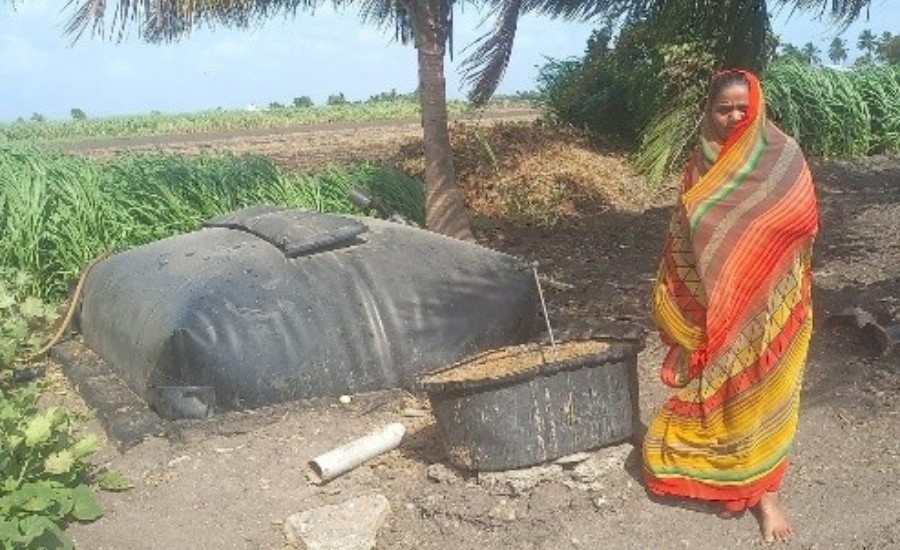
The impact of the scheme can be seen through the experience of Smt. Manjulaben Dedabhai Barad, a livestock rearer from Rangpur village in Sutrapada taluka of Gir Somnath district.
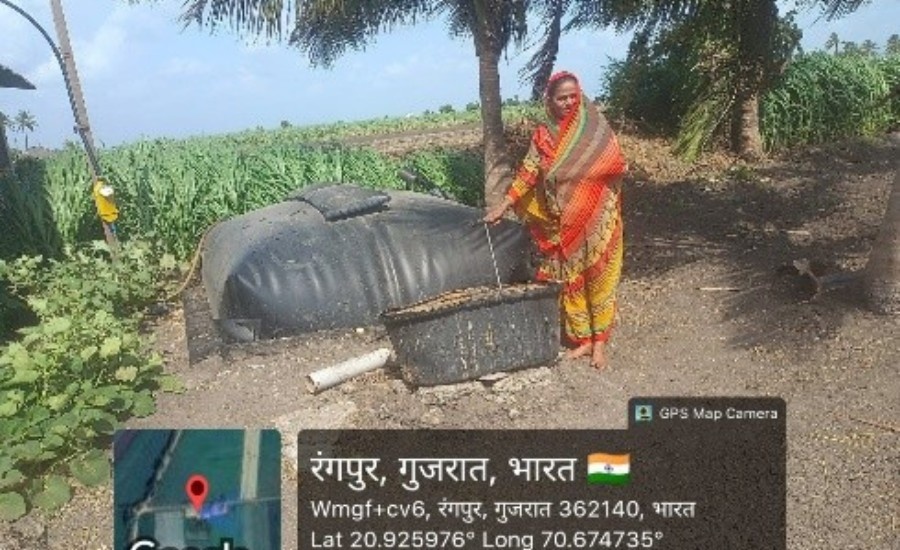
Before the installation of the biogas plant, cattle dung was stored in open areas, creating unhygienic conditions. During 2025–26, a GOBARdhan biogas plant was installed at her residence under the Swachh Bharat Mission (Gramin) with support from Junagadh’s Savaj Dairy on behalf of GCMMF.
The plant, maintained by Manjulaben herself, converts cattle dung into clean biogas and organic manure slurry.
By using biogas for cooking and slurry in agricultural fields, she has reduced her dependence on urea fertilisers. The initiative demonstrates how GOBARdhan can link rural sanitation, renewable energy and sustainable agriculture.
Read Also: Cabinet Approves ₹23,731 Crore GOBARdhan Scheme to Scale Up India’s Compressed Biogas Revolution