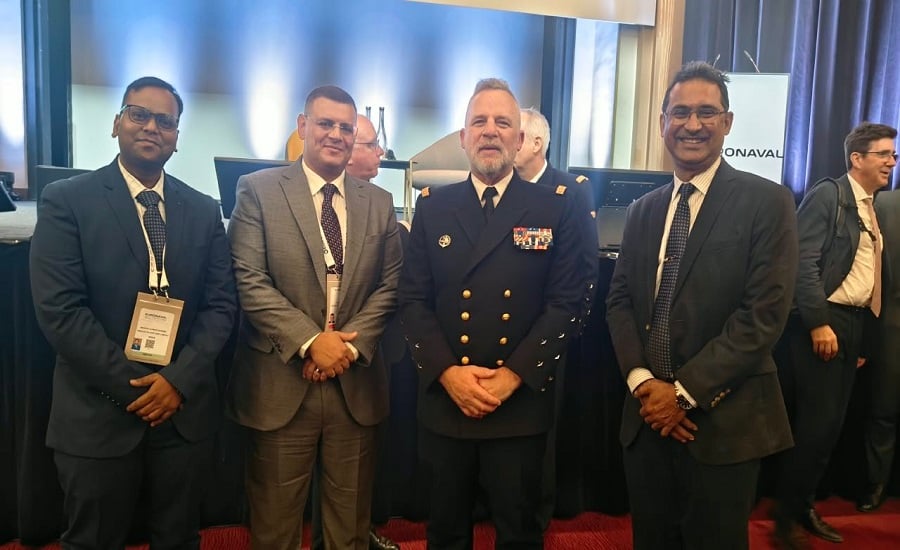
New Delhi: Hindustan Shipyard Limited (HSL), a leading defence shipyard under the Ministry of Defence, Government of India, represented India’s growing naval shipbuilding capabilities at EURONAVAL 2026 in Paris, one of the leading global forums for naval defence.
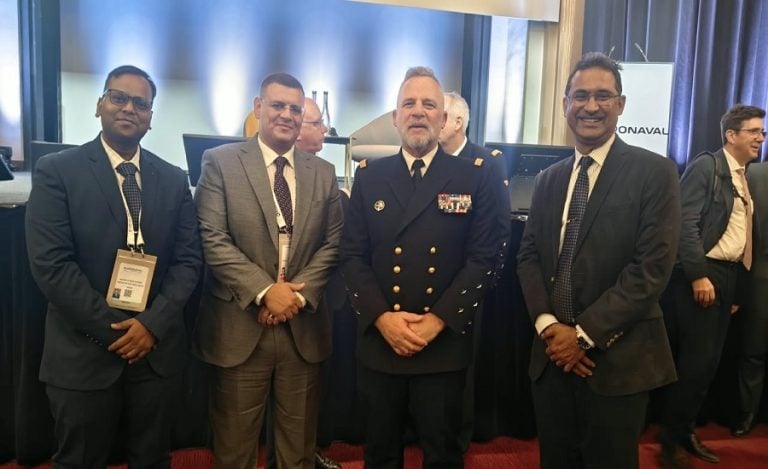
On the opening day of the event, the HSL delegation, led by RV Ramana, General Manager (Production), interacted with Admiral Christophe Kluzel, Chief of Staff of the French Navy. The engagement provided an opportunity to exchange perspectives on developments in naval defence and the future requirements of maritime forces.
The HSL delegation also attended a panel discussion titled “Operating and Supporting Distributed and Hybrid Fleets”, which highlighted emerging concepts and technologies shaping the future of naval operations.
Key Takeaways from EURONAVAL 2026 Panel Discussion
The discussion focused on several important aspects of operating and supporting distributed and hybrid naval fleets.
Human-Machine Teaming
The panel highlighted the importance of effective human-machine collaboration. Machines can process complex sensor data, while operational decisions and the authority to act remain with the crew. This approach aims to combine technological capabilities with human judgement.
Read also: INMARCO 2026: HSL CMD Stresses Series Production and Digitalisation for Global Shipbuilding Growth
Distributed Fleet Design
The discussion explored the concept of using larger “mothership” platforms to host uncrewed systems. Such an approach can expand fleet capabilities and provide operational flexibility while reducing dependence on a single platform.
Edge Processing and Sensor Fusion
The panel highlighted the role of edge processing and sensor fusion in enabling naval platforms to process information directly. These capabilities can help filter environmental noise, particularly in challenging conditions, and improve the identification and assessment of potential threats.
Unified and Resilient Software Systems
A common software ecosystem across naval fleets was identified as an important requirement for future operations. Such systems can support network resilience, enable automatic recovery from disruptions and help maintain fleet-wide operational and mission integrity in challenging environments.
Risk-Based Sustainment
The discussion also emphasised the need to adopt risk-based sustainment practices over the decades-long service life of naval platforms. This approach moves beyond rigid maintenance schedules and focuses on assessing operational risks and maintenance requirements.
HSL Focuses on Advanced Naval Platforms and Collaboration
Hindustan Shipyard Limited highlighted its focus on delivering modern naval platforms integrated with advanced systems. The shipyard also emphasised its continued efforts to strengthen its capabilities through partnerships with the Indian Navy, designers, technology companies and suppliers.
The participation at EURONAVAL 2026 provided HSL with an opportunity to engage with global naval defence perspectives and understand evolving requirements in areas such as hybrid fleets, advanced systems integration, software resilience and long-term platform support.
The central message emerging from the discussions was that the future of naval capability will depend not only on individual platforms but also on the integration of systems, software, sensors and human decision-making.
About Hindustan Shipyard Limited
Hindustan Shipyard Limited (HSL) is a defence public sector undertaking under the Ministry of Defence, Government of India. The shipyard is engaged in shipbuilding, ship repair and submarine-related activities, contributing to India’s maritime and defence capabilities.
Read also: Rajnath Singh Launches India’s First Indigenous Fleet Support Ship ‘Surya’ at HSL