In a remarkable display of precision, endurance and inter-agency coordination, the Indian Air Force (IAF) carried out round-the-clock aerial firefighting operations to contain a massive forest fire in Himachal Pradesh’s Kasauli region, marking the force’s first-ever night Bambi Bucket mission using Night Vision Goggles (NVGs).
The operation, conducted under the aid-to-civil-authorities framework, played a critical role in preventing the blaze from spreading into nearby residential areas, military establishments and key infrastructure.
Also read: IPS Vacancies Drop by 53: Just 147 Posts Up for Grabs in Cadre Allocation Cycle
Rapid Response After Fire Alert
The IAF received information about the forest fire near Kasauli on May 26 and immediately deployed a Cheetah helicopter to assess the situation.
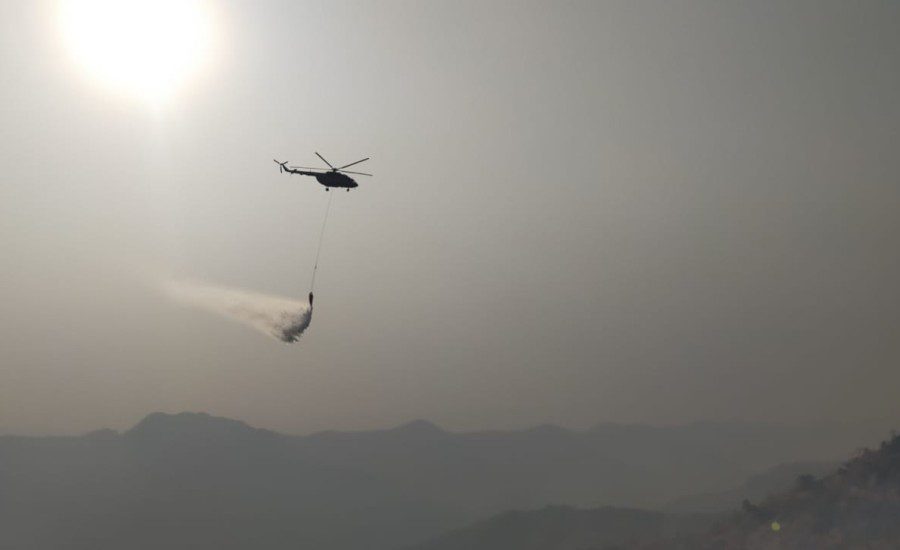
Following the aerial reconnaissance, Mi-17 V5 medium-lift helicopters were pressed into service to undertake large-scale firefighting operations over the affected region in Solan district.
The fire had spread across nearly 10 hectares in the Kasauli Beat area, posing a serious threat to both civilian and defence assets.
Over 93,000 Litres of Water Dropped
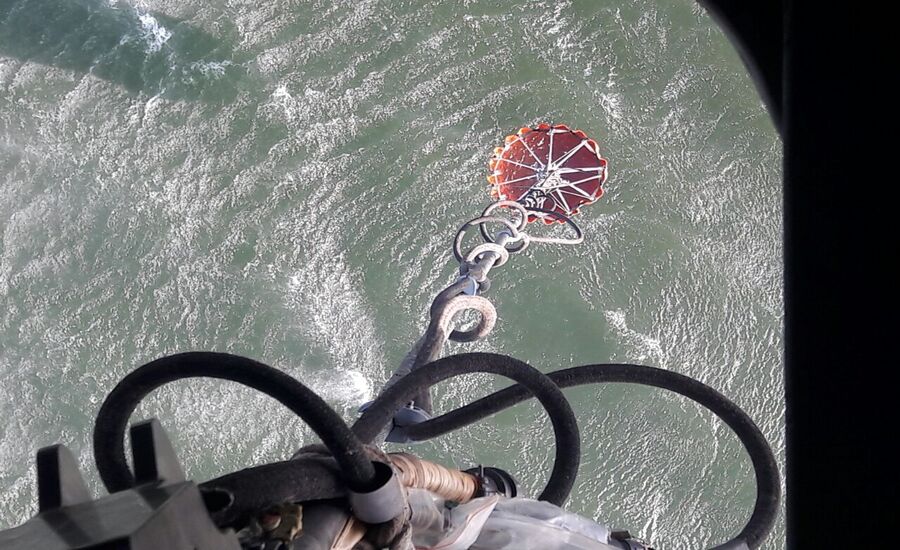
Working in coordination with the Himachal Pradesh administration, State Forest Department, Indian Army and local authorities, IAF helicopters conducted continuous Bambi Bucket operations to suppress the flames.
Water was sourced from Chandigarh’s Sukhna Lake, with each sortie carrying approximately 2,000 to 2,500 litres.
Over the course of the mission, helicopters dropped more than 93,000 litres of water on the affected area, significantly reducing the intensity of the fire and helping ground teams gain control over the situation.
A First for the Indian Air Force
The operation entered the record books as the Indian Air Force successfully executed its first-ever night Bambi Bucket firefighting missions using Night Vision Goggles.
Conducted over mountainous terrain and under low-visibility conditions, the missions required exceptional flying skills and operational precision.
Night aerial firefighting is considered one of the most challenging aviation tasks because of difficult terrain, smoke conditions, visibility limitations and the need for pinpoint accuracy while carrying heavy water loads.
Despite these challenges, the missions were completed safely and effectively.
Aircrew and Ground Teams Worked Round the Clock
The success of the operation was not limited to the pilots alone.
Ground personnel worked continuously under harsh weather conditions to ensure rapid refuelling, servicing and turnaround of aircraft, allowing uninterrupted firefighting sorties throughout the day and night.
The seamless coordination between aircrew, maintenance teams and civil authorities ensured that the operation remained effective from start to finish.
Preventing a Larger Disaster
Officials said the swift response helped prevent the forest fire from escalating into a major environmental and humanitarian disaster.
The operation showcased the Indian Air Force’s growing capability to support civil authorities during emergencies and highlighted the increasing role of military aviation assets in disaster response, environmental protection and humanitarian assistance missions.
As extreme weather events and forest fires become more frequent, the Kasauli operation stands out as a significant example of how advanced technology, trained personnel and coordinated action can make a decisive difference in protecting lives, property and natural ecosystems.
Also read: Madhya Pradesh: ₹1100 Crore Temple Redevelopment Plan to Transform Ujjain Ahead of Simhastha 2028