A government that works with fewer files, monitors natural resources more effectively and prepares for the industries of the future is a government investing in both efficiency and economic growth. In Telangana, these priorities are taking shape through a series of administrative initiatives spanning digital governance, sand management and the development of a critical minerals ecosystem.
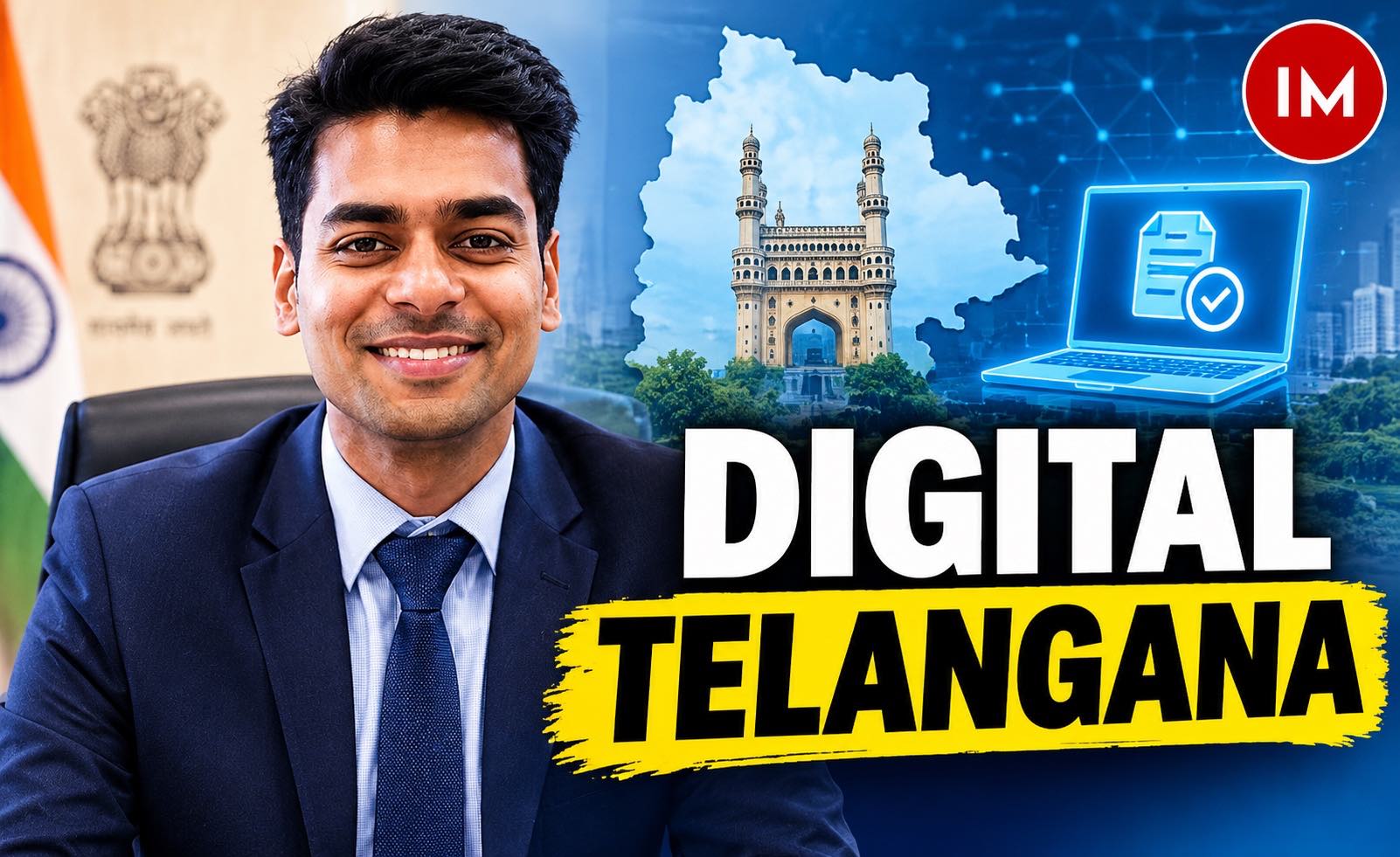
At the centre of these efforts is 2018-batch IAS officer Anudeep Durishetty, who is spearheading multiple reforms in the state through his responsibilities in the Information Technology, Electronics and Communications (ITE&C) Department and the Mines and Geology sector.
Currently serving as Joint Secretary in the ITE&C Department, Director of Mines and Geology, and Vice Chairman and Managing Director of the Telangana Mineral Development Corporation (TGMDC), Anudeep is working across sectors that are crucial to Telangana’s administrative efficiency and long-term economic development.
From introducing a dedicated digital platform for paperless Cabinet meetings to strengthening surveillance at sand reaches and identifying opportunities in critical minerals, his initiatives reflect an approach that combines technology, accountability and resource-based economic growth.
Strengthening Sand Management: Revenue Target of ₹1,200 Crore
One of the major areas receiving attention is the management of sand resources, where Telangana is expecting a substantial increase in revenue through better monitoring, surveillance and enforcement.
The state earned approximately ₹1,000 crore in sand revenue during the previous financial year. This year, it is targeting more than ₹1,200 crore, representing an expected growth of nearly 25 per cent.
Read Also: Inside IAS Pandve Rahul Tukaram’s Mission to Identify Childhood Disabilities Before It’s Too Late
According to Anudeep, the increase is not merely a result of higher revenue targets but is closely linked to efforts to strengthen monitoring mechanisms and prevent illegal sand mining and transportation.
“We are looking at nearly a 25 per cent increase in sand revenue this financial year. Last financial year, the state earned around ₹1,000 crore, and this year we are targeting more than ₹1,200 crore. Encouragingly, our first-quarter revenue is already in line with that target,” he said.
He attributed the improvement primarily to enhanced surveillance at sand reaches and stricter enforcement against illegal activities.
“We have substantially increased surveillance at sand reaches to curb illegal activities,” he explained.
However, technology-driven monitoring also comes with infrastructure challenges, particularly in areas where internet connectivity is inadequate.
How Technology Is Improving Sand Surveillance
Real-time surveillance is an important component of the state’s strategy to monitor sand extraction and transportation. However, connectivity gaps at certain locations have affected the uninterrupted functioning of digital monitoring systems.
To address this, the department has identified approximately 15 to 20 sand reaches where connectivity will be strengthened through T Fiber.
The affected locations are primarily in Mulugu, Jayashankar Bhupalpally and Bhadradri Kothagudem districts.
“In a few locations, internet connectivity has been affecting real-time monitoring. We have identified about 15 to 20 sand reaches where T Fiber connectivity will be provided to address these network issues,” Anudeep said.
The proposed connectivity improvements are expected to ensure more reliable digital surveillance, allowing officials to monitor sand operations more effectively.
By addressing infrastructure gaps alongside enforcement measures, the state aims to strengthen transparency, reduce opportunities for illegal mining and improve the management of its natural resources.
Inside Telangana’s Paperless Cabinet Revolution
While natural resource management is one important aspect of Anudeep’s administrative responsibilities, his role in the ITE&C Department is also contributing to a significant transformation in the functioning of the state government.
Telangana had earlier announced its intention to introduce paperless Cabinet meetings. However, the initiative gained momentum following Anudeep’s appointment as Joint Secretary in the department in May.
Under his supervision, the department developed a dedicated digital application to replace the conventional system of circulating bulky physical files during Cabinet meetings.
The platform allows ministers to access Cabinet agenda items and related documents electronically through iPads provided to them.
“We have created a dedicated application exclusively for Cabinet meetings. Every minister has been provided with an iPad through which they can access all Cabinet agenda items. Instead of physical files, ministers can simply swipe through the agenda on their devices,” he explained.
The shift required coordination among different stakeholders, including senior bureaucrats, ministers and technical teams.
Before the rollout, the department organised demonstrations and training sessions to familiarise ministers and other users with the application. These exercises helped ensure that the transition from physical documents to digital access would be smooth.
How the Paperless System Works
The dedicated application has been designed specifically for Cabinet proceedings, allowing ministers to access relevant agenda items and documents on their devices rather than relying on printed files.
The system simplifies document circulation and sharing while reducing the administrative effort involved in preparing and distributing large volumes of paperwork.
It also strengthens document security and enables faster circulation of Cabinet notes, making the process more efficient.
Beyond the immediate convenience, the initiative represents a broader shift towards technology-enabled governance. Reducing paper consumption also contributes to a more environmentally sustainable administrative system.
The move places Telangana among the states adopting digital platforms to modernise high-level government decision-making processes.
Building Telangana’s Critical Mineral Future
Apart from digital governance and natural resource management, another important area of Anudeep’s work is strengthening Telangana’s position in India’s emerging critical minerals sector.
Critical minerals have become increasingly important because of their applications in semiconductor manufacturing, electric vehicles, renewable energy, advanced electronics, defence equipment and space technologies.
Recognising their strategic importance, the Government of India launched the National Critical Mineral Mission (NCMM), backed by an outlay of ₹16,300 crore, to strengthen domestic exploration, processing and supply chains and reduce dependence on imports.
Telangana is now working to expand its participation in this national initiative.
As part of the mission, the Union Coal Ministry has allotted the Govindapur and Parvathapur mineral blocks in Sangareddy district to NLC India Limited for exploration of titanium and vanadium.
These minerals have significant industrial applications, particularly in advanced alloys, defence systems and emerging technology sectors.
“These are the first mineral blocks shortlisted for exploration in Telangana by the Union Coal Ministry based on Geological Survey of India findings. We are also working to identify more such potential blocks in different districts,” Anudeep said.
The identification of these blocks marks an important step in exploring Telangana’s untapped mineral potential and creating opportunities for future investment.
Mineral Potential Perspective Map to Guide Future Exploration
One of the major initiatives being pursued by the state is the preparation of a comprehensive Mineral Potential Perspective Map of Telangana.
At present, geological information relating to mineral resources is available across different agencies and institutions. Bringing this information together into a single integrated platform is expected to make mineral planning and exploration more systematic.
The proposed map will consolidate geological data and provide district-wise information about the state’s mineral potential.
“The idea is to develop one integrated mineral perspective map that will provide district-wise information on mineral potential and help guide future exploration and investment,” Anudeep explained.
Such a consolidated resource map could help the government identify promising mineral-bearing areas, prioritise exploration activities and provide a stronger information base for investment decisions.
It will also support the state’s efforts to identify additional mineral blocks that could contribute to India’s domestic critical mineral supply chain.
Telangana Emerges as a Research Hub Under the National Critical Mineral Mission
Telangana’s ambitions in the critical minerals sector extend beyond exploration and identification of mineral blocks. The state is also emerging as an important research and development centre under the National Critical Mineral Mission.
It has become the only state to secure two Centres of Excellence under the mission.
The first is IIT Hyderabad, which will focus on research, innovation and the development of domestic critical mineral value chains.
The second is the Non-Ferrous Materials Technology Development Centre (NFTDC), Hyderabad, which will specialise in mineral processing, beneficiation and advanced metallurgy.
These institutions will contribute to strengthening India’s technological capabilities in the critical minerals sector.
While IIT Hyderabad will focus on research and innovation, NFTDC’s expertise in processing and metallurgy will support the development of technologies required to extract and refine valuable minerals.
Together, the two Centres of Excellence are expected to support India’s ambitions in clean energy, electronics, defence and space technologies.
They will also contribute to reducing dependence on imported critical minerals by strengthening domestic research, processing capabilities and value-chain development.
An Administrative Approach Focused on Technology and Economic Growth
From strengthening sand surveillance and improving revenue collection to introducing paperless Cabinet meetings and developing a long-term strategy for critical minerals, Anudeep Durishetty’s responsibilities span several important areas of Telangana’s administration.
The initiatives reflect how technology can be used not only to simplify government processes but also to improve resource management, strengthen enforcement and create opportunities for future economic development.
While improved connectivity is expected to make sand monitoring more effective, the paperless Cabinet platform is aimed at making administrative decision-making more efficient. At the same time, mineral exploration, integrated geological mapping and research partnerships are laying the groundwork for Telangana’s participation in India’s evolving critical mineral economy.
Through these parallel efforts, the state is seeking to combine immediate administrative improvements with long-term economic planning.
For Anudeep, the challenge is to translate these initiatives into effective systems on the ground, ensuring that digital transformation, better resource governance and mineral development contribute meaningfully to Telangana’s growth.