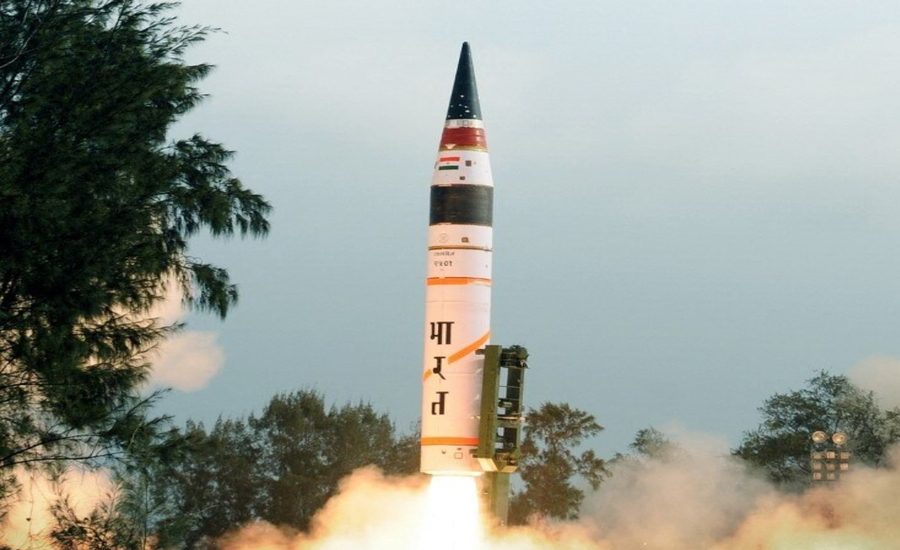
New Delhi: India’s Agni-VI ICBM programme has reached a major milestone as the Defence Research and Development Organisation (DRDO) confirmed that the missile’s design phase is complete.
The next step now depends on final approval from the central government for hardware prototyping and full-scale development.
The update was shared by DRDO Chairman Samir V. Kamat during a national security discussion, highlighting India’s growing long-range strategic defence capability.
What Is Agni-VI ICBM?
The Agni-VI is expected to become India’s most advanced intercontinental ballistic missile (ICBM).
Read also: DRDO Successfully Tests Third-Generation MPATGM with Top-Attack Capability Against Moving Target
Key expected features include:
- Range of over 10,000 km
- Multiple Independently Targetable Re-entry Vehicle (MIRV) capability
- Ability to carry multiple warheads
- Advanced manoeuvrable re-entry vehicles (MaRV)
- Improved radar evasion technology
- Lightweight and more mobile launch platform
Reports suggest the missile may target multiple locations with a single launch, improving India’s strategic deterrence strength.
Agni-VI ICBM: DRDO Confirms Readiness
DRDO Chairman Samir V. Kamat said the organisation is fully prepared to move ahead with the programme once official clearance is received from the Indian government.
According to defence reports:
- The design phase has been completed
- Core technologies are reportedly ready
- DRDO is waiting for approval for prototype manufacturing
- Future testing may begin after government clearance
This indicates that India has already completed a large part of the research and technical groundwork needed for the project.
Why Agni-VI Matters for India
The Agni-VI programme is important for India’s long-term strategic defence planning.
Main strategic advantages
- Stronger nuclear deterrence
- Better second-strike capability
- Ability to cover very long distances
- Improved defence readiness against advanced missile systems
- Enhanced global strategic reach
Experts believe the missile could strengthen India’s position among nations with advanced long-range missile technology.
What is MIRV Technology
One of the most important expected features of Agni-VI is MIRV technology. MIRV allows a single missile to carry several warheads that can hit different targets independently.
Benefits include:
- Higher strike efficiency
- Better penetration against missile defence shields
- Greater operational flexibility
- Stronger deterrence capability
India recently tested advanced MIRV-related missile technologies, showing progress in this area.
Agni Missile Series Evolution
India’s Agni missile programme has evolved steadily over the years.
Major Agni variants
| Missile | Estimated Range | Role |
| Agni-I | Short range | Regional deterrence |
| Agni-II | Medium range | Strategic operations |
| Agni-III | Intermediate range | Heavy payload delivery |
| Agni-IV | Advanced medium range | Precision targeting |
| Agni-V | Around 5,000+ km | Near-ICBM capability |
| Agni-VI | 10,000+ km expected | Full ICBM capability |
The Agni-VI could become the most advanced missile in India’s strategic arsenal if approved for development.
Government Approval Still Pending
Despite technical readiness, the programme still requires formal approval from the Indian government before:
- Hardware production starts
- Prototype systems are built
- Flight testing begins
- Full development moves forward
No official timeline has yet been announced for the approval process.
Read also: Inside Agni-1 Missile Test: Key Details You Should Know