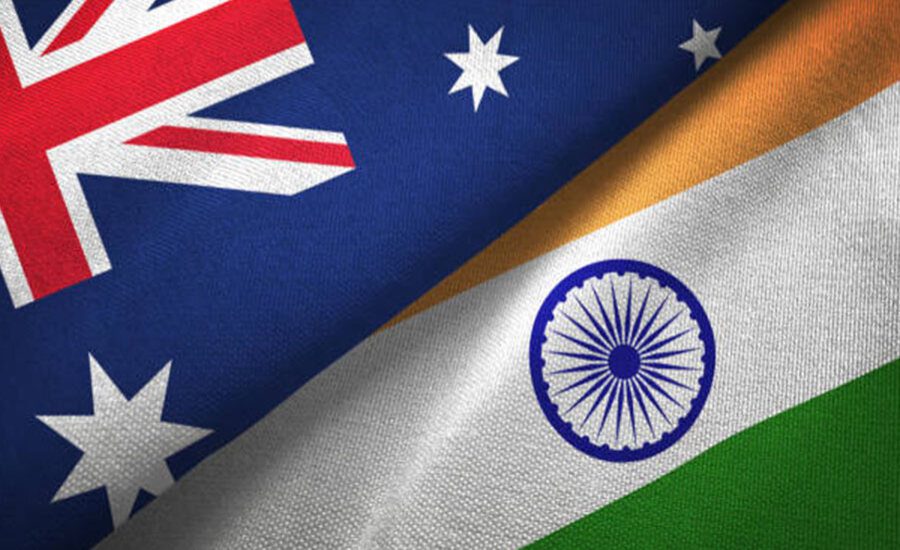
Melbourne: India-Australia deal became the biggest outcome of Prime Minister Narendra Modi’s Australia visit 2026. During the 3rd Australia-India Annual Leaders’ Summit in Melbourne, Prime Minister Narendra Modi and Australian Prime Minister Anthony Albanese signed multiple landmark agreements covering civil nuclear energy, uranium supply, critical minerals, defence, maritime security, cyber security, advanced technologies, supply chains and trade.
The agreements are designed to strengthen bilateral relations, improve clean energy security, diversify global supply chains and deepen cooperation across the Indo-Pacific region.
According to official statements issued by the Prime Minister’s Office of Australia both countries described the partnership as entering a new phase built on mutual trust, shared democratic values and long-term strategic cooperation.
Key Highlights of the India-Australia Deal 2026
- Australia will supply uranium to India for peaceful civilian nuclear energy.
- India and Australia launched a dedicated Critical Minerals Corridor.
- Both countries expanded defence and maritime security cooperation.
- A new Cyber, Critical Technologies and Supply Chains Partnership became operational.
- Leaders agreed to speed up negotiations on the Comprehensive Economic Cooperation Agreement (CECA).
- Both nations reaffirmed support for a free, open and secure Indo-Pacific.
Read also: Inside India Australia Defence Industrial Collaboration MoU: Key Focus Areas and Future Impact
Australia to Supply Uranium to India
One of the most significant announcements was Australia’s commitment to strengthen long-term uranium exports to India under existing civil nuclear cooperation arrangements.
The uranium will be used only for peaceful civilian nuclear energy under International Atomic Energy Agency (IAEA) safeguards. The agreement supports India’s growing clean energy needs while helping reduce dependence on fossil fuels.
Prime Minister Narendra Modi said the agreement would give India’s nuclear energy programme fresh momentum and contribute to the country’s clean energy transition.
India-Australia Launch Critical Minerals Corridor
Another major outcome was the launch of a dedicated India-Australia Critical Minerals Corridor. The initiative focuses on securing reliable supplies of strategic minerals, including lithium, cobalt, nickel and rare earth elements that are essential for electric vehicles, semiconductors, batteries, renewable energy and advanced manufacturing.
The corridor will encourage exploration, processing, investment and resilient supply chains between both countries.
Defence and Maritime Security Cooperation Expanded
India and Australia also strengthened defence ties by announcing new security initiatives. The agreements include:
- Defence and Security Cooperation framework
- Maritime Security Roadmap
- Greater naval cooperation
- Defence innovation partnerships
- Joint research and emerging defence technologies
- Shipbuilding and maintenance collaboration
These initiatives support peace, stability and freedom of navigation across the Indo-Pacific region.
Cyber Security and Critical Technologies Partnership
The Australia-India Partnership on Cyber, Critical Technologies and Supply Chains (PACTS) officially became operational. The partnership will improve cooperation in:
- Cyber security
- Artificial Intelligence
- Quantum technologies
- Semiconductor supply chains
- Digital infrastructure
- Critical technologies
- Supply chain resilience
Officials believe the initiative will reduce dependence on vulnerable global supply chains while promoting trusted technology ecosystems.
India and Australia to Boost Trade and Investment
Both leaders directed officials to accelerate negotiations on the Comprehensive Economic Cooperation Agreement (CECA). The agreement is expected to increase bilateral trade, attract investment and create new opportunities across manufacturing, renewable energy, education, mining, infrastructure and digital services.
Australian companies were also encouraged to expand investments in India’s rapidly growing economy.
India-Australia Deal 2026: Shared Vision for the Indo-Pacific
Prime Minister Modi and Prime Minister Albanese reaffirmed their commitment to:
- Counter terrorism
- Maritime security
- Rules-based international order
- Peaceful dispute resolution
- Regional stability
- Free and open Indo-Pacific
- Cooperation through the Quad
The leaders also exchanged views on developments in the Middle East, Ukraine and broader regional security.
What is the Importance of India-Australia Deal 2026
The agreements could have long-term strategic and economic benefits. They are expected to:
- Strengthen India’s clean energy security.
- Ensure reliable access to uranium for civilian nuclear power.
- Build secure critical mineral supply chains.
- Improve defence cooperation.
- Expand cyber security partnerships.
- Increase bilateral trade and investment.
- Strengthen Indo-Pacific strategic cooperation.
- Support India’s energy transition and manufacturing ambitions.
Experts believe these agreements position India and Australia as trusted strategic partners in an increasingly uncertain global environment.
Read also: Everything You Need to Know About This Crucial India Australia Defence MoU