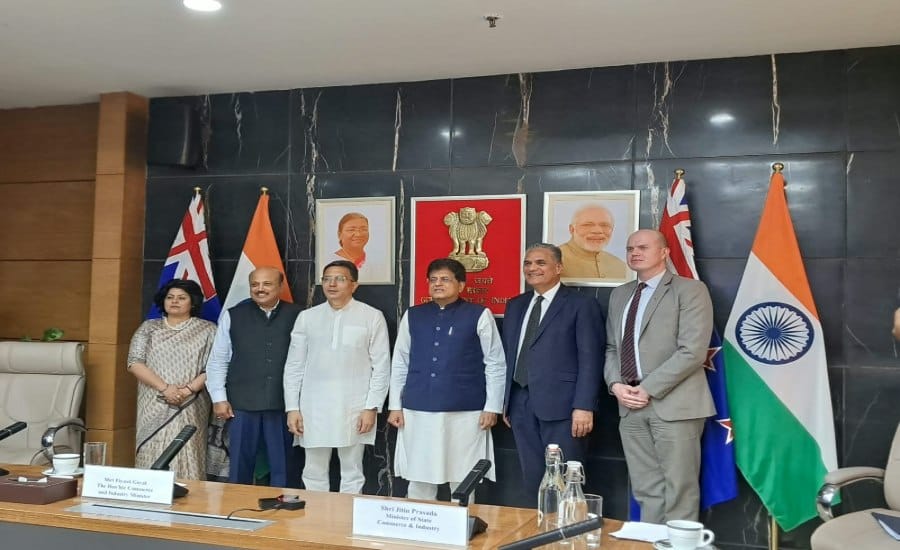
New Delhi: India and New Zealand have formally ratified their Free Trade Agreement (FTA), which will come into force on October 20, 2026, on the occasion of Dussehra. Union Commerce and Industry Minister Piyush Goyal described it as an important milestone in the two countries’ bilateral economic partnership, saying the agreement reflects their shared commitment to building a “stronger and more ambitious economic partnership.”
The FTA will provide 100% duty-free access for Indian exports to New Zealand from day one and facilitate USD 20 billion in investment into India over 15 years, while also creating new opportunities for students, skilled professionals, exporters and businesses.
Indian Exporters to Get Zero-Duty Market Access
One of the biggest gains for India is the removal of tariffs on all Indian export lines entering New Zealand. Labour-intensive sectors such as textiles, apparel, leather, footwear, gems and jewellery, engineering goods and processed foods are expected to benefit from improved price competitiveness.
New Zealand had earlier imposed tariffs of up to 10% on several Indian products, including ceramics, carpets, automobiles and auto components. The new arrangement removes these duties once the FTA comes into force.
The agreement also provides duty-free access to selected inputs such as wooden logs, coking coal and metal waste and scraps, which could help reduce manufacturing costs and strengthen Indian supply chains.
For New Zealand, India has offered tariff liberalisation covering around 70% of tariff lines and 95% of bilateral trade, with several products receiving phased access. Sensitive areas remain protected through exclusions, tariff-rate quotas and other safeguards.
Read Also: India Targets 60,000 Tonne Silk Output by 2030-31, Sets 2028-29 Goal for Global No. 1 Spot
Agriculture Remains Protected
The agreement keeps several sensitive agricultural and dairy products outside India’s tariff liberalisation commitments.
Products including dairy items such as milk, cream, cheese, yoghurt and whey, along with sugar, onions, spices, edible oils and several other agricultural products, have been excluded from market access commitments. This is intended to protect domestic farmers and rural livelihoods.
At the same time, the FTA creates an Agricultural Productivity Partnership aimed at combining New Zealand’s agricultural expertise and technology with India’s large farming base.
Centres of Excellence for products such as apples, kiwifruit and Mānuka honey are part of the cooperation framework, with the broader objective of improving productivity, knowledge transfer and farmer incomes.
$20 Billion Investment Commitment for India
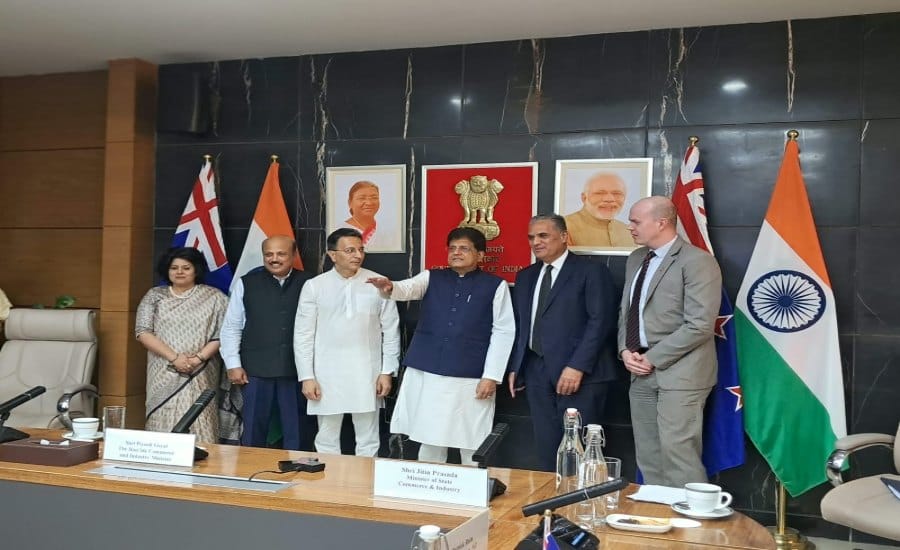
Investment is another major component of the agreement. New Zealand has committed to facilitating USD 20 billion in investment into India over 15 years.
The cooperation framework covers areas including manufacturing, agriculture, infrastructure, renewable energy, digital services, technology, research and innovation. A rebalancing mechanism has also been included to address potential shortfalls in investment delivery.
The investment push could create opportunities for Indian businesses, startups and MSMEs while strengthening technology and knowledge flows between the two economies.
New Opportunities for Indian Students and Skilled Professionals
The FTA also goes beyond conventional trade in goods.
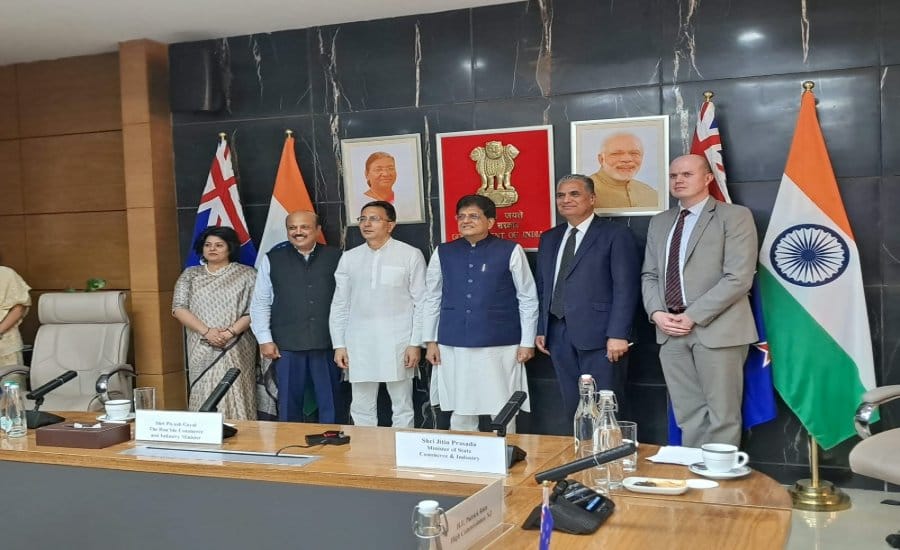
For the first time in a New Zealand trade agreement, a dedicated Student Mobility and Post-Study Work Visa pathway has been created for Indian students. STEM graduates can receive post-study work rights of up to three years, while doctoral graduates can receive up to four years. Indian students can also work up to 20 hours a week while studying under the agreement’s provisions.
A separate Temporary Employment Entry pathway provides a quota of 5,000 skilled Indian professionals, with stays of up to three years. The covered fields include IT, engineering, healthcare, education and construction, along with AYUSH practitioners, yoga instructors, Indian chefs and music teachers.
The agreement also provides for 1,000 Working Holiday Visas annually for young Indians, supporting greater people-to-people and professional mobility.
Services Sector Gets Wider Market Access
Indian service providers will also gain from New Zealand’s commitments across 118 services sectors, including computer-related services, professional services, telecommunications, construction, education, financial services, tourism and business services.
India will receive Most-Favoured-Nation treatment across about 139 service sub-sectors, giving Indian businesses greater opportunities as New Zealand expands commitments to other trading partners.
The pact also facilitates cooperation in traditional medicine and wellness services, including Ayurveda and yoga, creating additional avenues for India’s AYUSH ecosystem.
What the FTA Could Mean for Jobs and Trade
The India-New Zealand FTA comes as both countries seek to expand and diversify their economic relationship. Indian officials have highlighted the potential of FTAs to open new markets, improve economies of scale and support employment, particularly in export-oriented sectors.
The agreement aims to help India expand its presence in the New Zealand market while creating a more predictable framework for investment and services. For MSMEs, exporters, students and skilled professionals, the benefits will depend on how effectively businesses and individuals use the opportunities created by the pact.
With formal ratification now complete, the next major milestone will be October 20, 2026, when the India-New Zealand FTA enters into force. The agreement is expected to add momentum to bilateral trade and deepen economic cooperation between the two countries.
Read Also: Indian Railways Approves ₹209 Crore for Electronic Interlocking at 7 Stations in Solapur Division