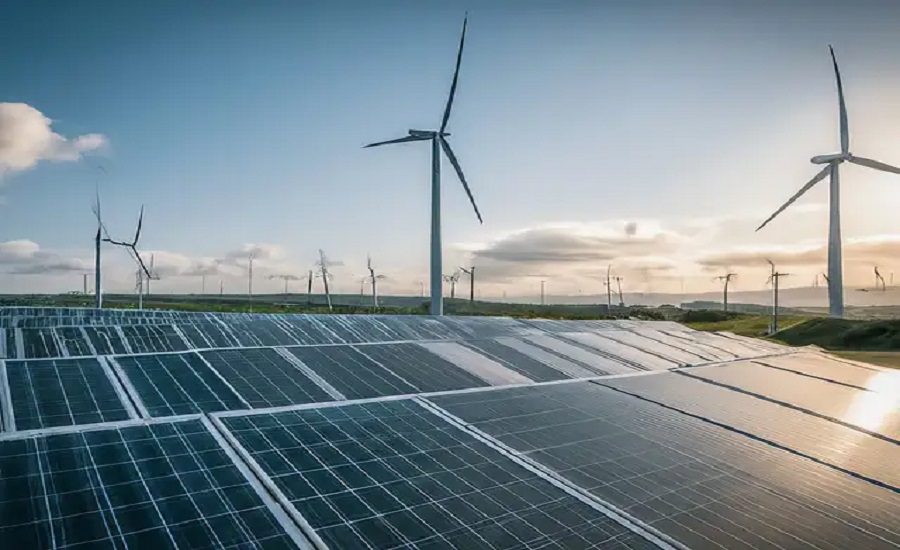
India’s renewable energy sector is entering a pivotal new phase, focusing less on the speed of capacity addition and more on the strength, stability, and integration of its clean energy systems. After a decade marked by record-breaking expansion, the Ministry of New and Renewable Energy (MNRE) has outlined a clear vision for the future — one that emphasizes creating a resilient, dispatchable renewable infrastructure capable of supporting India’s ambitious target of 500 GW of non-fossil fuel capacity by 2030.
From Quantity to Quality: The Next Leap in India’s Renewable Energy Growth
Over the past ten years, India’s renewable energy capacity has surged from less than 35 GW in 2014 to over 197 GW today (excluding large hydro), making it one of the fastest-growing renewable markets globally. However, as MNRE explains, this exponential growth is now transitioning into a phase that prioritizes quality over quantity.
Instead of focusing solely on megawatts added, the sector is now concentrating on capacity absorption — a shift toward grid integration, energy storage, hybridisation of projects, and market reforms. This deliberate recalibration is essential to ensure that future renewable energy additions are not just numerous but also stable, reliable, and dispatchable.
Multi-Pathway Expansion Maintains Momentum Despite Global Headwinds
Despite challenges such as supply chain disruptions, fluctuating module prices, and tighter financing conditions, India continues to add between 15 and 25 GW of new renewable capacity annually — a pace that remains among the fastest worldwide.
Currently, over 40 GW of renewable projects are in advanced stages of securing Power Purchase Agreements (PPAs), Power Sale Agreements (PSAs), or transmission connectivity, underscoring strong investor confidence.
The capacity addition is progressing through multiple pathways
Central Renewable Energy Implementing Agencies (REIAs): 5.6 GW of bids in the current year.
State Agencies: 3.5 GW of bids.
Commercial and Industrial Consumers: Expected to add nearly 6 GW in 2025.
The Ministry highlights that enforcement of Renewable Power Purchase Obligations (RPOs) by states and DISCOMs, upgrading transmission infrastructure, and technology-enabled grid integration are top priorities to support this multi-faceted growth.
Policy Pivot: From Capacity Growth to System Design and Domestic Manufacturing
Over the last two years, Indian renewable energy policy has consciously shifted from pure capacity expansion to robust system design. This includes:
Hybrid and Storage-Backed Auctions: Increasing tender focus on projects paired with Battery Energy Storage Systems (BESS) to provide firm, dispatchable power.
Domestic Manufacturing Incentives: Production-Linked Incentive (PLI) schemes, Domestic Content Requirements, and duty structures aim to reduce import dependency and bolster India’s solar and battery manufacturing ecosystems.
Regulatory Realignments: GST recalibration and Approved List of Models and Manufacturers (ALMM) adjustments are designed to stabilize costs and improve module reliability.
These reforms signify a maturation of the sector — from rapid expansion to a quality-driven, integrated energy system.
Transmission Reforms: Unlocking Over 200 GW of Renewable Potential
Recognizing that transmission infrastructure is the backbone of renewable integration, the Government has unveiled a ₹2.4 lakh crore Transmission Plan targeting 500 GW capacity. Key components include:
Green Energy Corridors: High-capacity transmission lines connecting renewable-rich states like Rajasthan, Gujarat, and Ladakh with demand centers.
HVDC Corridor Development: Increasing inter-regional transmission capacity from 120 GW today to 168 GW by 2032.
CERC General Network Access Amendments: Introduction of time-segmented access for ‘solar-hours’ and ‘non-solar-hours,’ allowing dynamic sharing of transmission corridors among solar, wind, and storage projects. This reduces congestion and optimizes grid utilization.
These measures are critical for clearing bottlenecks and enabling stranded projects to move forward, reinforcing the system’s resilience.
India Remains a Global Magnet for Clean Energy Capital
Despite temporary slowdowns, India’s renewable sector continues to attract substantial international investment. With some of the world’s lowest renewable tariffs and policy continuity, India’s clean energy market is competitive and stable.
Investors are increasingly favoring integrated portfolios that include storage-backed projects, reflecting confidence in India’s long-term renewable growth trajectory.
The Real Renewable Energy Story: Integration, Reliability, and Market Innovation
The transition from expansion to integration is a sign of sector maturity, not decline. The focus is on synchronizing renewable generation with grid infrastructure, financial mechanisms, and market design to build a resilient energy system.
Emerging market instruments such as Virtual Power Purchase Agreements (VPPAs) and green attribute trading are becoming essential tools for accelerating renewable deployment. These enable corporate buyers to procure clean energy virtually, fostering private investment and offering price certainty for developers awaiting grid connectivity.
Further, market reforms under the Electricity (Amendment) Bill and CERC regulations aim to integrate day-ahead and real-time markets, ancillary services, and corporate procurement strategies to create a flexible, demand-driven renewable energy ecosystem.
Looking Ahead: The Next Phase of Renewable Growth
The future of India’s renewable sector is taking shape through several key initiatives:
Large Hybrid and Round-the-Clock (RTC) Projects: Underway in Rajasthan, Gujarat, and Karnataka.
Offshore Wind and Pumped Hydro Storage: Gaining momentum as complementary clean energy sources.
Distributed Solar and Agrovoltaics: Expanding rural participation through PM Suryaghar and PM KUSUM schemes.
National Green Hydrogen Mission: Linking renewables to industrial decarbonization.
Green Energy Corridor Phase III: Strengthening grid integration.
These strategic levers will propel India toward its 2030 targets not through sheer speed but through enduring systemic strength.
Viksit Bharat: A Renewable Energy Transition Growing Up
India’s renewable energy journey is evolving from a sprint to a marathon. The focus on institutional durability, grid synchronization, local manufacturing, and financial stability marks a transition toward a sustainable, resilient clean energy future.
After a decade of rapid expansion, the sector’s new maturity ensures that when the next acceleration comes, it will be faster, more efficient, and sustainable — a true reflection of India’s vision for Viksit Bharat.