New Delhi: Union Minister of Commerce and Industry Piyush Goyal has announced the formation of a dedicated task force to support India’s toy sector and identify key interventions to help the country achieve a 5% share of the global toy market by 2032.
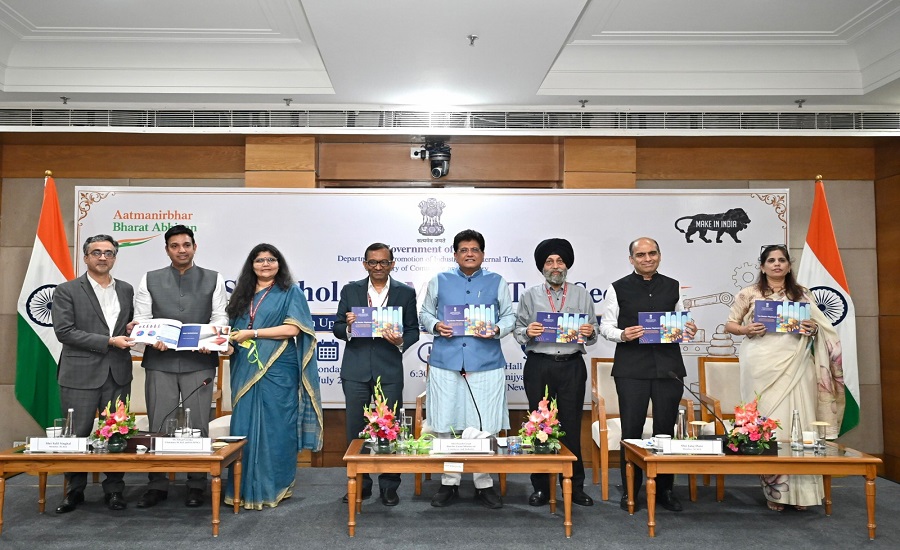
The announcement was made during the stakeholder meet titled “Team Up for Toys: Driving SCALE, Innovation and Exports”, organised by the Department for Promotion of Industry and Internal Trade (DPIIT) at Vanijya Bhawan in New Delhi.
The event brought together policymakers, industry leaders, manufacturers, startups, investors, artisans, designers and other stakeholders to discuss the future growth of India’s toy industry.
Six Key Objectives of New Toy Sector Task Force
The newly announced task force will focus on six major objectives aimed at strengthening India’s toy manufacturing ecosystem and improving its global competitiveness.
The key areas of focus include:
- Integrating India’s toy industry with global value chains
- Strengthening domestic manufacturing capabilities
- Identifying and resolving value chain bottlenecks
- Creating a skilled workforce and generating employment
- Promoting product design and innovation
- Improving the ease of doing business
The task force is expected to work towards identifying practical interventions that can help the sector expand its manufacturing capacity, improve competitiveness and increase India’s participation in international toy markets.
Read also: India Targets 100 MT Coal Gasification Capacity by 2030, Government Boosts Clean Coal Technology
Piyush Goyal Launches Toy Sector Playbook
During the event, Mr. Piyush Goyal also launched the Toy Sector Playbook, a comprehensive roadmap designed to support manufacturers, startups, MSMEs, investors and entrepreneurs operating in the toy industry.
The Playbook provides actionable guidance across several areas, including:
- Manufacturing ecosystems
- Value chains
- Standards and compliance
- Skill development
- Product innovation
- Intellectual property
- Exports
- Emerging market opportunities
The resource is intended to serve as a practical guide for stakeholders looking to improve their competitiveness and expand their presence in both domestic and international markets.
Minister Calls for Globally Competitive Indian Toy Industry
Addressing the gathering, Mr. Piyush Goyal said the progress of India’s toy industry reflects the country’s broader journey towards Viksit Bharat.
He highlighted the unique combination of manufacturing capabilities, creativity, innovation and India’s rich cultural heritage that gives the Indian toy sector significant potential.
The Minister noted that Indian-made toys are increasingly reaching international markets and called upon industry stakeholders to build a complete domestic manufacturing ecosystem.
He emphasised the need for advanced technologies, globally competitive quality standards, deeper localisation, stronger branding and greater integration with global value chains.
Government Initiatives Supporting the Toy Sector
Mr. Piyush Goyal highlighted the positive impact of several government initiatives aimed at strengthening India’s toy ecosystem.
These include quality regulation through BIS certification, cluster development programmes and support measures for MSMEs and startups.
The Minister urged the industry to focus on key areas such as:
- Innovation
- Design excellence
- Sustainability
- Manufacturing scale
- Export competitiveness
The broader objective is to develop globally recognised Indian toy brands and establish India as a leading destination for toy design, manufacturing and exports.
India’s Toy Ecosystem Includes Over 21,000 MSMEs
Welcoming participants at the stakeholder meeting, Joint Secretary, SCALE, Dr. Kajal, highlighted the role of the Steering Committee for Advancing Local Value Add and Employment (SCALE) and the RAPiD Unit in advancing the vision of Aatmanirbhar Bharat.
She noted that the toy sector was among the earliest industries identified for focused intervention because of its strong potential for local value addition, employment generation and export growth.
According to the details shared at the event, India’s growing toy ecosystem currently comprises:
- More than 21,000 MSMEs
- Over 770 DPIIT-recognised toy startups
- Nearly 50 toy clusters
- More than 1,800 BIS licensees
The expanding ecosystem provides a strong foundation for scaling up domestic manufacturing and increasing India’s presence in global toy markets.
India Aims to Become a Global Toy Manufacturing Powerhouse
Chairman, SCALE, Dr. Pawan Goenka, outlined the vision of transforming India into a global toy manufacturing powerhouse.
He highlighted the significant growth opportunity presented by the rapidly expanding global toy industry and said India is well positioned to emerge as a trusted manufacturing and export destination as global supply chains diversify.
He also pointed to the strong potential of India’s domestic toy market and emphasised the goal of increasing the country’s share in the global toy market to 5% by 2032.
Achieving this target will require greater manufacturing scale, stronger design capabilities, continuous innovation and improved export competitiveness.
Stakeholders Discuss Roadmap for Toy Sector Growth
Following the launch of the Toy Sector Playbook, stakeholders participated in extensive discussions on the future growth of India’s toy industry.
The deliberations focused on several key areas, including:
- Scaling up toy manufacturing
- Strengthening local supply chains
- Improving design and innovation capabilities
- Enhancing quality standards
- Developing skilled manpower
- Promoting exports
- Attracting investments
- Increasing India’s participation in global toy value chains
The discussions aimed to identify practical measures that can help Indian toy manufacturers and businesses compete more effectively in international markets.
Focus on Made in India and Designed in India Toys
The event concluded with a vote of thanks by Joint Secretary, DPIIT, Dr. Sumeet Jarangal.
The discussions reaffirmed the shared commitment of the government and industry to build a stronger and globally competitive Indian toy ecosystem.
The long-term vision is not only to ensure that toys are “Made in India”, but also to promote toys that are “Designed in India, Innovated in India and Branded in India”.
With the formation of the new task force, the launch of the Toy Sector Playbook and continued government support for manufacturing, MSMEs, startups, quality and exports, India is aiming to strengthen its position in the global toy industry and achieve a 5% global market share by 2032.
Read also: NeVA Expands Nationwide: 33 States, UT Legislatures Sign MoUs; 21 Go Fully Digital