https://indianmasterminds.com

ADVERTISEMENT
ADVERTISEMENT

From Border Security to Biodiversity Protection: Indian Army Signs Key MoU for Ladakh Wildlife Conservation

The Indian Army and Ladakh Forest Department have signed a landmark MoU to protect wildlife and fragile Himalayan ecosystems. The initiative focuses on conserving species like snow leopards and Himalayan wolves while promoting sustainable development in Ladakh.
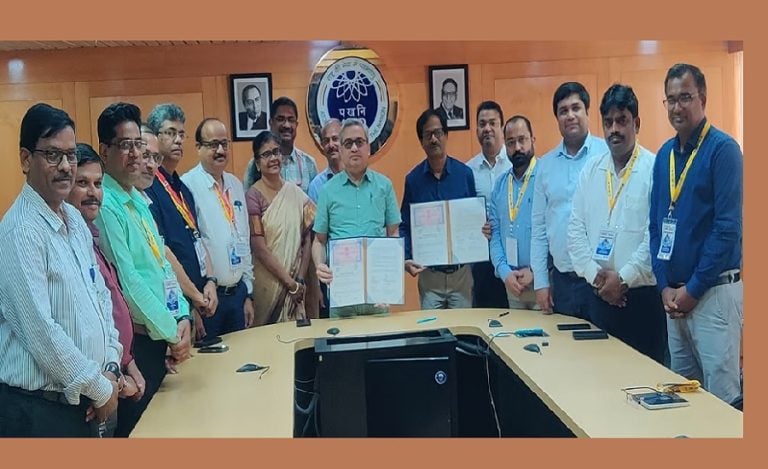
Indian Army IIT Madras MoU
Indian Masterminds Stories

New Delhi: The Indian Army wildlife conservation initiative in Ladakh received a major boost as the Indian Army and the Forest, Ecology and Environment Department of the Union Territory of Ladakh signed a Memorandum of Understanding (MoU) to protect wildlife and preserve fragile high-altitude ecosystems.

The agreement was signed on World Wildlife Day, highlighting the growing importance of environmental protection in border regions. The partnership aims to conserve iconic Himalayan species such as the snow leopard and Himalayan wolf while promoting sustainable development in Ladakh’s ecologically sensitive mountain landscape.

Officials said the collaboration reflects a shared commitment to balancing national security duties with environmental stewardship in one of the world’s most delicate ecosystems.

Details of Indian Army Ladakh Forest Department MoU

The MoU was signed between the Indian Army’s Fire and Fury Corps and the Forest, Ecology and Environment Department of Ladakh on the occasion of World Wildlife Day.

Read also: Self-Reliance in Defence: Indian Army to Order 300 Dhanush Howitzers for Next-Generation Artillery Capability

Senior officials, including Lieutenant General Hitesh Bhalla, General Officer Commanding of the Fire and Fury Corps, and Ashish Kundra, Chief Secretary of Ladakh, were present during the signing ceremony.

Officials described the agreement as an important step toward protecting Ladakh’s unique biodiversity and strengthening cooperation between defence and civil authorities for environmental conservation.

Key Objectives of Indian Army Ladakh Forest Department MoU

The partnership will focus on protecting several key wildlife species that live in the high-altitude ecosystem of Ladakh.

These include:

  • Snow Leopard
  • Himalayan Wolf
  • Bharal (Blue Sheep)
  • Ibex
  • Himalayan Marmot
  • Black-necked Crane

These species are considered important for maintaining the ecological balance of the Himalayan region. The initiative will also focus on preserving their natural habitats and improving wildlife monitoring systems.

Joint Snow Leopard Conservation Cell to be Established

As part of the agreement, authorities will establish a Joint Snow Leopard Conservation Cell.

This specialized unit will:

  • Monitor snow leopard populations and habitats
  • Coordinate conservation activities in high-altitude areas
  • Support scientific research and environmental monitoring
  • Strengthen wildlife protection measures

The cell will play a crucial role in safeguarding the snow leopard, one of the most iconic and endangered animals in the Himalayan ecosystem.

Support Under Global Snow Leopard Ecosystem Protection Programme

The initiative will operate under the Global Snow Leopard and Ecosystem Protection Programme (GSLEP), an international conservation framework aimed at protecting snow leopards and their habitats across Central and South Asia.

Through this framework, the partnership will encourage eco-friendly practices, coordinated conservation efforts, and sustainable development in Ladakh’s high-altitude landscapes.

Balancing Border Security and Environmental Protection

The Indian Army maintains a strong presence in Ladakh because of its strategic border location and challenging terrain.

Officials noted that the Army has consistently worked to balance two responsibilities:

  • Protecting India’s borders
  • Preserving the region’s fragile environment and wildlife

The MoU is expected to create a long-term framework for cooperation between defence forces and environmental authorities to ensure that development and security activities remain environmentally responsible.

Why Ladakh’s Ecosystem Needs Protection

Ladakh is one of the world’s most fragile mountain ecosystems. The region’s extreme climate, high altitude, and limited vegetation make wildlife conservation particularly challenging.

Many rare animals, including the snow leopard, depend on these ecosystems for survival. Conservation initiatives like this MoU are important to protect biodiversity and maintain ecological balance in the Himalayan region.

Read also: Supreme Court Mining Prohibition: Mining Banned Within 1 KM of Wildlife Sanctuaries — A Massive Boost for India’s Biodiversity


Indian Masterminds Stories
Join our WhatsApp Channel
ADVERTISEMENT
ADVERTISEMENT
Related Stories
ADVERTISEMENT
ADVERTISEMENT
NEWS
Jalaun
UP CM Yogi Launches ₹1,273.96 Crore Development Projects in Jalaun, Announces 324 Infrastructure Works 
cm rekha
CM Rekha Gupta Launches Door-to-Door Waste Collection Project with 917 Modern Vehicles in West Delhi
NBCC defence infrastructure project
NBCC Secures ₹108.85 Crore PMC Orders for Clean Plant Centre in Srinagar and Hostel Projects in Odisha
cm mohan yadav
Madhya Pradesh CM Mohan Yadav Announces Four Fast Track Courts to Resolve Exam Cases Within 3 Months
Karnataka Hate Speech and Hate Crimes Bill 2025
Karnataka Govt Transfers Two IAS Officers; Rahul Ratnam Pandey Made Mangaluru Commissioner
Madras High Court Witnesses Uniform Ruling
Madras HC Orders DGP to Form SIT, Re-Postmortem in Pregnant Woman Afrin's Alleged Dowry Death Case
gujarat
Gujarat CM Bhupendra Patel Reviews Rain Situation at SEOC, Orders High Alert Amid Heavy Rainfall Forecast
cm dhami
Uttarakhand CM Dhami Approves Tiger Protection Force, AI Monitoring to Strengthen Wildlife Conservation 
ADVERTISEMENT
ADVERTISEMENT
Videos
Piyusha Jagtap
How IFS Piyusha Jagtap Is Changing Conservation Through Stories, Communities and Compassion | Video Interview
Pulkit Khare
How Uttar Pradesh Is Preparing Its Youth for the AI Revolution
Haryana Leads India's First AI-Powered Bird Census
ADVERTISEMENT
UPSC Stories
nitesh upsc
CSE 2025 AIR 562 Nitesh Chose India Over an American Dream and Reached Civil Services After Six Attempts
UPSC CSE 2025 AIR 562 Nitesh's inspiring journey from a small village in Madhya Pradesh to IIT Bombay,...
WhatsApp Image 2026-07-19 at 9.46
Why So Many UPSC Aspirants Fail Despite Studying So Hard
Many UPSC aspirants mistake attending lectures for preparation, but the examination rewards independent...
Sanjay Bagali and Deekshith N UPSC IFS 2025
How Trust, Teamwork and Persistence Helped Two Friends Crack UPSC IFS 2025
Read the inspiring UPSC IFS 2025 success story of Deekshith N (AIR 14) and Sanjay Bagali, whose friendship,...
CSR NEWS
NCL CSR
NCL Signs ₹11.71 Crore CSR MoU to Build 8-Km Road in Singrauli, Boost Rural Connectivity
Northern Coalfields Limited partners with MPRRDA to construct Obri-Kasaiya via Kanhaiya Dah road, improving...
MCL CSR
MCL to Build 5 Km BT Roads in Odisha’s Angul with ₹5.35 Crore CSR Support for Better Connectivity
Mahanadi Coalfields Limited signs MoU for road development in Athmallik NAC to improve all-weather transport...
WCL
WCL Partners with Narayana Institute Nagpur to Provide Free JEE Coaching Under Project TARASH
WCL signs MoU with Narayana Institute for the 4th batch of Project TARASH, offering expert JEE coaching...
ADVERTISEMENT
ADVERTISEMENT
ADVERTISEMENT
Latest
Jalaun
UP CM Yogi Launches ₹1,273.96 Crore Development Projects in Jalaun, Announces 324 Infrastructure Works 
cm rekha
CM Rekha Gupta Launches Door-to-Door Waste Collection Project with 917 Modern Vehicles in West Delhi
ADVERTISEMENT
ADVERTISEMENT
ADVERTISEMENT
ADVERTISEMENT
ADVERTISEMENT
ADVERTISEMENT
ADVERTISEMENT
Videos
Piyusha Jagtap
Pulkit Khare
Haryana Leads India's First AI-Powered Bird Census
ADVERTISEMENT
ADVERTISEMENT