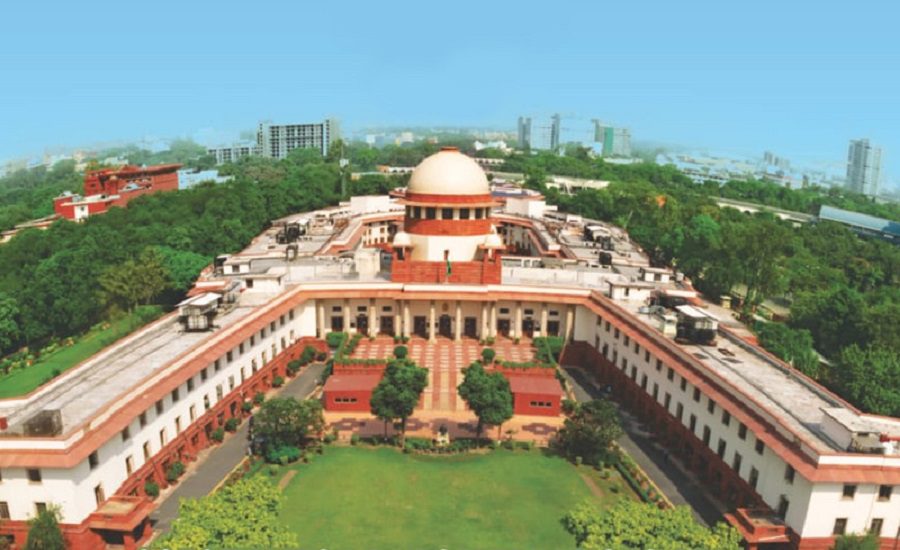
Ranchi: The appointment of Tadasha Mishra as Jharkhand’s Director General of Police (DGP) just one day before her scheduled retirement was in violation of the Supreme Court’s directions on appointment of state police chiefs, senior advocate and amicus curiae Raju Ramachandran has told the apex court.
In a report submitted before the Supreme Court, Ramachandran said Mishra’s appointment as DGP on December 30, 2025, despite her superannuation being due the following day, was contrary to the principles laid down in the Prakash Singh series of judgments and orders.
The amicus is assisting a bench headed by Chief Justice of India Surya Kant in matters concerning alleged violations of the Supreme Court’s directions on the appointment of DGPs. The bench also includes Justice Joymalya Bagchi.
Appointment Came Under Scrutiny
Tadasha Mishra, a 1994-batch IPS officer of the Jharkhand cadre, was appointed as the state’s DGP on December 30, 2025, after serving as the acting police chief. She was due to retire on December 31, 2025.
Read Also: Why 46 IPS Officers Were Deputed to CAPFs? Supreme Court Seeks Home Secretary’s Reply
The appointment was subsequently challenged in the Supreme Court in proceedings arising from a challenge to Jharkhand’s rules governing the selection of its police chief.
The controversy centres on the Supreme Court’s directions that an officer considered for appointment as DGP should have at least six months of residual service at the time of selection. The amicus has said appointing an officer with only one day of service remaining ran contrary to these directions.
Key Issues Raised Before the Supreme Court
- One-day residual service: Mishra was appointed DGP on December 30, 2025, a day before her scheduled retirement.
- Six-month eligibility principle: The Prakash Singh directions require an officer being considered for DGP appointment to have at least six months of service remaining.
- Two-year tenure: The dispute also concerns the grant of a two-year tenure to an officer appointed immediately before retirement.
- State’s DGP rules: The Jharkhand government introduced its own rules governing the selection and appointment of the DGP in 2025.
- UPSC’s role: Questions have also been raised over whether the prescribed process involving a panel of eligible officers and the Union Public Service Commission was followed.
Amicus Flags Concern Over State’s Powers
Ramachandran has also raised concerns over provisions of Jharkhand’s 2025 DGP appointment rules that, according to his report, give the State government broad discretion to remove the DGP.
The amicus said such discretionary powers could expose the police chief to undue political pressure and undermine the independence intended to be protected by the Supreme Court’s requirement of a fixed tenure.
He suggested that the rules should be interpreted in a manner consistent with service-condition safeguards and the statutory two-year tenure prescribed for the police chief.
Background To The Dispute
The Jharkhand government notified the Selection and Appointment of Director General and Inspector General of Police, Jharkhand (Head of Police Force) Rules, 2025 in January last year.
Former Jharkhand Chief Minister and BJP leader Babulal Marandi subsequently challenged provisions of these rules before the Jharkhand High Court, arguing that they were inconsistent with the Supreme Court’s directions in the Prakash Singh case. The matter later reached the Supreme Court.
The Supreme Court had earlier sought responses from the State in proceedings concerning the appointment process. The latest submissions by the amicus have brought the issue of Mishra’s appointment and the State’s amended rules back into focus.
The case could have wider implications for how states frame rules for appointing police chiefs and for the safeguards intended to ensure stability and independence in the office of the DGP.