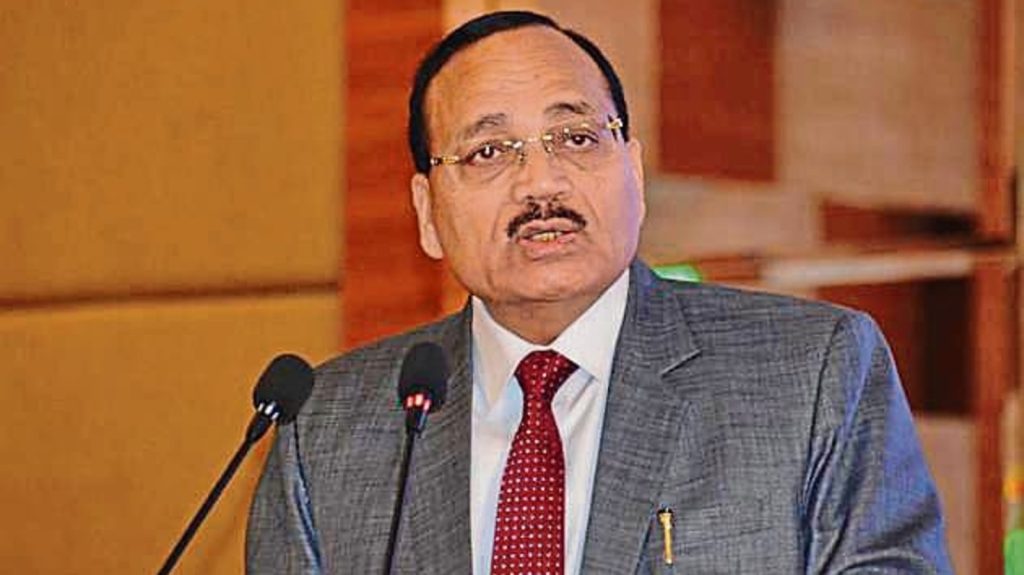
New Delhi: Chief Justice of India Surya Kant has clarified his ‘cockroach’ remark, saying it was not directed at India’s youth or unemployed young people. He said the comment was made while discussing people who allegedly entered the legal profession using fake or unrecognised law degrees. The CJI has also called for a clear protocol on reporting oral court observations to prevent remarks from being presented without their full context.
Background of CJI Surya Kant Cockroach Remark
The controversy began after CJI Surya Kant’s oral observation using the word “cockroaches” was widely discussed in news reports and on social media. Some reports and online reactions suggested that the remark was aimed at young people. However, CJI Surya Kant has said this interpretation was incorrect.
Read also: CJI Surya Kant Explains How the Collegium Selects Supreme Court and High Court Judges
In an interview, the Chief Justice said his observation had been taken completely out of context. He explained that the discussion was actually about people who allegedly entered the legal profession using fake, false or unrecognised law degrees.
Details of CJI Surya Kant Cockroach Remark
According to CJI Surya Kant, the discussion was about the problem of fake lawyers in the legal system. He said some people had allegedly obtained law degrees without properly attending law colleges, while others may have used degrees that were not issued by the universities concerned.
The CJI said he had been told that there were around 48,000 such lawyers in the country.
This number was mentioned by the Chief Justice during the interview. It should therefore be understood as a figure cited by him, rather than an independently verified finding in the interview. CJI Surya Kant said his “cockroach” observation was made only in this context. He stressed that it was not a comment about India’s youth.
Was the ‘cockroach’ remark aimed at unemployed youth
No, according to CJI Surya Kant. The Chief Justice said the controversial observation was about people allegedly entering the legal profession through fake or unrecognised degrees. He said it was never meant as a description of young people or unemployed youth.
The clarification is important because the original remark had triggered criticism and strong reactions on social media.
CJI Surya Kant also explains student protest controversy
The Chief Justice also addressed another controversy involving oral observations made when a lawyer sought an urgent hearing related to student protests. CJI Surya Kant explained that when a matter is mentioned for an urgent hearing, the Supreme Court Registry normally provides him with details of petitions that have already been filed.
He said he had repeatedly asked whether any petition concerning the student agitation had been filed. According to him, he was informed that no such petition had been filed at that time.
Later, a lawyer mentioned the issue in court as if a petition had already been filed and urgently needed to be heard. The CJI said this was the background to his remark asking the lawyer not to waste the Court’s time or his time.
CJI Surya Kant Cockroach Remark: ‘Supreme Court is open for everyone’
CJI Surya Kant also rejected the suggestion that the Supreme Court was unwilling to hear the concerns of students or young people. He explained that a judge cannot simply tell someone in open court to “go and file a petition”, as this could appear to be an invitation to start litigation.
However, he made clear that anyone can approach the Supreme Court by following the proper legal process. “The Supreme Court is definitely open for everyone,” the CJI said.
He explained that if someone files a proper petition, the Court can examine it according to law.
Why is CJI Surya Kant concerned about reporting oral court remarks
CJI Surya Kant said reporting isolated courtroom remarks without their full context can give the public an incorrect picture of what happened.
According to him, such reporting can also create a negative impression of the judiciary when a short oral remark is separated from the discussion in which it was made.
The Chief Justice said people have a right to know what is actually happening in courts. But he argued that they should not receive filtered or one-sided information.
This has become an important issue as courtroom remarks can quickly spread through news websites, social media posts and short video clips.
What are oral observations in court
Oral observations are comments made by judges while hearing or discussing a matter in court. They can include questions, concerns or preliminary views expressed during proceedings. Such comments should not automatically be treated as the Court’s final ruling.
A court’s written order or judgment carries particular legal importance because it records what the Court has formally decided. This difference is important when reporting court proceedings.
What is ‘mentioning’ in the Supreme Court?
Mentioning is a process in which a lawyer requests the Court to urgently list or hear a matter. It is different from the full hearing of a case.
CJI Surya Kant described mentioning as largely an administrative or semi-judicial process. During mentioning, the main question is usually whether a case deserves an urgent or out-of-turn hearing.
The Court is not necessarily deciding the main legal issues involved in the case at this stage.
That is one reason why the CJI believes comments made during mentionings need to be reported carefully.
CJI Surya Kant Cockroach Remark: Supreme Court acts on unauthorised courtroom recordings
The wider debate also comes amid concerns about the use of audio and video recordings of court proceedings. The Supreme Court recently issued an interim direction against unauthorised extraction, modification, dissemination and commercial exploitation of recordings of court proceedings. The concern is particularly relevant to social media, where short courtroom clips can be edited and circulated without showing the full proceedings. The move seeks to address the misleading or unauthorised use of official courtroom recordings.
Read also: MHA to Hold High-Level Meeting with DGPs on Demographic Changes and Illegal Infiltration on July 9