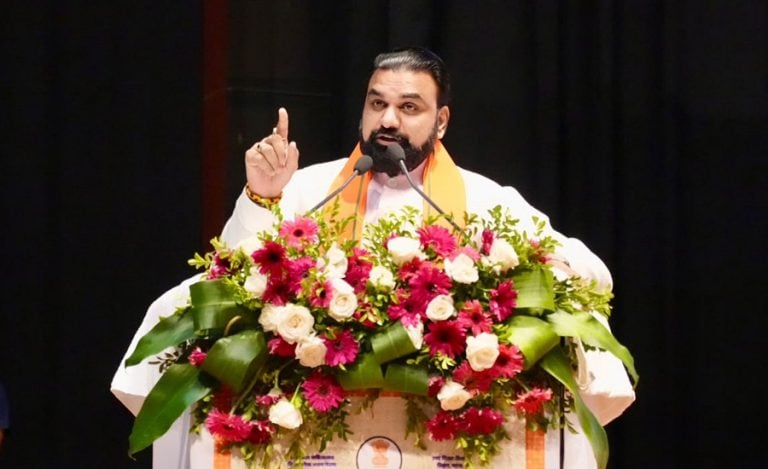
New Delhi: Chief Justice of India Surya Kant has said that mediation is not just a legal process but a deeply psychological one that helps people find lasting solutions to disputes. Speaking at the International ADR Conference 2026 in New Delhi, the CJI said India has the potential to become a global centre for dispute resolution if it continues to strengthen its mediation framework and institutions.
ADR Conference 2026: CJI Surya Kant Highlights Importance of Mediation
Chief Justice Surya Kant said mediation works because people are more likely to follow agreements that they help create themselves. He described mediation as a process that builds trust, understanding, and long-term solutions rather than simply deciding who wins or loses a dispute.
Read also: CJI Surya Kant Explains How the Collegium Selects Supreme Court and High Court Judges
According to the CJI, mediation goes beyond legal procedures and focuses on human behaviour, communication, and mutual understanding.
India Can Become a Global Mediation Hub
Speaking at the International ADR Conference 2026, organised by the Madhyam International Council for Conflict Resolution, the CJI said India has the potential to emerge as a major global centre for mediation and alternative dispute resolution (ADR). He stressed that strong dispute resolution systems are essential for a fast-growing economy.
The CJI noted that India must continue developing modern and efficient mediation infrastructure to meet rising domestic and international demand.
Mediation System Has Improved Significantly
The CJI highlighted that mediation in India has undergone major transformation over the last two decades. Today, mediation centres operate with trained professionals, dedicated managers, secure digital platforms, and online dispute resolution systems. These improvements have made dispute resolution faster, more accessible, and more efficient for parties located in different cities and countries.
Rise of Hybrid Dispute Resolution Models
CJI Surya Kant also pointed to the growing use of hybrid dispute resolution methods such as “Med-Arb-Med.” Under this model, parties first attempt mediation to find common ground.
If a deadlock arises on a specific issue, an arbitrator intervenes briefly to resolve that issue. Afterward, the parties return to mediation and incorporate the decision into a broader settlement.
According to the CJI, this approach combines the strengths of both mediation and arbitration, resulting in more comprehensive and durable outcomes.
ADR Conference 2026: Mediation Act, 2023 Strengthens Legal Framework
The Chief Justice said the Mediation Act, 2023 has provided India with a dedicated legal framework for mediation. The law recognizes party autonomy in selecting mediators and procedures while giving mediated settlement agreements legal standing similar to court decrees. He noted that the Act creates timelines that balance efficiency with fairness, helping increase confidence in mediation.
Read also: CJI Surya Kant Highlights How Digital Courts Are Transforming India’s Justice System