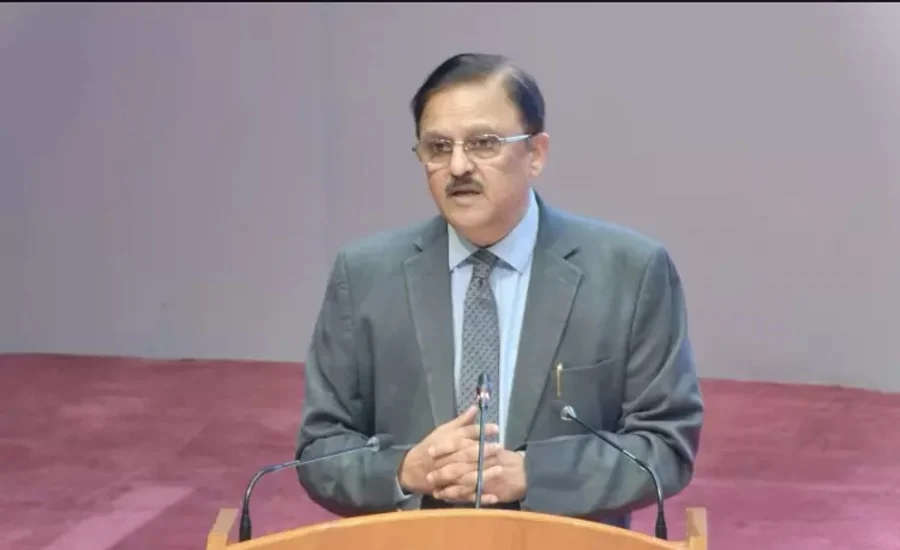
New Delhi: Recent comments by Justice Abhay S. Oka on Judicial conflict of interest have sparked an important discussion about judicial transparency, ethics, and public confidence in India’s judiciary.
Speaking about the appointment of judges’ children as lawyers for government agencies, Justice Oka said that while such appointments are not illegal, it would be ideal for them to avoid accepting such positions until their judge-parent retires. His remarks come amid ongoing debates over judicial independence and disclosure requirements.
Why Did Justice Abhay S. Oka Make This Observation on Judicial Conflict Of Interest
Justice Oka’s comments came during a discussion on controversies involving the appointment of children of sitting judges as panel lawyers for government institutions.
Read also: Why Justice Abhay Oka Opposes Lawyers Discussing Their Own Ongoing Cases Publicly
He clarified that there is nothing wrong with judges’ children practicing law. However, concerns may arise when they are appointed as lawyers for government agencies such as the Election Commission of India (ECI), Enforcement Directorate (ED), National Investigation Agency (NIA), or similar bodies.
According to Justice Oka, public confidence in the judiciary is extremely important, and any situation that may create an appearance of conflict of interest should be handled carefully.
What Did Justice Abhay S. Oka Say About Government Appointments
Justice Oka stated that the ideal situation would be for children of sitting judges to avoid accepting appointments as panel lawyers for government agencies until their parents retire.
He emphasized that this would be a matter of personal ethics and self-restraint rather than a legal requirement. According to him, no law can prohibit a qualified lawyer from receiving such appointments.
No Legal Ban Exists
Justice Oka made it clear that judges’ children have the same professional rights as any other advocate. He said that preventing someone from being appointed solely because they are the son or daughter of a judge would not be legally justified. Therefore, any restraint in such cases should be voluntary rather than mandatory.
Importance Of Transparent Selection Processes
Justice Oka highlighted that government institutions should follow transparent procedures while appointing panel advocates.
He suggested that agencies should clearly publish eligibility criteria, invite applications, and ensure that all eligible lawyers get an equal opportunity to compete. Such transparency can reduce concerns about favoritism and strengthen trust in the appointment process.
Merit Should Decide Appointments
Justice Oka noted that when appointments are made through a fair and open process, questions about privilege or influence become less significant. He stressed that appointments should be based on merit, qualifications, and experience.
When Should Judges Disclose Such Relationships
Justice Oka said that if a sitting judge’s child is empanelled as a lawyer for an institution such as the ED, ECI, or NIA, the judge should disclose that fact. This disclosure helps maintain transparency and public confidence in judicial proceedings.
Judges Should Avoid Hearing Related Cases
Justice Oka further stated that judges should not hear cases involving an institution where their son or daughter has appeared as counsel.
For example, if a judge’s child is a panel advocate for the ED, the judge should avoid hearing ED-related matters. This approach helps prevent any perception of bias.
Does Empanelment Automatically Require Recusal
Justice Oka clarified that empanelment alone does not automatically require a judge to recuse from all cases involving the Central or State Government.
He distinguished between appointments with specific institutions and broader government panels. According to him, automatic recusal may not be necessary if the appointment was made through a regular and transparent process.
Case-Specific Assessment Is Important
However, he maintained that judges should avoid matters where their children have directly appeared as lawyers. Each situation should be evaluated carefully to protect judicial integrity and fairness.
Judges’ Families Also Have A Responsibility
Justice Oka observed that judicial ethics are not solely the responsibility of judges. Family members also play a role in preserving public trust in the justice system. He said that judges’ children should ideally exercise caution and avoid situations that may create controversy.
Public Confidence Must Be Protected
According to Justice Oka, the judiciary depends heavily on public confidence. Even if no legal wrongdoing exists, avoiding situations that may create doubts about impartiality can help strengthen faith in the institution.
Justice Oka’s Remarks On The Justice Satish Chandra Sharma Controversy
Justice Oka also commented on the controversy involving the empanelment of the son of Justice Satish Chandra Sharma as a lawyer for the Election Commission of India. He stated that the relationship should have been disclosed at the beginning of the proceedings.
According to him, early disclosure would have ensured greater transparency and prevented questions from arising later. At the same time, he noted that since no final decision on merits had been delivered in the matter, there was technically no judgment that needed to be recalled.
Read also: Department of Justice to Showcase Tech-Enabled Legal Aid at DISHA 2.0 Workshop in Goa
FAQs
Not automatically. Justice Oka said recusal depends on the circumstances, although judges should avoid hearing cases in which their children have appeared as counsel.
Justice Oka said that judges’ children can legally practice law, but ideally they should avoid accepting appointments as lawyers for government agencies until their judge-parent retires.
Disclosure promotes transparency, prevents conflict-of-interest concerns, and helps maintain public confidence in the judiciary.