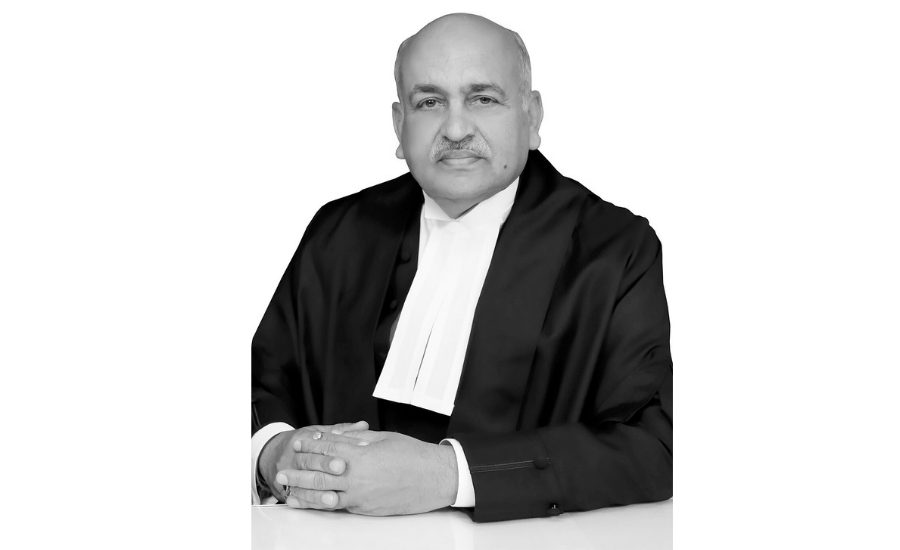
New Delhi: The Judicial Pendency in India issue came into sharp focus after Supreme Court Judge Justice Pankaj Mithal expressed serious concern over the growing backlog of court cases during his farewell speech.
Speaking at a farewell function organized by the Supreme Court Bar Association, Justice Mithal said that rising pendency is not just a statistical problem but a challenge that directly impacts the lives, liberties, and rights of millions of citizens. He also warned legal professionals against excessive dependence on Artificial Intelligence (AI) in legal work.
Key Highlights of the Justice Pankaj Mithal Farewell Speech
- Justice Pankaj Mithal addressed a farewell event organized for retiring Supreme Court judges.
- He highlighted the growing burden of pending court cases across India.
- He said every pending case represents a real human struggle waiting for justice.
- He cautioned lawyers against overreliance on AI tools.
- He stressed that technology should assist legal professionals, not replace legal reasoning and ethics.
- He called for stronger institutional culture, discipline, efficiency, and sensitivity within the judiciary.
Read also: Big Warning to Bar Associations: Follow 30% Women Rule or Face Suspension, Says Supreme Court
Judicial Pendency Is Affecting Millions
Justice Mithal stated that judicial delays are not merely administrative issues. According to him, every pending case reflects a family dispute, a citizen seeking constitutional protection, an undertrial waiting for liberty, or a business matter affecting livelihoods.
He emphasized that delayed justice creates uncertainty in people’s lives and weakens public confidence in institutions. He noted that citizens continue approaching courts because they trust that justice will eventually prevail, and preserving this trust remains a core responsibility of the judiciary.
Need for More Than Infrastructure
While discussing solutions, Justice Mithal said increasing judicial strength and court infrastructure alone may not be enough.
He stressed the importance of:
- Institutional discipline
- Professional efficiency
- Judicial sensitivity
- Strong work culture
- Human commitment to justice delivery
According to him, technology and reforms can support the justice system, but the foundation of justice remains human responsibility and integrity.
Justice Mithal’s Warning on Artificial Intelligence
One of the most significant parts of his speech focused on the growing use of AI in the legal profession.
Justice Mithal acknowledged that AI can help lawyers with:
- Legal research
- Information access
- Document organization
- Case preparation
However, he warned that technology should never replace:
- Legal reasoning
- Professional judgment
- Ethical responsibility
- Judicial consciousness
He said courts are already witnessing instances of inaccurate pleadings, false citations, and poor drafting caused by unchecked reliance on AI-generated content. Such practices can damage professional standards and reduce the credibility of legal institutions.
Justice Pankaj Mithal Farewell Speech: Message for Young Lawyers
Addressing junior advocates and young legal professionals, Justice Mithal emphasized that success in law does not come through shortcuts.
He advised lawyers to focus on:
- Hard work
- Consistent dedication
- Professional honesty
- Humility
- Accessibility to clients
He said lasting respect is earned through commitment to the profession and service to the court rather than superficial presentation skills.
Justice Pankaj Mithal Farewell Speech: Lawyers Must Help Build Social Harmony
Justice Mithal also highlighted the broader role of advocates in society.
According to him, lawyers are not merely litigators but also:
- Peacemakers
- Conflict resolvers
- Protectors of public trust
He encouraged lawyers to promote reconciliation, fair settlements, and mutual understanding to make justice more accessible, affordable, and simple for citizens.
Who is Justice Pankaj Mithal
Justice Pankaj Mithal was born on June 17, 1961, in Meerut, Uttar Pradesh, into a family of legal professionals.
Career Highlights
- Enrolled with the Uttar Pradesh Bar Council in 1985.
- Practiced mainly at the Allahabad High Court.
- Elevated as Additional Judge of the Allahabad High Court in 2006.
- Became Chief Justice of the Jammu & Kashmir and Ladakh High Court in 2021.
- Appointed Chief Justice of the Rajasthan High Court in 2022.
- Elevated to the Supreme Court of India on February 6, 2023.
- Received an honorary Doctor of Laws (LL.D.) degree from Rajiv Gandhi National University of Law in 2025.
- Scheduled to retire on June 16, 2026.
Read also: Commercial Court Rules 2021 Stuck: Supreme Court Questions Centre, Pushes for Reform