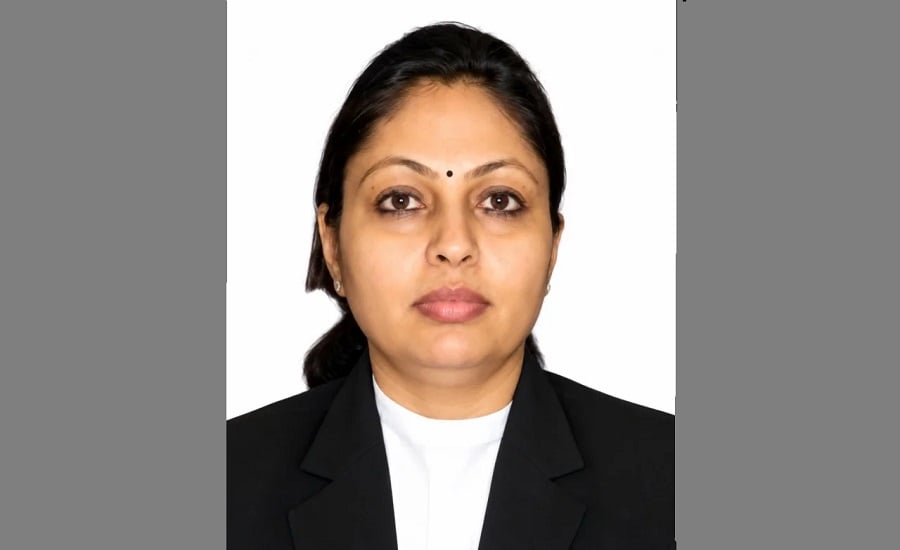
New Delhi: Kaveri Baweja, an officer of the Delhi Higher Judicial Service (DHJS) and currently serving as Registrar (Vigilance) at the High Court of Delhi, has been appointed Principal Secretary (Law, Justice and Legislative Affairs), Government of NCT of Delhi, on deputation basis.
The appointment places a member of the judiciary in a key administrative position responsible for the Delhi government’s legal, judicial and legislative affairs.
According to the order issued by the Services Department of the Government of NCT of Delhi on Thursday, September 24, 2026, the appointment followed a letter dated September 19 from the Registrar General of the Delhi High Court addressed to the Lieutenant Governor of Delhi.
Baweja is not an IAS officer. She belongs to the Delhi Higher Judicial Service and has served in several judicial and administrative capacities within the Delhi judiciary.
Before taking up the new assignment, she served as Registrar (Vigilance) at the Delhi High Court, a position to which she was appointed in April 2025. The Delhi High Court’s records show that she was appointed Registrar (Vigilance) on deputation basis with immediate effect on April 21, 2025, after serving as Special Judge (PC Act) (CBI).
Who Is Kaveri Baweja?
Kaveri Baweja is a member of the Delhi Higher Judicial Service who has held both judicial and administrative assignments in the Delhi court system.
Her career has included postings as a Special Judge under the Prevention of Corruption Act at the Rouse Avenue Court Complex, a Commercial Court judge and, subsequently, Registrar (Vigilance) at the Delhi High Court.
The Delhi High Court’s official judicial-officer directory lists her as an officer of the DHJS and records her posting as Registrar (Vigilance).
Her judicial assignments have included cases involving corruption, money laundering and other high-profile criminal matters, bringing her into the public spotlight during her tenure at the Rouse Avenue Courts.
Appointment as Registrar (Vigilance)
Baweja was appointed Registrar (Vigilance) of the Delhi High Court in April 2025.
An order issued by the Delhi High Court on April 21, 2025, stated that the Chief Justice had appointed Baweja, then serving as Special Judge (PC Act) (CBI), as Registrar (Vigilance) on deputation basis with immediate effect. The same order recorded the repatriation of the then Registrar (Vigilance), Pawan Kumar Jain, to his parent cadre.
The Registrar (Vigilance) position involves important internal administrative and vigilance-related responsibilities within the High Court.
The Delhi High Court’s official former-registrars page records Baweja’s tenure in the post from April 21, 2025, to September 21, 2026.
Her subsequent appointment to the Delhi government’s Law, Justice and Legislative Affairs Department marks another transition from judicial administration to a senior government administrative role.
Earlier Role as Special Judge at Rouse Avenue
Before moving to the Delhi High Court as Registrar (Vigilance), Baweja served as Special Judge (PC Act) (CBI) at the Rouse Avenue Court Complex.
The position brought her before several cases investigated by central agencies, including the Central Bureau of Investigation and Enforcement Directorate.
Her orders in a number of cases involving prominent political figures and public officials received considerable attention.
Delhi Excise Policy Case
Baweja presided over proceedings connected with the Delhi excise policy case during her tenure at the Rouse Avenue Courts.
She dealt with proceedings involving former Delhi Chief Minister Arvind Kejriwal and former Deputy Chief Minister Manish Sisodia, among other accused.
In April 2024, Baweja rejected Sisodia’s second bail plea in the excise policy case.
She also dealt with proceedings concerning Kejriwal’s custody in the money-laundering case. Subsequent proceedings before her court included extensions of judicial custody of Kejriwal, Sisodia and other accused.
These proceedings were part of a wider set of criminal cases arising from allegations relating to the now-scrapped Delhi excise policy, with investigations conducted by the CBI and ED.
1984 Anti-Sikh Riots Case
One of the significant cases handled by Baweja was the trial concerning the killing of Jaswant Singh and his son Tarundeep Singh during the 1984 anti-Sikh riots.
On February 12, 2025, Special Judge Kaveri Baweja convicted former Congress MP Sajjan Kumar in the case relating to the killings in Delhi’s Saraswati Vihar area on November 1, 1984.
On February 25, 2025, the court sentenced Kumar to life imprisonment. The prosecution and the complainant’s family had sought the death penalty, but the court imposed a life sentence.
The case was one of the major trials from the 1984 violence to reach a verdict decades after the incidents.
Proceedings Related to the 2020 Northeast Delhi Riots
Baweja also presided over proceedings concerning allegations relating to BJP leader Kapil Mishra and the 2020 Northeast Delhi riots.
In April 2025, while hearing a challenge involving an order directing further investigation into allegations against Mishra, Baweja questioned the prosecution about whether the allegations had already been investigated. The Delhi Police’s Special Cell argued that the magistrate court lacked jurisdiction to direct the further investigation.
A sessions court subsequently set aside the magistrate’s order, holding that it suffered from a serious jurisdictional error.
The matter illustrates the nature of the judicial responsibilities Baweja handled before moving into the High Court’s administrative establishment.
Experience in Commercial Courts
Baweja has also served in the commercial judiciary.
She previously served as District Judge (Commercial Court)-07 in the Central District at the Tis Hazari Courts complex.
Her experience therefore extends beyond criminal and anti-corruption matters to commercial litigation and judicial administration.
From Judicial Proceedings to Government Administration
Baweja’s appointment as Principal Secretary (Law, Justice and Legislative Affairs) represents a move from the judicial side of Delhi’s legal system into the executive government’s legal and legislative administration.
The department is responsible for matters relating to the Delhi government’s legal affairs, including coordination on litigation, legal advice and legislative work.
Her experience in judicial proceedings and subsequent administrative role at the Delhi High Court brings a combination of courtroom and institutional administrative experience to the new assignment.
Appointment on Deputation Basis
The Delhi government’s September 24 order states that Baweja has been appointed on deputation basis.
The appointment followed a September 19 communication from the Registrar General of the Delhi High Court to the Lieutenant Governor of Delhi.
The move also reflects the existing mechanism through which judicial officers can be assigned to administrative positions outside their regular judicial postings.
Her earlier appointment as Registrar (Vigilance) at the Delhi High Court was also on deputation basis.
A Judiciary Officer in a Key Delhi Government Role
Kaveri Baweja’s new assignment places her at the head of one of the Delhi government’s important departments at a time when legal and legislative coordination is central to the functioning of the administration.
Her professional journey has taken her from trial-court responsibilities, including Special Judge assignments and commercial court work, to the Delhi High Court’s administrative establishment and now to the Delhi government’s Law, Justice and Legislative Affairs Department.
Her appointment also distinguishes the post from the conventional IAS cadre-based secretariat appointments: Baweja is a DHJS judicial officer serving on deputation, rather than a member of the IAS.
With her appointment as Principal Secretary, Law, Justice and Legislative Affairs, Baweja will now move from the High Court’s vigilance and administrative structure to a senior executive assignment in the Government of NCT of Delhi.
Read also: ‘I Seek Your Lordships’ Protection’: Amicus Raju Ramachandran Hits Back in Odisha DGP Case