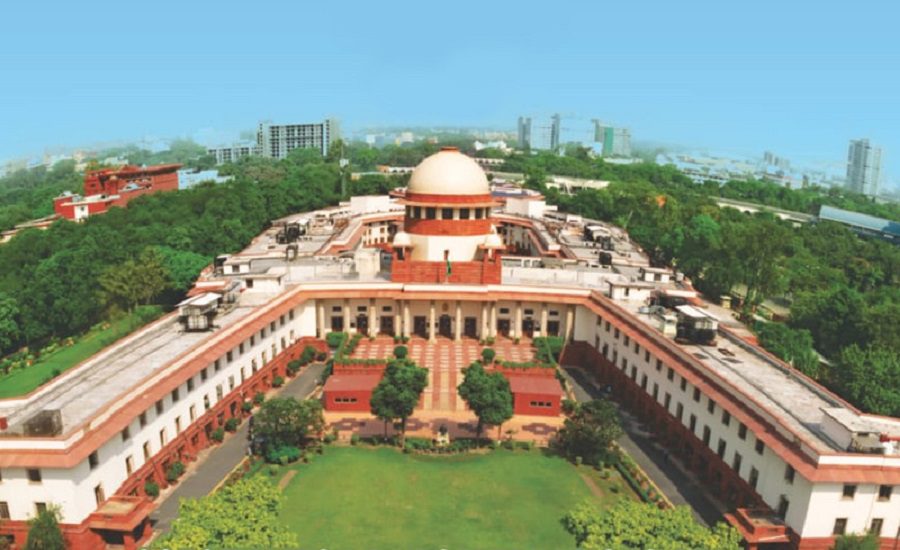
New Delhi: The Supreme Court directions on bail for foreign nationals in NDPS cases have introduced stricter verification measures to prevent accused persons from absconding after obtaining bail. The Supreme Court of India has issued 13 binding directions focusing on stronger surety verification, passport monitoring, FRRO registration, and accountability of officials involved in the bail process.
The decision came in a case involving a foreign national accused under the Narcotic Drugs and Psychotropic Substances (NDPS) Act, where the Court found serious irregularities, including fake sureties.
Why Did The Supreme Court Issue These 13 NDPS Bail Guidelines
The Supreme Court observed that weaknesses in the existing bail verification system can be exploited by foreign nationals accused in serious drug trafficking cases.
Read also: Explained: Kerala High Court’s Order on Special NDPS Courts and What It Means for Drug Trials
The Court noted that fake sureties, inadequate background checks, and poor monitoring mechanisms create a risk of accused persons fleeing India after securing bail.
To address these concerns, the Bench of Justice Sanjay Karol and Justice Augustine George Masih introduced a detailed framework aimed at strengthening the criminal justice system.
What Was The Case Before The Supreme Court
The case involved Nigerian national Chidiebere Kingsley Nawchara, who was arrested in March 2023 in connection with a heroin seizure linked to Mumbai airport.
The Bombay High Court had granted him bail. However, during the appeal process, the Supreme Court stayed the bail order and later found that the sureties furnished on behalf of the accused did not exist.
The Court stated that what began as a routine appeal eventually became a matter involving fake sureties and concerns about the effectiveness of the bail system.
NDPS Bail Guidelines: Key Observations Made By The Supreme Court
The Supreme Court held that the stringent bail conditions under the NDPS Act must be followed strictly.
The Bench observed that courts must record clear findings before granting bail in cases involving commercial quantities of narcotic substances. The Court further stated that fake sureties can severely damage public trust in the justice delivery system and highlighted the need for stronger verification mechanisms.
Details of NDPS Bail Guidelines for Foreign Nationals
1. Passport Must Be Deposited
Foreign nationals released on bail must deposit their passport with the trial court. They cannot travel abroad without prior court permission.
2. Mandatory Registration With FRRO
The accused must register with the Foreigners Regional Registration Office (FRRO) within one week of release. The court and investigating officer must be informed in writing.
3. FRRO Digital Portal To Be Created
The FRRO has been directed to create a dedicated portal to facilitate registration and monitoring.
4. Two Sureties Generally Mandatory
Foreign nationals must normally provide two sureties. Any relaxation must be supported by written reasons recorded by the trial court.
5. Surety Verification Within Three Days
Verification of sureties must be completed within three days before release. Any delay must be properly documented.
6. Physical Verification Of Address
Residential address and contact details in India must be physically re-verified within three days of the bail order.
7. Financial Disclosure By Accused
The accused must submit an affidavit disclosing income sources, financial resources, and bank account details held in India.
8. Embassy Must Be Informed
Investigating officers must officially notify the concerned embassy about the criminal proceedings.
9. National NDPS Database
The Ministry of Law and Justice and the National Informatics Centre (NIC) must develop a centralized database containing details of accused foreign nationals and their sureties.
10. Departmental Action For Fake Sureties
Officials responsible for verification may face departmental inquiry if a surety is later found to be fake.
11. Property Lien On Sureties
A lien equal to the bond amount will be created on the property of anyone acting as surety for a foreign accused.
12. Digital Verification Portals
High Courts have been asked to develop digital platforms for rapid verification of financial and property documents.
13. New BNSS Form For Surety Undertakings
A new Form 47A will be introduced under the Bharatiya Nagarik Suraksha Sanhita (BNSS) for standardized surety undertakings.
Additional Recommendations Made By The Supreme Court
Apart from the binding directions, the Court suggested broader reforms to improve bail administration. These recommendations include:
- Professional bail bond services under a regulated framework.
- Dedicated court staff for surety verification.
- A nationwide Surety Information Management System.
- Geo-fencing technology to monitor accused persons.
- Aadhaar-based verification in accordance with UIDAI rules.
- Specialized judicial training on financial and surety verification.
Read also: NDPS Act Reform Plea: Why Is the Supreme Court Concerned About Drug Trafficking in India?