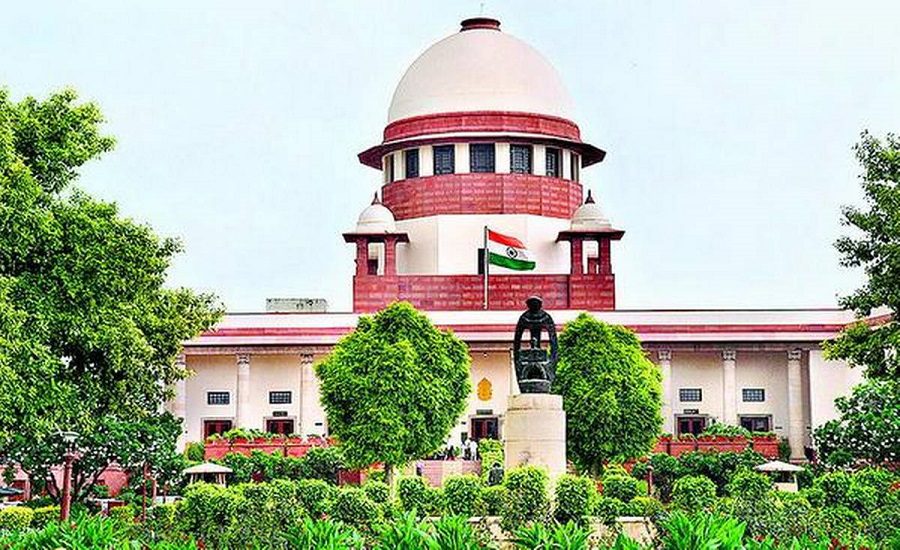
New Delhi: The ECI appointment law challenge has moved to a new stage after the Supreme Court referred petitions against the Chief Election Commissioner and Other Election Commissioners (Appointment, Conditions of Service and Term of Office) Act, 2023, to a Constitution Bench.
The case concerns how Election Commissioners are appointed and whether the current process ensures the independence of the Election Commission of India (ECI).
According to court proceedings, questions were raised about whether the existing selection mechanism creates enough distance from executive influence.
ECI Appointment Law Challenge Case: What Did The Supreme Court Decide
A two-judge bench comprising Justice Dipankar Datta and Justice Satish Chandra Sharma delivered differing opinions on whether the case should be referred to a larger bench. However, both judges agreed that the matter should be placed before the Chief Justice of India for the constitution of a Constitution Bench to avoid further delays in resolving the issue.
The Constitution Bench will now examine important constitutional questions related to the appointment of the Chief Election Commissioner (CEC) and Election Commissioners (ECs).
What Is The 2023 ECI Appointment Law
In 2023, Parliament enacted the Chief Election Commissioner and Other Election Commissioners (Appointment, Conditions of Service and Term of Office) Act. Under this law, the Selection Committee consists of:
- Prime Minister
- Union Cabinet Minister nominated by the Prime Minister
- Leader of Opposition in the Lok Sabha
The law replaced the Chief Justice of India (CJI), who was part of the interim selection mechanism created by the Supreme Court in the 2023 Anoop Baranwal judgment.
What is the Reason of ECI Appointment Law Challenge Case
The petitioners argue that the selection committee gives the executive a two-to-one majority. According to them, this could affect the perceived independence of the Election Commission, which plays a critical role in conducting free and fair elections.
What Did Justice Dipankar Datta Observe?
Justice Dipankar Datta reportedly expressed preliminary concerns about whether the current appointment system appears sufficiently independent. He observed that for free and fair elections, it is not enough for the Election Commission to be independent; it must also be seen as independent by the public.
Questions Over The Selection Committee
Justice Datta noted that a Cabinet Minister nominated by the Prime Minister may not serve as a fully independent counterbalance within the selection committee. He also questioned whether the current structure creates enough public confidence in the appointment process. These observations were made while examining the constitutional issues involved in the case.
ECI Appointment Law Challenge Case: What Is The Centre’s Stand
The Union Government defended the 2023 law. The Centre argued that Article 324 of the Constitution gives Parliament the authority to determine the appointment mechanism for Election Commissioners. It also maintained that the Anoop Baranwal judgment created only an interim arrangement until Parliament enacted a law.
The government further argued that the challenge raises important constitutional questions regarding Parliament’s powers and therefore deserves consideration by a Constitution Bench.
What Was The Anoop Baranwal Judgment
In the 2023 Anoop Baranwal v. Union of India case, the Supreme Court directed that Election Commissioners should be appointed by a committee comprising:
- Prime Minister
- Leader of Opposition
- Chief Justice of India
The Court had clarified that this arrangement would remain in place only until Parliament passed a law on the subject.
Why Is It Important Today
Petitioners argue that the principles established in the judgment regarding Election Commission independence continue to apply even after Parliament enacted the 2023 law. This issue will now be examined in greater detail by the Constitution Bench.
Why Does ECI Appointment Law Challenge Case Matter
The Election Commission is responsible for conducting elections across India. Because of its role, questions about how Election Commissioners are selected have significant constitutional importance.
Constitutional Questions Involved
The Constitution Bench is expected to examine:
Interpretation Of Article 324
Whether Parliament has complete freedom to determine the appointment process for Election Commissioners.
Independence Of The Election Commission
Whether the current selection process adequately protects the institutional independence of the ECI.
Scope Of The Anoop Baranwal Judgment
How the 2023 Supreme Court ruling interacts with the law later enacted by Parliament.
Read also: Why The Supreme Court Wants A Common System For Money Deposited In Courts
FAQs
The main issue is whether the 2023 appointment process provides adequate independence to the Election Commission or gives excessive influence to the executive.
The Court found that the petitions raise important constitutional questions regarding the appointment of Election Commissioners and the interpretation of Article 324 of the Constitution.
In 2023, the Supreme Court directed that Election Commissioners be selected by a committee consisting of the Prime Minister, Leader of Opposition, and Chief Justice of India until Parliament enacted a law on the matter.