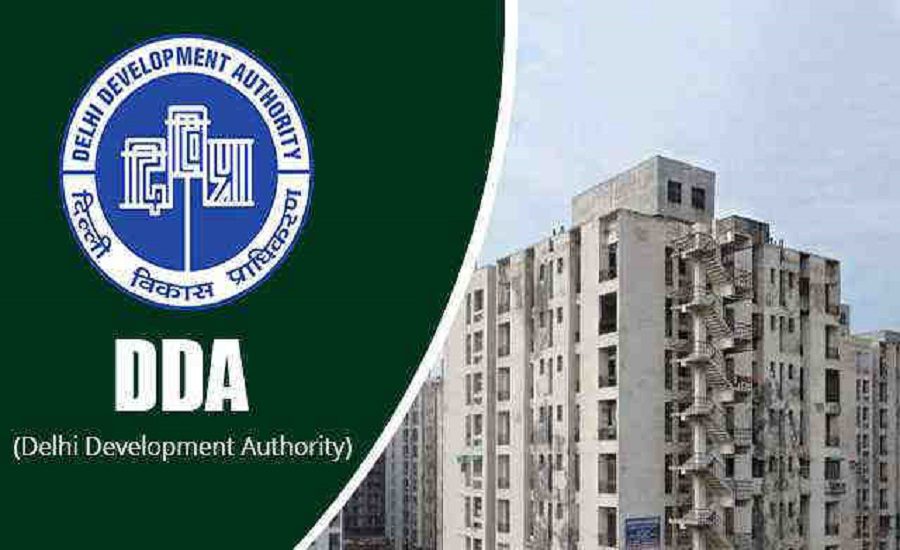
New Delhi: Delhi has cleared a major set of transport infrastructure projects aimed at improving Metro connectivity, pedestrian movement and road traffic. The Delhi Development Authority’s Unified Traffic & Transportation Infrastructure (Planning & Engineering) Centre (UTTIPEC) has approved six Multi Modal Integration (MMI) plans for Metro stations along with two road projects by the Delhi government’s Public Works Department (PWD).
The approvals cover improvements around six Metro stations, a proposed 5.5-km elevated corridor on Maa Anandmayee Marg in South Delhi and a major decongestion plan for Mukarba Chowk in northwest Delhi.
Six Metro Stations to Get Multimodal Integration Plans
The six approved MMI plans cover:
- GTB Nagar Metro Station on the Yellow Line
- Sarita Vihar Metro Station on the Violet Line
- Akshardham Metro Station on the Blue Line
- Rohini West Metro Station on the Red Line
- Malviya Nagar Metro Station on the Yellow Line
- Shastri Park Metro Station on the Red Line
The plans focus on the area within approximately 300 metres of each Mass Rapid Transit System station. The objective is to make it easier for commuters to reach Metro stations and improve last-mile connectivity.
The proposed interventions will also focus on walkability, pedestrian safety and facilities for Metro and Regional Rapid Transit System (RRTS) users.
With these six approvals, all 31 MMI plans prepared by the Delhi Metro Rail Corporation (DMRC) for Metro stations across Phase I and Phase II corridors in Delhi have now received approval from UTTIPEC.
Read Also: Delhi CM Rekha Gupta Approves 1,000 Acres of Southern Ridge for Reserved Forest Notification
5.5-km Elevated Corridor Planned in South Delhi
One of the major road projects approved by UTTIPEC is a six-lane elevated corridor on Maa Anandmayee Marg.
The approximately 5.5-km corridor will connect the Outer Ring Road with Mehrauli-Badarpur Road. It is planned to bypass around 12 intersections along Maa Anandmayee Marg.
The project is aimed at improving traffic movement in an area that receives significant traffic from the Okhla Phase I and Phase II industrial areas. By allowing through traffic to bypass several intersections, the elevated corridor is expected to reduce delays along the route.
The approval also includes an underpass and roundabout at the Crowne Plaza intersection on Okhla Estate Marg. These components are intended to further improve traffic flow and reduce congestion at the intersection.
Mukarba Chowk to Get Wider Road Connectivity
The second major road project focuses on Mukarba Chowk in northwest Delhi, an important traffic point on the Outer Ring Road.
Under the approved plan, the existing six-lane Road Over Bridge (ROB) on the Outer Ring Road will be widened to 10 lanes.
A new four-lane ROB will also be constructed to connect Jahangirpuri Industrial Area with Sanjay Gandhi Transport Nagar. The new structure will cross over the Delhi-Sonipat railway line.
The widening is intended to improve traffic movement between Mukarba Chowk and Madhuban Chowk, while the new ROB will provide an additional route for traffic in the area.
According to the project plan reported by The New Indian Express, the new road is expected to divert around 20% of vehicular traffic currently passing through Mukarba Chowk. This could also help ease congestion on NH-44 near the junction.
Focus on Last-Mile Connectivity and Pedestrian Safety
The Metro-related approvals are not limited to road access. The MMI approach is designed to connect different modes of transport around Metro stations and make station access more convenient.
For daily commuters, better last-mile connectivity can reduce the difficulty of travelling between Metro stations and nearby residential, commercial or institutional areas. Improvements to pedestrian infrastructure can also make walking routes around busy stations safer and more accessible.
DDA describes UTTIPEC as a body established to improve mobility, reduce congestion and promote traffic safety through coordinated transport planning and traffic engineering measures.
The approved projects therefore combine station-level improvements with larger road infrastructure works, covering both public transport access and vehicular movement.
Multiple Agencies Involved in Delhi’s Transport Planning
The UTTIPEC meeting brought together representatives from several agencies, including DDA, the Government of the National Capital Territory of Delhi, the Ministry of Housing and Urban Affairs, Delhi Traffic Police, DMRC, PWD, MCD, NDMC, Indian Railways and NCRTC.
The participation of multiple agencies reflects the need for coordinated planning in projects that involve Metro stations, roads, railway crossings, pedestrian infrastructure and public transport.
What the Projects Could Mean for Delhi Commuters
The approved plans target some of the everyday challenges faced by commuters across Delhi: congestion at major junctions, limited last-mile connectivity and difficult pedestrian movement around transport hubs.
The six MMI projects are focused on improving access around Metro stations, while the elevated corridor and Mukarba Chowk projects address road capacity and traffic movement.
Together, the approvals represent a broader approach to urban mobility in which Metro connectivity, pedestrian infrastructure and road networks are planned together rather than as separate systems.
As these projects move towards implementation, their impact will depend on execution, construction timelines and how effectively the planned infrastructure integrates with existing transport networks. For Delhi commuters, the stated objective is clearer movement between different modes of transport and reduced congestion at some of the city’s busy traffic points.
Read Also: Big Healthcare Boost for East Delhi: GTB Hospital Gets Approval for 250-Bed Trauma Block