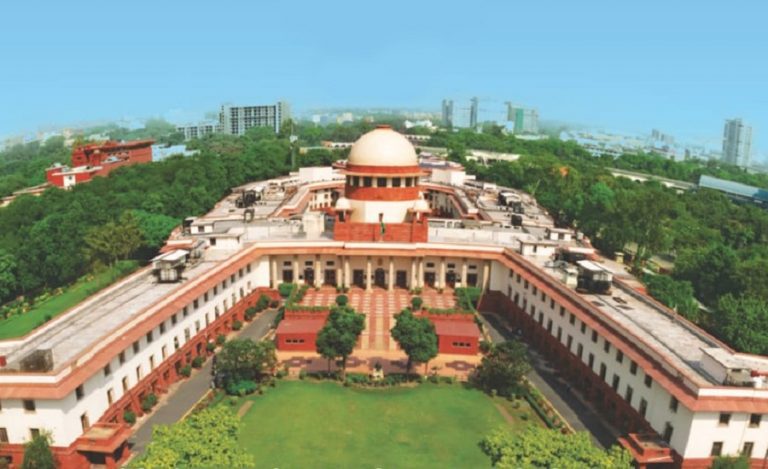
New Delhi: The Supreme Court of India has quashed disciplinary proceedings against a retired Rajasthan judicial officer who granted bail to two accused persons despite their earlier bail applications being rejected by the Rajasthan High Court.
The Supreme Court ruled that a disciplinary inquiry was not justified under the specific circumstances of the case and said that counselling or a warning could have been sufficient.
The Court also directed the Rajasthan Government and the High Court to recalculate the judge’s revised salary and release his pending retirement benefits, including pension arrears, within three months, subject to any other legal obstacle.
Why Did The Supreme Court Quash The Rajasthan Judge Disciplinary Proceedings
The case concerns Mukesh Tyagi, a judicial officer who served as a Special Judge under the Protection of Children from Sexual Offences (POCSO) Act in Dholpur, Rajasthan.
Read also: BCI Warns Law Interns: Posting Courtroom Reels? BCI Says Law Interns Could Face Disciplinary Action
In May 2019, Tyagi granted bail to two accused persons. Their earlier bail applications had already been rejected by the Rajasthan High Court.
The High Court later cancelled the bail orders, observing that there had been no change in circumstances to justify granting bail after the earlier rejections.
Following this decision, the High Court directed that its order be placed before the Chief Justice. Disciplinary proceedings were subsequently initiated against Tyagi for alleged judicial impropriety and indiscipline.
What Disciplinary Action Was Taken Against The Judge
The disciplinary proceedings were initiated under Rule 16 of the Rajasthan Civil Services (Classification, Control and Appeal) Rules, 1958.
The authorities issued a memorandum dated October 25, 2024, along with charges against the judicial officer.
The proceedings questioned his decision to grant bail despite the earlier orders of the High Court. Tyagi challenged the disciplinary action before the Supreme Court.
The key issue before the Supreme Court was whether a formal disciplinary inquiry was necessary in the circumstances of this particular case.
What Did The Supreme Court Say About The Rajasthan Judge Disciplinary Proceedings
A bench comprising Justice B.V. Nagarathna, Justice R. Mahadevan and Justice Devendra Kumar Upadhyaya examined the matter.
The Supreme Court declined to interfere with the Rajasthan High Court’s observations regarding the bail orders. However, it separately concluded that initiating formal disciplinary proceedings against the judicial officer was not necessary in the circumstances of the case.
The Court observed that recording remarks in the officer’s Annual Confidential Report (ACR), counselling him or issuing a warning could have been sufficient.
The judges also stressed that the officer should have given proper weight to the High Court’s earlier orders in the same case.
The Court found that the formal disciplinary memorandum and the related charges were not justified under the specific facts before it.
Supreme Court Considers Judge’s Service Record And Retirement Benefits
The Supreme Court also took note of the judicial officer’s service record. According to the report, Tyagi’s Annual Confidential Reports were positive. He retired from service on March 31, 2026, but his revised pay and retirement benefits had not been released.
The Court directed the Rajasthan Government and the High Court to recalculate his salary under the revised pay scale and release his pending terminal benefits.
These benefits include pension and arrears. The authorities were directed to complete the process within three months, provided there was no other legal obstacle.
Which Rajasthan Judge Disciplinary Proceedings Did The Supreme Court Cancel
The Supreme Court quashed the disciplinary memorandum dated October 25, 2024, and the charges connected with it. However, the decision was limited to the particular facts of this case. It should not be understood as a general rule that judicial officers cannot face disciplinary proceedings for their decisions.
The ruling instead shows that the need for disciplinary action must be assessed in light of the circumstances of each case.
The Court distinguished between its decision not to interfere with the High Court’s observations on the bail orders and its conclusion that the subsequent disciplinary inquiry was unwarranted.
FAQs
The Supreme Court quashed the disciplinary memorandum dated October 25, 2024, and the related charges initiated against retired judicial officer Mukesh Tyagi under the Rajasthan Civil Services (Classification, Control and Appeal) Rules, 1958.
The Supreme Court held that a formal disciplinary inquiry was not warranted under the specific circumstances of the case. It observed that counselling, a warning or remarks in the officer’s Annual Confidential Report could have been sufficient.
The Supreme Court directed the Rajasthan Government and the High Court to recalculate his pay under the revised pay scale and release his pending retirement benefits, including pension and arrears, within three months, subject to any other legal impediment.