New Delhi: Turkey has questioned the United States over the reported deployment of F-35 stealth fighter jets to India for the 2026 Tarang Shakti exercise. Ankara argues that Washington is applying different rules to Turkey and India because both countries operate Russian-made S-400 air defence systems.
The controversy has renewed debate over US defence policy, NATO relations and the security concerns surrounding advanced fighter aircraft. However, the two countries’ defence relationships and the legal conditions governing F-35 transfers are different.
Why Is Turkey Questioning The US Over F-35 Jets In Tarang Shakti Exercise
Turkey has raised questions about the US decision to send F-35 stealth fighter jets to India, according to a news report on October 16, 2026.
Read also: 40 Nations, 6 F-35 Stealth Fighters And One Massive Mission: Inside Tarang Shakti 2026
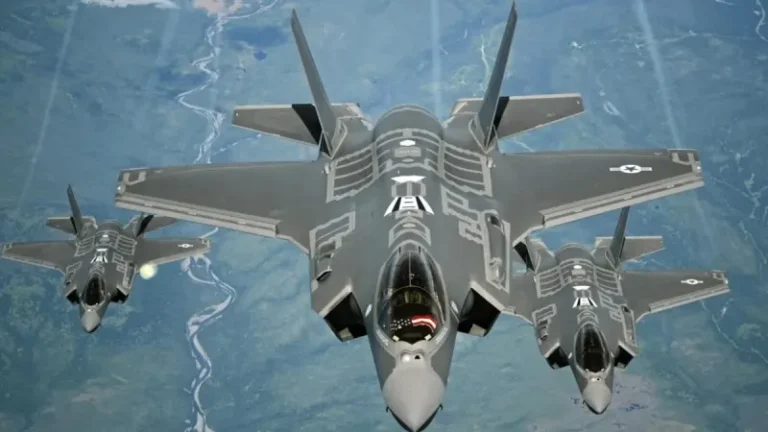
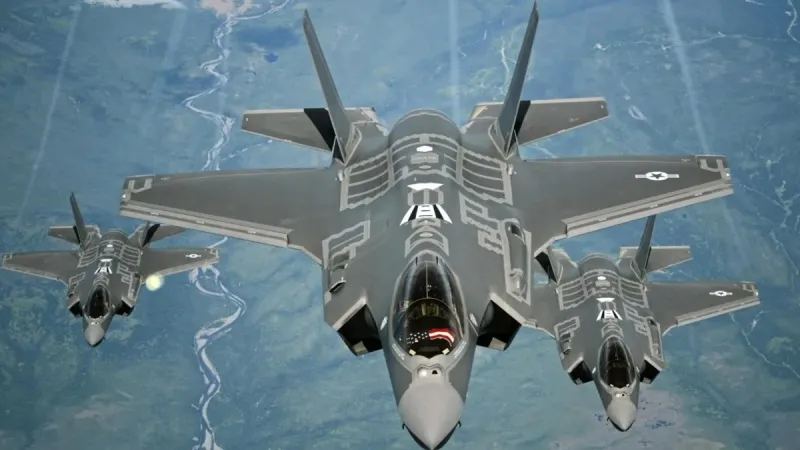
The report says that American F-35 aircraft were sent to Jodhpur Air Force Station in Rajasthan to participate in the joint military exercise Tarang Shakti 2026. The development has attracted attention in Turkey because the country was removed from the F-35 programme after purchasing Russia’s S-400 air defence system.
Turkish media outlets have questioned why the US is allowing its advanced fighter aircraft to operate in India, which also possesses Russian-made S-400 systems. They have described the situation as a possible example of double standards in American defence policy. However, the presence of American aircraft at an exercise does not automatically mean that the host country has purchased those aircraft or received permission to operate them.
Why Did The US Remove Turkey From The F-35 Programme
The dispute between Turkey and the United States began after Ankara decided to purchase Russia’s S-400 air defence system.
Turkey is a member of NATO, the military alliance led by the United States. However, its decision to acquire the Russian system created serious concerns in Washington.
The US government argued that operating the S-400 system alongside the F-35 could expose sensitive information about the American aircraft.
In 2019, the United States began removing Turkey from the F-35 programme. Washington later imposed sanctions on Turkey’s defence procurement agency in December 2020 under the Countering America’s Adversaries Through Sanctions Act, commonly known as CAATSA.
The sanctions were linked to Turkey’s purchase of the Russian air defence system. The American government argued that the S-400 could create security risks for the F-35 and potentially expose sensitive military technology to Russia.
Turkey, meanwhile, has maintained that it needs advanced air defence systems to protect its territory and has repeatedly challenged its exclusion from the fighter jet programme.
What Makes The F-35 And S-400 Combination Sensitive
The F-35 Lightning II is an advanced fifth-generation fighter aircraft developed by the United States and its partners.
It is designed to combine stealth technology, advanced sensors, electronic warfare systems and information-sharing capabilities. These features help the aircraft detect threats and operate in heavily defended airspace.
The Russian S-400 Triumf is a long-range air defence system designed to detect, track and engage different types of aerial targets, including aircraft and missiles.
The main American concern is that repeated exposure to the F-35 could allow an S-400 system to collect information about the aircraft’s radar signature and other operational characteristics. Such information could potentially help an adversary understand how to detect or counter the fighter jet.
The United States has therefore treated Turkey’s possession of the S-400 as a security issue affecting the F-35 programme. However, the technical risks depend on how the systems are operated and the circumstances involved. The presence of an S-400 system does not, by itself, prove that sensitive F-35 information has been collected.
India Also Operates Russia’s S-400 Air Defence System
India purchased the Russian S-400 air defence system to strengthen its air defence capabilities. The agreement was signed with Russia in October 2018 and was widely reported to be worth approximately $5.43 billion.
The system is intended to help India detect and engage aerial threats at different ranges, providing another layer of protection for important military installations and strategic locations.
India’s decision to acquire the S-400 has also attracted international attention because the country maintains defence partnerships with both Russia and Western nations.
The reported deployment of US F-35 aircraft to India for Tarang Shakti 2026 has therefore raised questions about how Washington assesses the risks associated with military cooperation involving countries that operate Russian equipment. However, there is an important distinction between hosting foreign aircraft during a military exercise and acquiring, possessing or independently operating those aircraft. These arrangements can involve different levels of access, technical safeguards and security restrictions.
Why Is Turkey Calling The US Policy A Double Standard
Turkey’s main argument is that the United States has treated two countries differently despite their possession of Russian S-400 systems.
Ankara was excluded from the F-35 programme after acquiring the Russian system. Turkey believes that Washington should reconsider its decision and allow it to return to the programme.
The reported participation of American F-35 aircraft in an Indian exercise has provided fresh material for this debate.
Turkish commentators have questioned why the S-400 issue remains a major obstacle for Turkey while US military cooperation with India continues. However, the situations are not necessarily identical.
Turkey was a participant in the international F-35 development and procurement programme. India, by contrast, has not been publicly established as an F-35 operator merely because American aircraft reportedly participated in an exercise on Indian soil.
The United States can also apply different security arrangements to temporary deployments, defence exercises, aircraft sales and long-term operational partnerships.
For this reason, Turkey’s accusation reflects its political and defence concerns rather than definitive proof that Washington has violated a single, identical rule for both countries.
Can Turkey Sell Its S-400 System And Return To The F-35 Programme
Turkey’s possession of the S-400 remains a central obstacle to resolving its dispute with Washington.
One possible route to an agreement would involve addressing the concerns surrounding the Russian system and meeting the applicable American legal requirements. However, transferring or selling the S-400 to another country would not necessarily be a simple process. Any proposed arrangement could involve contractual restrictions, Russian consent and negotiations between the countries concerned.
Turkey has continued to seek a way back into the F-35 programme. In July 2026, US President Donald Trump indicated that he wanted to lift sanctions on Turkey and would consider the possibility of selling F-35 aircraft to Ankara. However, legal and congressional requirements remained important obstacles.
The US State Department subsequently reiterated in July that Turkey had not yet met the legal conditions required to rejoin the F-35 programme.
These developments suggest that political discussions may continue, but they do not establish that Turkey has regained access to the programme or secured a confirmed delivery of F-35 aircraft.
What Did India Gain From The Reported F-35 Deployment in Tarang Shakti Exercise
The reported deployment of F-35 aircraft to India for Tarang Shakti 2026 has attracted attention because of the fighter jet’s advanced capabilities.
Military exercises can provide opportunities for participating forces to improve coordination, observe different operational approaches and strengthen professional relationships.
The presence of American aircraft may also highlight the continuing defence engagement between India and the United States. However, participation in a joint exercise should not be confused with a confirmed purchase agreement.
There is no basis to conclude from the reported deployment alone that India has decided to buy the F-35, received unrestricted access to its technology or been approved to operate the aircraft independently.
India continues to maintain a diverse defence strategy that includes Russian-origin equipment and growing cooperation with Western partners. This approach allows New Delhi to pursue its security requirements while maintaining strategic independence.
Read also: Tarang Shakti 2026: Why France’s Top Air Commander Sees Mirage 2000 In India’s Tejas Fighter Jet
FAQs
The United States removed Turkey from the F-35 programme in 2019 because it considered Turkey’s acquisition of the Russian S-400 system a potential threat to the security of sensitive F-35 technology. The US also imposed CAATSA-related sanctions on Turkey’s defence procurement agency in 2020.
Turkey has questioned the US decision to reportedly deploy F-35 fighter jets to India for Tarang Shakti 2026, arguing that Washington excluded Turkey from the F-35 programme because it purchased Russia’s S-400 air defence system.
The reported participation of American F-35 aircraft in an Indian military exercise does not mean India owns or operates them. A confirmed purchase, delivery and operational arrangement would be needed to establish India’s status as an F-35 operator.