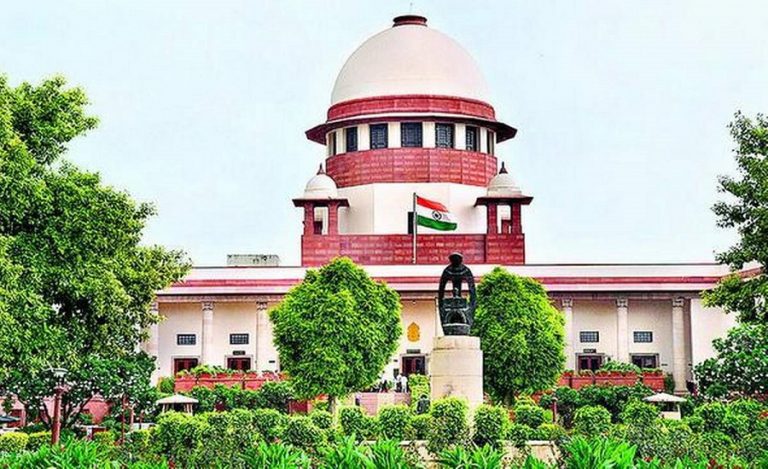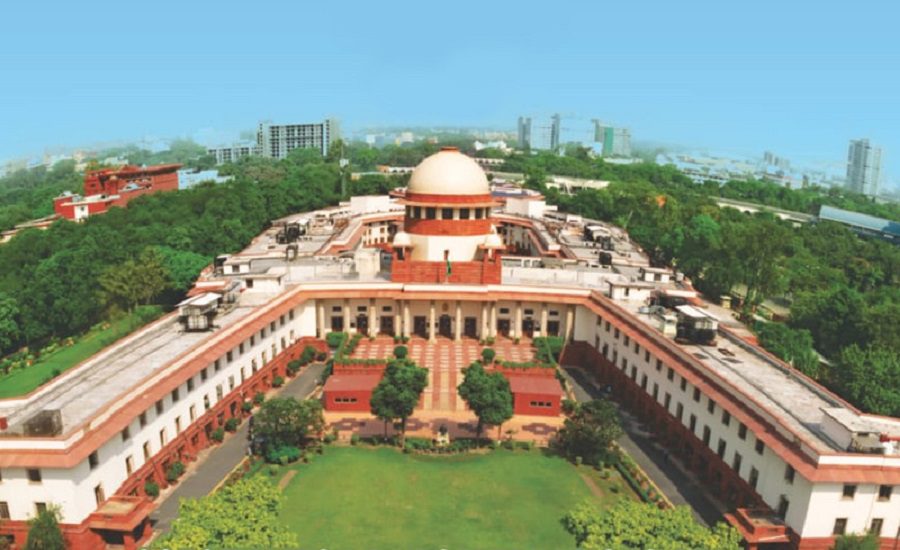
New Delhi: The Supreme Court has questioned whether the NTA has the infrastructure, manpower, and technological capabilities needed to conduct large-scale national examinations securely and efficiently.
The Court stressed that examination reforms should not be limited to one exam cycle but should be institutionalised through a dedicated and scientifically equipped organization, similar to the Union Public Service Commission (UPSC).
Details of SC Suggestion on NEET-UG Reform
The Supreme Court bench comprising Justice P.S. Narasimha and Justice Alok Aradhe heard petitions related to reforms in the National Testing Agency following concerns raised after the NEET-UG 2026 paper leak controversy.
Read also: Monsoon Session 2026: Full List of 7 Major Bills Government Will Table in Parliament
During the hearing, the Court sought a detailed response from the Central Government regarding the implementation of recommendations made by expert committees led by former ISRO Chairman K. Radhakrishnan and former NITI Aayog CEO Nandan Nilekani.
The judges emphasized that long-term structural reforms are necessary to strengthen examination security and restore public confidence.
Why Is The Supreme Court Concerned About NTA
Need For Institutional Strengthening
The Court observed that examination reforms should become part of a permanent institutional framework rather than depending on individual officers or temporary measures.
According to the bench, institutional memory and expertise must be built over time so that knowledge and experience are transferred from one generation of officials to another.
The judges cited UPSC as an example of an organization that has developed expertise through years of conducting examinations.
Questions Raised By The Court
The Court asked several important questions, including:
- Whether NTA has a dedicated office and infrastructure.
- Whether new senior officers have been appointed.
- Whether specialized technology and cybersecurity teams are operational.
- Whether sufficient manpower has been recruited.
- Whether recommendations of expert committees have been implemented.
The judges also sought details about timelines for implementing pending reforms.
NEET-UG Reform: SG Tushar Mehta Explains NTA’s Security Measures
Multi-Layer Question Paper Preparation
Solicitor General Tushar Mehta informed the Court that NTA follows a multi-stage process to prepare question papers.
Several moderators prepare questions, while another group selects them for final papers. Officials involved in one stage are not aware of the complete process, reducing the risk of leaks.
Secure Printing And Transportation
According to the government, question papers are printed under CCTV surveillance and CISF security.
The papers are transported in specially secured containers equipped with GPS tracking systems.
Question papers are stored in strong rooms under strict monitoring, with records maintained by officials and banking authorities.
Distribution On Exam Day
On the examination day, sealed boxes are opened under videography and in the presence of witnesses before question papers are distributed to examination centers.
The government described the system as highly secure and designed to prevent unauthorized access.
Supreme Court Calls For Long-Term NEET-UG Reform
Beyond Individual Examinations
Justice Narasimha observed that even strong security measures are not enough unless they become part of a permanent institutional structure.
The Court stated that examination integrity should be managed by a scientifically equipped organization with dedicated infrastructure, trained personnel, and technological expertise.
Focus On Technology And Security
The bench also raised questions about:
- Sovereign databases for examination data.
- Data storage and cybersecurity systems.
- Indigenous AI tools for translation.
- Research and development capabilities.
- Testing infrastructure and network operations.
The Court said these capabilities are essential for the future of India’s examination system.
Government’s Response On NEET-UG Reform
The Solicitor General informed the Court that the government has accepted the recommendations of the Radhakrishnan Committee in principle.
He stated that recruitment processes have started for key positions, including technology and administrative roles.
The government also informed the Court that NTA is working with the National Informatics Centre (NIC) to build stronger technology systems and is exploring indigenous AI-based solutions for question paper translation.
Importance Of The Case For Students
The outcome of this case could significantly impact how national entrance examinations are conducted in India. A stronger and more technologically advanced NTA could improve:
- Examination security.
- Transparency.
- Candidate experience.
- Data protection.
- Prevention of paper leaks.
- Public trust in competitive examinations.
Millions of students appearing for NEET, JEE, CUET, and other national exams may benefit from these reforms in the coming years.
Read also: NEET-UG 2026 Paper Leak Case: Future of NEET in Question? Supreme Court Demands These Major Changes
FAQs
The Supreme Court questioned whether the NTA has sufficient infrastructure, manpower, and technology to conduct large-scale national examinations securely and efficiently.
The Court has called for a dedicated and scientifically equipped examination body, similar to UPSC, with strong institutional systems, cybersecurity, and trained personnel.
The proposed reforms could improve exam security, reduce the risk of paper leaks, enhance transparency, and increase trust in national entrance examinations like NEET, JEE, and CUET.